Americans are living in unprecedented times. And while most of us are protesting and resisting in whatever ways make sense for us, we’re also going on with our lives. It’s the kind of surreal situation I’d previously only read about. In the last year and a half so much has changed so dramatically. I still believe passionately in the America that strives to be good, the America in which the Constitution is our scripture, and the America that celebrates democracy and pluralism.
Books provide us with much-needed information, interpretation, and inspiration. And sometimes solace. For today’s post I’m featuring 10 books that capture the essence of America in all its rich variety. These books take readers to Maine, Appalachia, the California desert, Wyoming, New York, New Jersey, Las Vegas, Oklahoma, and New Mexico, from the 1850s to the present. I think you’ll find each one to be a valuable reading experience.
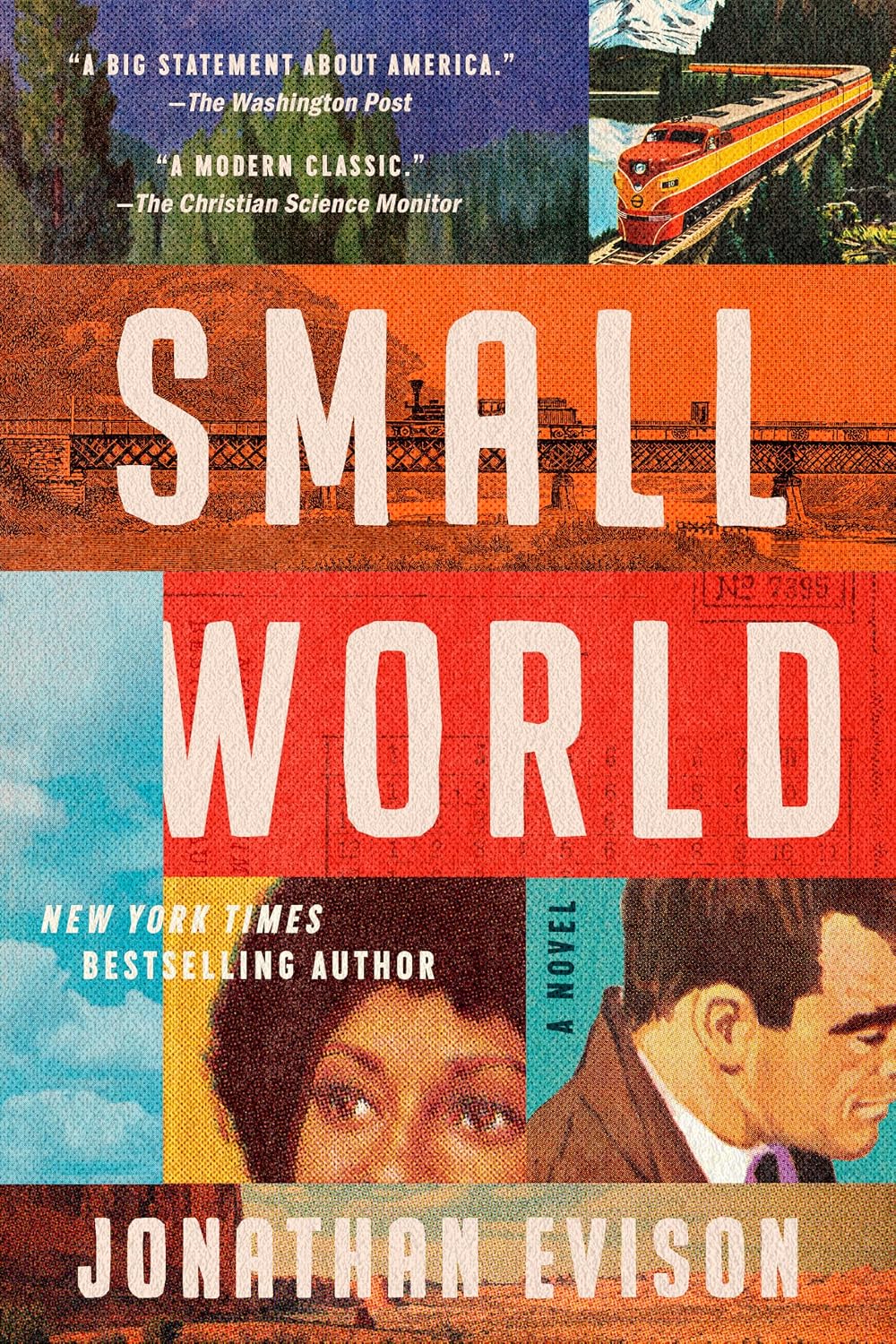
Small World — Jonathan Evison
Jonathan Evison is one of the most prolific and versatile novelists of recent years. In the last 15 years, he’s published West of Here (2011), The Revised Fundamentals of Caregiving (2012), This is Your Life, Harriet Chance (2015), Lawn Boy (2018), Legends of the North Cascades (2021), Small World (2022), Again and Again (2023), and The Heart of Winter (2025).
In Small World, the framing device is an accident involving an Amtrak cross-country train. The passengers, as one might expect, represent a microcosm of America. Evison weaves together the stories of several passengers with their American origin stories going back as far as 1851. In doing so, he tells the story of America in the last 175 years. Small World gives us Irish and Chinese immigrants, slaves and servants, rich and poor, the construction of the transcontinental railroad, the California Gold Rush, and the American Dream in all its glory and disappointment.
Small World reminds us that the United States is a big country that contains multitudes, but that our common ground as Americans – as people — supersedes our differences, if only we pay attention and open our hearts to others’ stories. Small World has a modern sensibility in that it addresses a range of contemporary social and cultural issues, but Evison’s storytelling is old-fashioned in the best way: a little on the sentimental, optimistic side but absorbing and thought-provoking. And I remember when being sentimental and optimistic were core American traits.
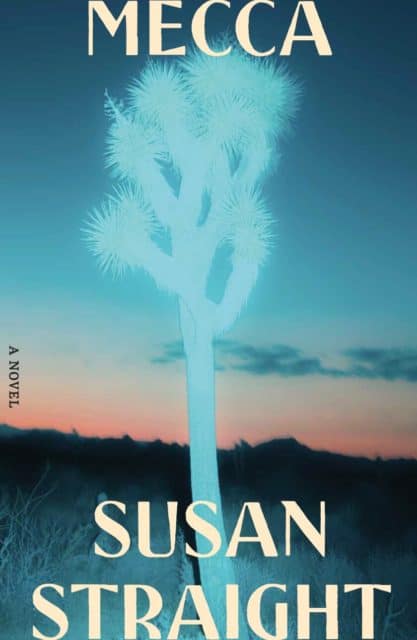
Mecca — Susan Straight
Mecca is a powerful novel that has not received the acclaim it deserves. Straight’s storytelling is best described as contemporary California noir. Mecca braids three narratives concerning the harsh reality of working-class life in Southern California, where the so-called glamour of places like Hollywood, Beverly Hills, and Santa Monica is irrelevant. As a lifelong Californian, Straight knows well the sprawling suburbs, mountain canyons, and desolate deserts of eastern Los Angeles County, as well as the Inland Empire of Riverside County, which runs to the east and south of Los Angeles.
Mecca follows a Hispanic police officer patrolling the endless freeways on his motorcycle, Mexican immigrants struggling to make a living at a desert resort, and a Black family whose young son gets caught up in an act of violence. Straight writes with insight and empathy as she slowly brings the three narrative strands together, revealing the connections among these characters’ lives. Reviews have compared Mecca to the work of Louise Erdrich and John Steinbeck.
Straight’s latest novel, Sacrament (2025), follows some of the characters from Mecca during the Covid pandemic.

The Road to Dalton — Shannon Bowring
The Road to Dalton made a big impression on its readers when it was published in 2023. We didn’t know at the time that it would become a trilogy. Shannon Bowring is working in Richard Russo and Anne Tyler territory in this hybrid of a novel and interconnected stories. Set in the isolated town of Dalton in northern Maine in 1990, it depicts the multilayered and interdependent lives of several residents.
There’s library director Trudy and her husband Richard, who took over his father’s thriving medical practice. Bev is Trudy’s best friend, who has recently left her managerial position at an assisted living facility. Bev’s son Nate is a police officer who is discovering he may not be well suited to the job. His marriage to Bridget appears to be on solid ground until their baby girl arrives. Rose, the waitress at the diner, is in an abusive relationship with town troublemaker Tommy. Teenager Greg has a weight problem that is exacerbated by his confusion over being attracted to his childhood friend Angela and her boyfriend Henry.
Bowring examines four marriages, a secret relationship, the trials of advancing age, guilt over things seen and unseen, and the nature of life in a town of 1,000 where people are closely connected for better or worse. She covers a lot of ground in 250 pages through crisp and revealing dialogue and telling details. And, as with Russo’s work, there is a distinct sense of time and place. Dalton is a town easily missed as you pass by momentarily and instantly forgotten by those who happen to notice it. But it’s home to people with complex inner lives and a tangled net of relationships. If you enjoy The Road to Dalton, you will want to read Where the Forest Meets the River and In a Distant Valley.

Monsters in Appalachia: Stories — Sheryl Monks
After reading Sheryl Monks’ impressive debut collection, Monsters in Appalachia, I felt as though I had walked the mountains and valleys of West Virginia and North Carolina with her characters. The fifteen stories here are distinguished by a range of narrative voices that are as undiluted as a bottle of moonshine from the most hidden of hollers. Monks examines the lives of these hard-living and hard-learning people with an unrelenting, knowing stare that sees through the lies they tell each other and themselves.
Monks is concerned with good and evil as it plays out in the lives of the invisible people of Appalachia and similar economically struggling communities. Her stories are rich with biblical allusions from Exodus to Revelation. Desire and temptation are ever present, and salvation is just out of reach. It’s hot, humid, and dusty during the day and dark as coal at night. There is an almost claustrophobic intensity to most of these stories, whether the monsters are real or imagined. This is Southern Gothic storytelling at its finest.
According to those who know better than I, Monks accurately depicts the Appalachian dialect, attitudes, and beliefs, and she has created more than a dozen small worlds full of mesmerizing characters and startling conflicts. This is a dark and darkly humorous collection.

Properties of Thirst — Marianne Wiggins
Rockwell “Rocky” Rhodes has spent years protecting his California high desert ranch from the LA Water Corporation. In the early days of WWII, his son Stryker enlists and is stationed at Pearl Harbor when the Japanese attack. The following year, when the U.S. government decides to build an internment camp for Japanese immigrants and Japanese-Americans next to the ranch, Rocky is faced with another threat to the family property. Although the Department of the Interior official sent to oversee the construction of the camp is a good man faced with an ethical dilemma, matters become complicated when he befriends Sunny and learns of Rocky’s problems.
Properties of Thirst is Wiggins’s first novel since Evidence of Things Unseen (2003), which was a Pulitzer Prize and National Book Award finalist. She had nearly finished the manuscript in 2016 when she suffered a stroke. Her daughter, photographer Lara Porzak, worked closely with her mother to finish it over the next few years. It’s a big, gritty, cinematic novel of the American West at mid-century.
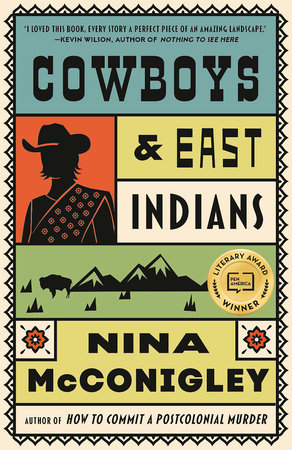
Cowboys & East Indians: Stories — Nina McConigley
Nina McConigley’s Cowboys and East Indians is a collection of ten stories based on her experiences as an East Indian raised in Wyoming. Where most fiction exploring the immigrant experience is set in urban environments, McConigley takes us to the high altitude, windy isolation, and cozy cities of the least-populous state.
McConigley perfectly captures the duality of being pulled in two directions, the culture in which you live and the culture in which your parents and older relatives came from. The dominant complicating factor is how other people see you; because you look a certain way, you are viewed as foreign rather than “American.” In each of these stories, McConigley’s characters attempt to navigate through their home and outside lives. McConigley’s characters are quirky, three-dimensional individuals who are working through strange places, both literal and figurative. She writes with a combination of deep empathy, droll wit, and vivid descriptions of people and places.
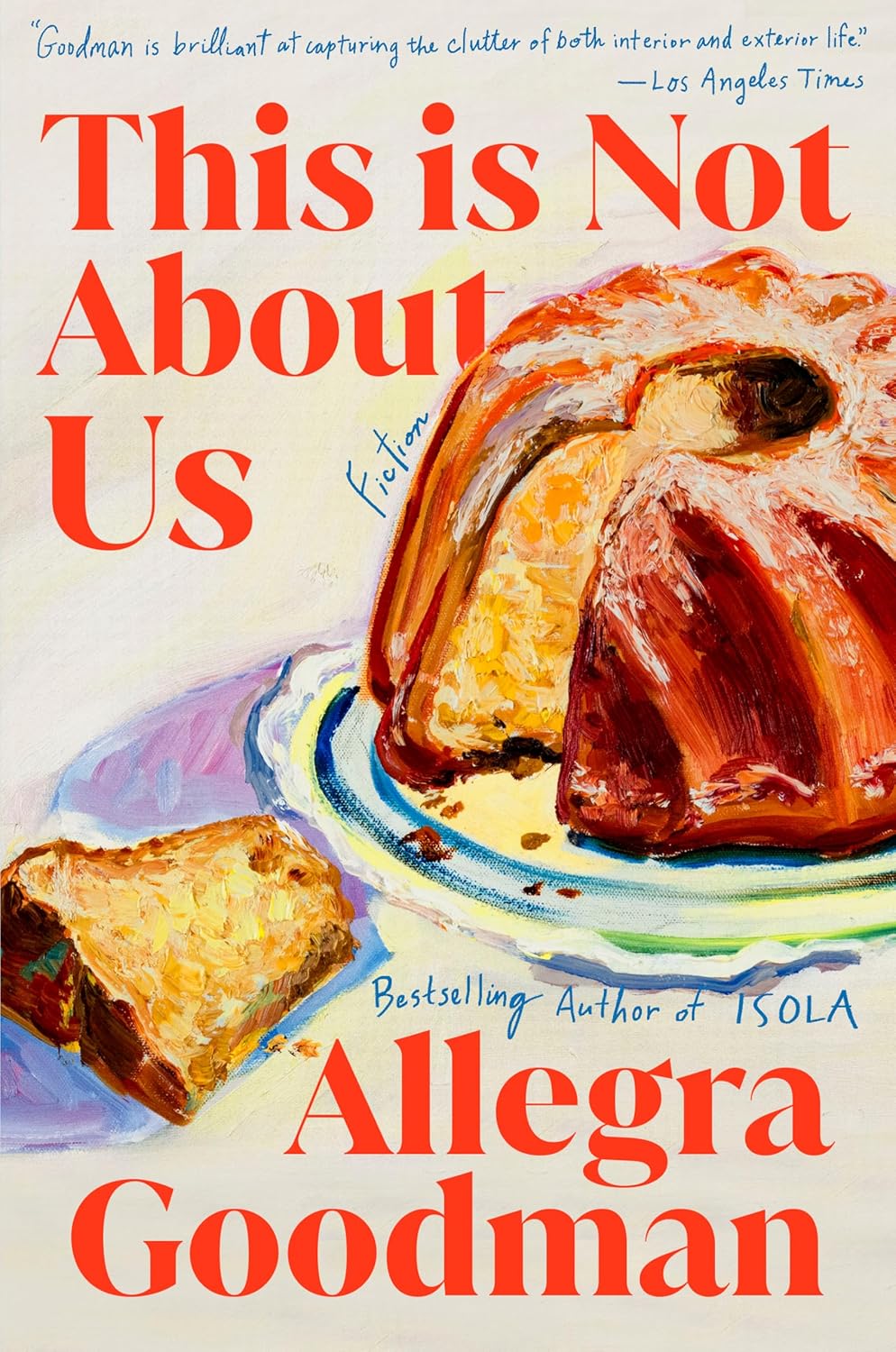
This is Not About Us — Allegra Goodman
Allegra Goodman moves back to family drama after a detour into historical fiction with Isola. This is Not About Us is a series of interconnected episodes (the cover says “Fiction” rather than “A Novel”) about three elderly sisters (Helen, Sylvia, and Jeanne), their children and, eventually, their grandchildren.
While the family is Jewish, their level of Jewish observance varies widely, and the members’ lives allow Goodman to explore many aspects of family life, a range of personality types, and several sociocultural issues. It’s an affectionate but unsentimental portrait of a sprawling American family that depicts their very human strengths and weaknesses and their attempts to stay close despite the usual, and in some cases unusual, conflicts. This is Not About Us stands out for its sympathetic depiction of elderly, middle-aged, and young characters, the interconnected and often shifting relationships within an extended family, and the crisp and often funny dialogue.
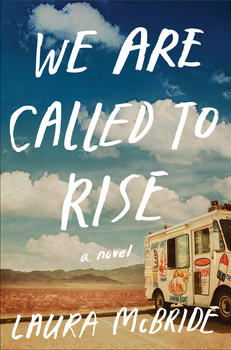
We Are Called to Rise — Laura McBride
Laura McBride’s debut novel captures the times in which we live with a story that skillfully weaves four narrative strands into a compelling and unforgettable tapestry. Set in the neighborhoods of Las Vegas, We Are Called to Rise tells the stories of a middle-aged woman whose marriage has suddenly collapsed, an eight-year-old Albanian immigrant boy whose family is struggling culturally and economically, and a recently returned Iraq War vet with a head injury and PTSD. The fourth narrator, who appears occasionally, is a social worker who becomes a Court-Appointed Special Advocate (CASA) for the boy.
The lives of these characters intersect in a moment of violence that is shocking and yet seemingly inevitable. Although alternating narrators can sap the momentum from a novel when not done well, McBride keeps the chapters to a manageable length and never keeps a character offstage for long. As a result, the story moves at a steady, increasingly tense pace. McBride presents us with a vision of a world in which good people step forward and try to make someone’s life better, in which a “new normal” can come out of a tragedy. In which little things matter immensely.
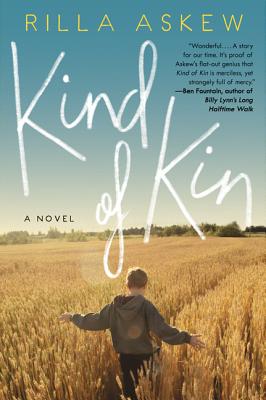
Kind of Kin — Rilla Askew
Rilla Askew deserves high praise for managing to explore the lives of those on both sides of the immigration issue without turning it into a one-sided screed. While Askew’s position is clear, Kind of Kin uses multiple narratives to put us inside the kaleidoscope of immigration politics at the national, state, and local levels. The novel’s protagonist is Georgia “Sweet” Kirkendall. Her father, Bob Brown, a taciturn but respected local mainstay in the tiny town of Cedar, Oklahoma, has been arrested for harboring undocumented immigrants in his barn, to the surprise and disappointment of friends and family. Even more strange is the fact that he refuses to hire a lawyer or put up a defense.
His parentless grandson, 10-year-old Dustin, is forced to stay with Sweet, who is already struggling with her own son, a young bully, and her husband, who works long hours out of town and has grown emotionally distant from his wife and son. At the same time, Luis Celayo has entered the U.S. illegally to search for his long-lost sons, who went north to work. The plot is enriched considerably by the fact that Sweet’s niece, Misty, is married to an immigrant who has been deported but has made his way back into the country. Then Dustin disappears, and the hunt for him drives the story to its dramatic conclusion.
Kind of Kin is a deeply involving story whose headlong momentum makes you turn the pages faster as the novel progresses. Kind of Kin would make a great choice for book clubs, as there is much to chew on within its 400 pages of powerful prose.

The Five Wounds — Kirstin Valdez Quade
The Five Wounds follows the Padilla family of Las Penas, New Mexico over the course of a year. Amadeo is a feckless 33-year-old living with his mother Yolanda; he’s unemployed and spends his days watching TV and drinking beer. It’s Holy Week and Amadeo has been given the role of Jesus in the Good Friday procession performed by the local Catholic men’s group. It’s the leader’s hope that this will put Amadeo on the right path after many years of self-destructive living. To everyone’s surprise, he is fervently committed to this chance at a rebirth and is preparing in the best method acting style.
But then his estranged 15-year-old daughter Angel shows up at Yolanda’s house, pregnant. She’s been fighting with her mother, Marissa, and decides to bail out after being verbally abused by Marissa’s live-in boyfriend. She has nowhere else to go and hopes Yolanda, the family’s heart and soul, will take her in and help her with the baby. And maybe she’ll be able to develop a relationship with her father, who has maintained a hands-off approach to parenthood. She’s been kicked out of school and is now enrolled in the Smart Starts program for teen mothers. She’s the best student in the class and has found a surrogate mother in her young teacher, Brianna, who is smart and caring and imposes some structure and discipline on Angel’s chaotic life. She also develops a love-hate relationship with her troubled but charismatic classmate, Lizette, from which she learns some lessons outside of the classroom.
Valdez Quade has a gift for bringing these flawed but very human characters to life. Like our own family members, they can be supportive and loving but also unpredictable and frustratingly stupid and stubborn. You’ll alternate between wanting to hug them and give them a good shake. They misunderstand each other, nurse grudges, marinate in their low self-esteem, and seem to have little to no luck. But Angel’s presence (and the looming arrival of her baby) is the catalyst for a series of events that manage, ever so tenuously, to pull things together.

