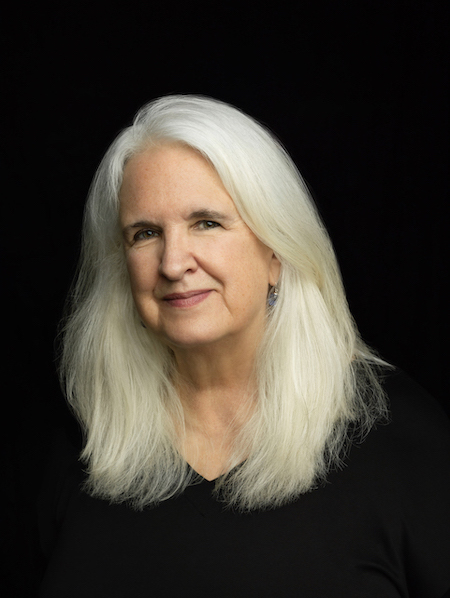
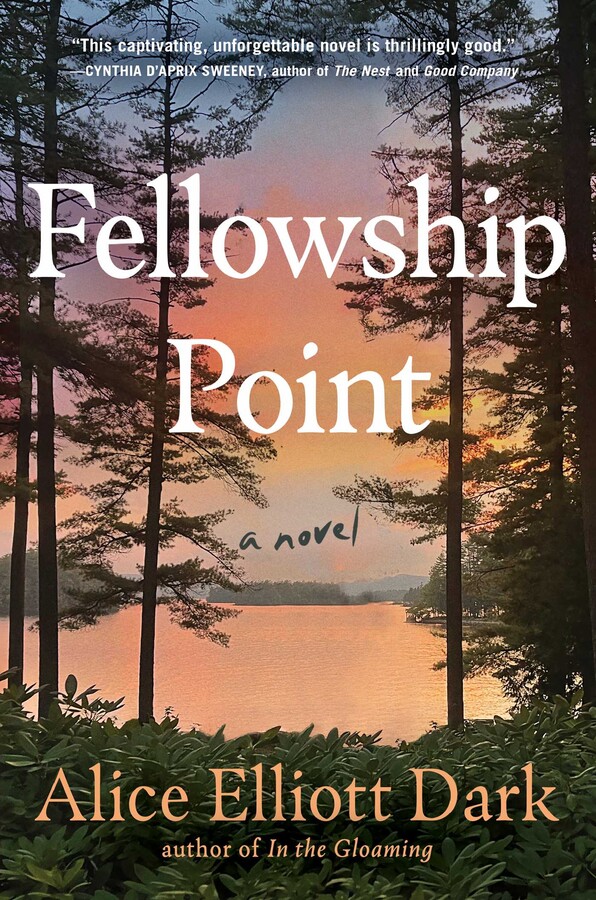
This week’s guest author post gives readers an up-close look at how one author revises her work-in-progress. I’ve always enjoyed learning about the elements of the creative process at this kind of granular level. If you haven’t read the work of Alice Elliott Dark, start with her most recent novel, Fellowship Point (2022). I also recommend her Substack newsletter, Alice on Sunday.
In the middle of January, I began to revise a novel.
I pressed send on June 1 and will have another round of minor edits to make, but essentially it is what it is, and I’m waking without thinking of what to jettison from the work of the previous day, I’m sleeping without bolting up in the threes with absolutely clarity about a change that must be made, I’m thinking about the next book, I’m back to Substack. Yowza. It has been a trek.
No one can offer anyone else a definitive method for revision, we are all queer fish and swim in our own channels, but I am going to share my notes here about how I went about it this time around.
It has become a habit to not only make daily notes in a log about how things are going, and also a set of notes at the end, to capture a sense of how I completed the task. Self-knowledge is such a part of making any art, and the more clearly you see yourself at work, the better you can understand your own patterns. It’s useful to have these summaries; looking back, I may notice that this isn’t the first time I have hit a wall ¾ of the way through, or that I always suddenly have a much better idea for a story or a much better angle on this one and in either case want to throw out the work I’ve done and start over again.
Should I though? Notes from past work can help me discern whether or not that sudden swerve is legitimate or a jazzy response to things getting harder and murkier in the work at hand. Above all, these notes on my own method is a record of how I did what I did—because I honestly can’t remember without this aid. Going back to the notes in the future will reassure me that I have done it before and can do it again.
Here are the steps I took from January to June to revise this book. I should say that I was both teaching and serving as Director of the MFA program at Rutgers-Newark during these months, so revising happened in the early mornings and on the weekends. I tunnel in when I am working, which doesn’t mean I work all the time; I watch TV; I scroll; I text; I worry. What it does mean is that I don’t make other plans. This can feel excruciating. I miss the rest of life. But locking in works.
1. I gather my notebooks and the feedback emails I received from my readers, my editor, and my agent, and print them out and slip them all into the plastic sleeves of a Sooez binder.
2. I print out favorite articles about revision and slip them into the sleeves too.
I have saved a bunch of revision articles over the years. They serve more as pep talks than instruction manuals—they are the favored methods of the people who wrote them, not me. Still, it helps to read about what they do.
I also print out calendars for the years involved.
3. This is when I should reread the whole manuscript, takes notes, and transcribe the notes I have received onto a single copy, but I don’t. Instead I print out the first chapter and mark it up as I read it. Then I look through my editor’s marked up manuscript to make certain I am addressing her concerns, albeit in my own way. I enter my changes.
I make a list of the character names as I go, note on what page they make their first appearance, calculate their ages again for the years in the text. I write all this down in my latest notebook and hope I can find this list again. I am always yearning for a better system for keeping track of versions and notes. I know there are apps but I prefer to be as analogue as possible.
4. I proceed through a few chapters this way, then print them out and show the changes to Larry, my in-house reader. He always finds things so I go back in and fix those spots, then save each chapter as a new file and hope I remember later what I named it, and continue to move forward. I should say that this process was really two steps forward one back, one to the side, and begin again. I’d spend a few days writing a scene, realizing it was off, and redoing it completely. I often don’t think of the best way to show something until I have written out a way that isn’t quite right. I remember in my early writing days being deflated by having to do things over. Now I know it will happen and there is no point have any feelings about it other than acceptance. This is just the way it is, how my writing goes.
5. At some point I decide what the chapter headings will be, which necessitates making more changes to chapters I’d finished. I chose the days and looked up the weather for those days and adjusted the events to reflect it. Once I knew I was going to do that, I gathered all the possible chapter headings in one spot and matched the weather to them. That took a while. I cut out those chapter headings and taped them to the chapters. This was an unnecessary step, but every so often I need to shift to an arts and crafts mode to have the feeling of constructing an object.
6. I send the sections of the book back to my agent and editor for a next round of notes. I also got excellent notes at this juncture from two friends. One set of notes was a hard-core copy edit of Part One which was heavenly. Not much in life is as pleasurable as making sentences better, and the little internal cuts and tightenings she suggested made me mad with joy. Oh to be julienned by a great chef! This reader also called me out on a tic which happened to be her writing pet peeve. I laughed every time she noted it. It had to do with gestures made by eyes, a once you see it you can’t unsee it criticism that has set me straight forever.
7. I should say that while all this is happening I am making notes about new ideas for scenes and snappy comebacks and occasionally flipping back through the notebooks I kept for the book to see if I’d forgotten an earlier idea that I now wanted to add.
8. Next I’m going to try having the book read to me while following along on the screen, in hopes of excising more unnecessary words here and there. I’ve never read the book aloud before and I may not like it, but I’m going to try it out.
9. Then onto final edits. I can hardly believe it. Which is why I need to write these notes. I will forget otherwise.
10. Soon it will be out of my hands and in the publishing pipeline. I feel extremely fortunate that this is the case, and grateful to all who have read bits and pieces so far.
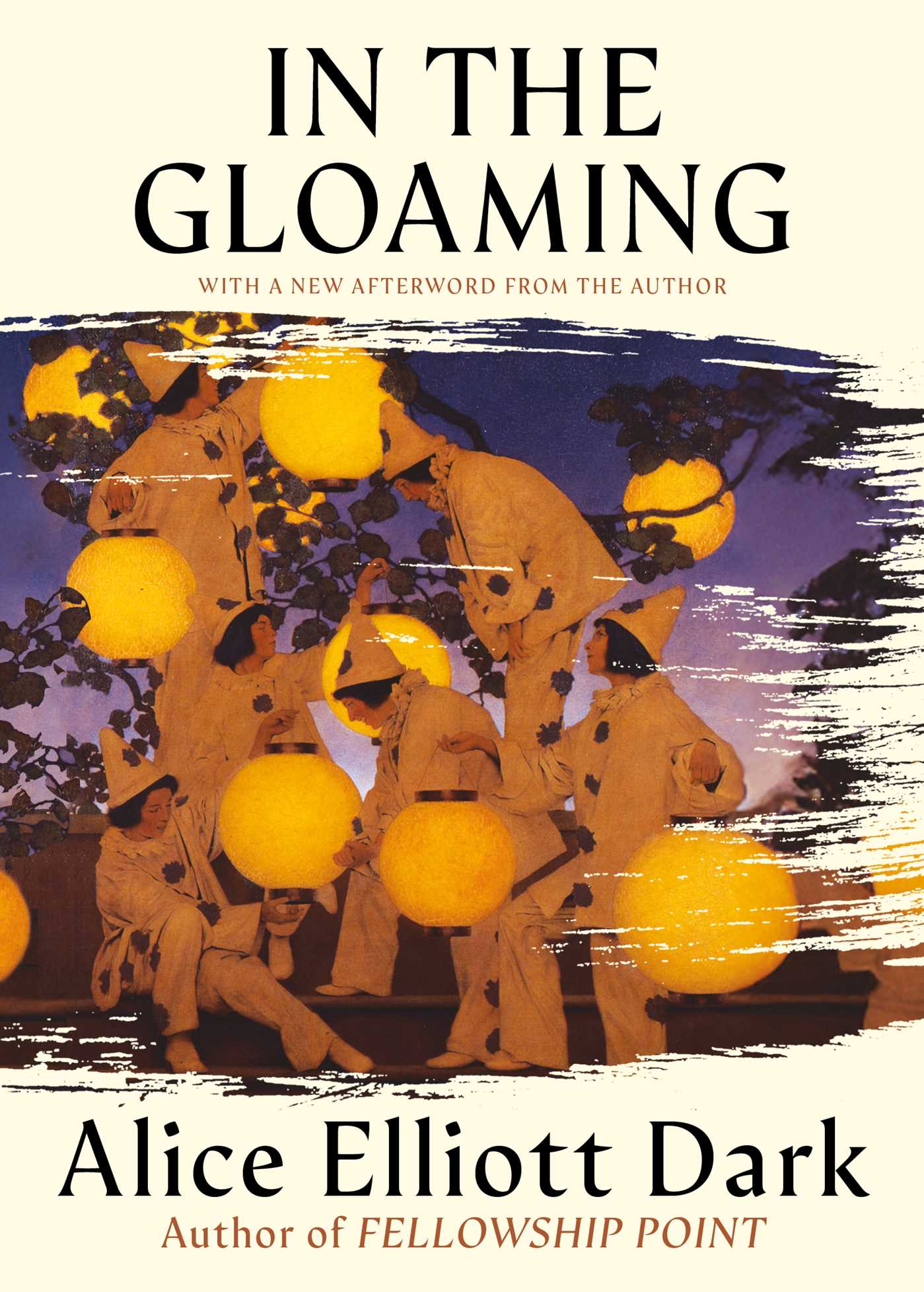
Alice Elliott Dark is the author of the novels Fellowship Point and Think of England, and two collections of short stories, In The Gloaming and Naked to the Waist. Her work has appeared in The New Yorker, Harper’s, DoubleTake, Ploughshares, A Public Space, Best American Short Stories, and Prize Stories: The O. Henry Awards, among others, and has been translated into many languages. Her story “In the Gloaming” was chosen by John Updike for inclusion in The Best American Short Stories of the Century and was made into films by HBO and Trinity Playhouse. Her non-fiction reviews and essays have appeared in The New York Times, The Washington Post, and many anthologies.

