My July 2 post about distinctly American books that make for suitable reading during the USA’s 250th birthday received such a positive response that I decided to share eight more books that either didn’t get enough attention when they were published or have faded from readers’ awareness. I hope you discover (or rediscover) some books that provide you with a satisfying reading experience.
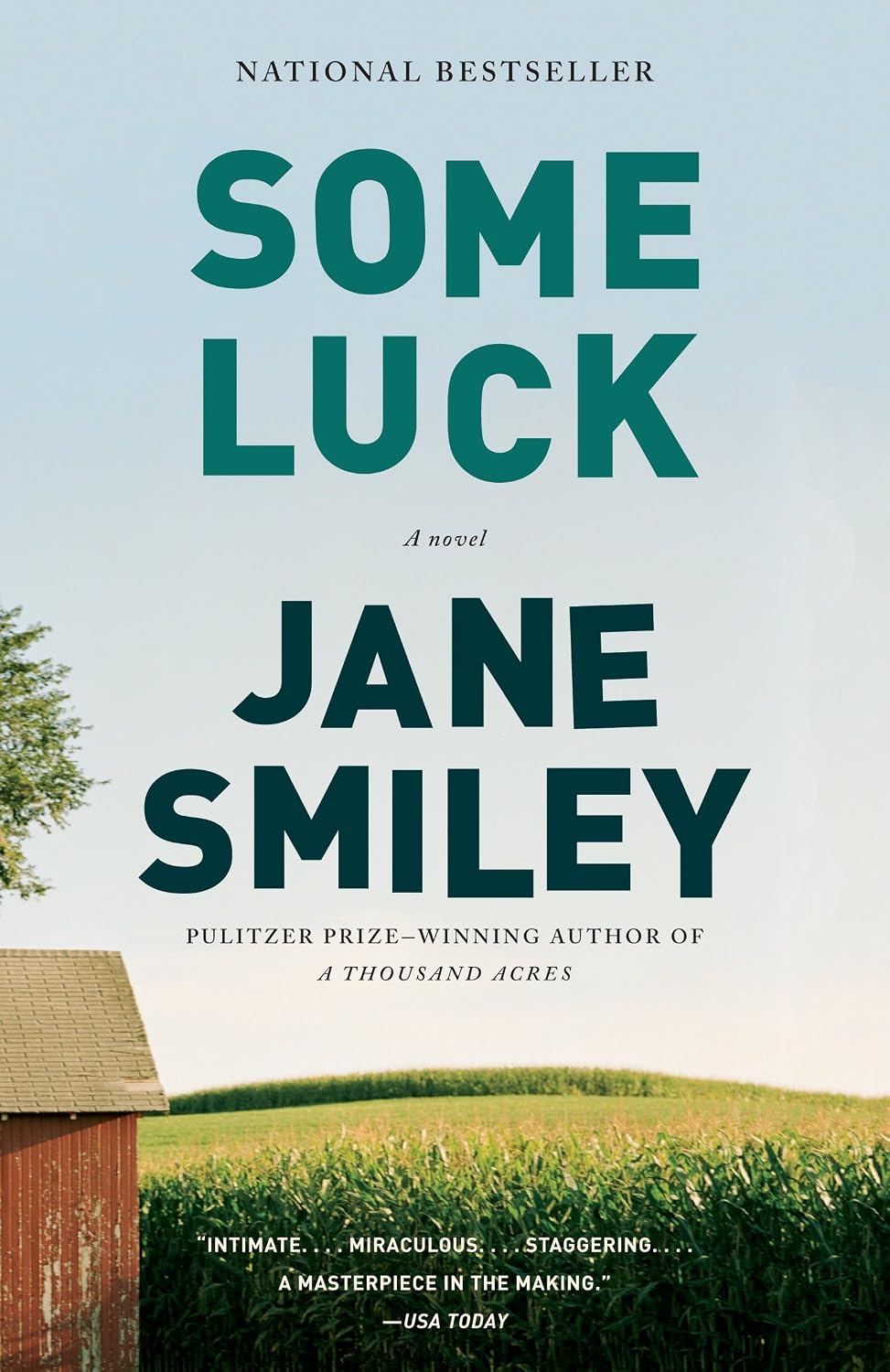
Some Luck — Jane Smiley
Jane Smiley may well have the most diverse body of work of any American author in the past quarter century. The first in the The Last Hundred Years trilogy, Some Luck follows the Langdon family of Denby, Iowa from 1920 to 1953. The novel is organized in 34 chapters, each one covering the key events of one year. We first meet 25-year-old Walter Langdon and his wife Rosanna as they try life on their own farm. In short order, children begin to arrive: the self-possessed and “enterprising” Frankie, sensitive homebody Joey, short-lived Mary Elizabeth, angelic Lillian, bookish Henry, and quiet Claire. In the early going, we are presented with an intimate view of farm life, marriage and family, and the world of the 20s and 30s. As the years and “small” experiences accrue, the characters develop into people you feel you know personally, and Some Luck gains a potent cumulative effect.
Some Luck is reminiscent of Steinbeck’s epic The Grapes of Wrath in the way the narrative alternates between a close-up view of one family’s life and a wide-angle view of the larger world they live in despite their seeming isolation in rural Iowa. Their daily lives are centered on surviving as a working farm family: planting, harvesting, coping with unpredictable crops, equipment, and weather (lightning storms, blizzards, and drought), finding their place in the local community, raising five very different children, and getting along with their English and German in-laws. (Some Luck is also a timely reminder that German and Scandinavian immigrants continued to speak their home languages well into the 20th century, even as they acculturated to the New World and became Americans, and that the various European cultures had a powerful impact on American culture that we take for granted today.)
But the Langdons are affected by events in the outside world like the Depression, World War II (in which Frank serves in Africa, Italy, and France), and the early stages of the Cold War and the communist witch hunts. The two worlds and narrative strands come together as the children grow up. Some of them leave for big cities with their manifold opportunities, while some choose to remain closer to home. Watching the older children fall in love, choose their spouses, and begin to raise their own families is one of the simple pleasures of Some Luck.
Despite the many strengths of Some Luck, it is worth noting that the rigid structure of yearly chapters results in a paradox: we establish a close connection with most of the characters, yet at times the narrative keeps us at a distance. Events fly by with only brief notice, or a major event in one chapter is mentioned briefly, if at all, in the following chapter. This can create a temporary emotional disconnect from the narrative. As one reviewer pointed out, Smiley occasionally sacrifices in depth what she gains in breadth. Still, Some Luck possesses a cumulative power that makes the characters and their lives resonate with you after you’ve closed the book for the last time.

Mary Coin — Marisa Silver
It is one of the most familiar photos of the 20th century: a haggard woman seated in front of a tent and surrounded by her small children looks off into the distance, seemingly pondering her circumstances. Dorothea Lange’s “Migrant Mother” is the iconic image of the Great Depression. We’ve all stared at it, almost willing it to come to life so we can see beyond the lens, talk to the mother, check on the children. Marisa Silver followed that impulse and has brought Lange’s photo to fictional life in Mary Coin. She answers the questions viewers of this photo have asked for the past 75 years: Who is this woman? How did she end up in a tent by the roadside? What is she thinking about? What will happen to her? Will her children be OK?
Mary Coin features three protagonists: Mary Coin (the woman in the photo), Vera Dare (a fictionalized Lange), and Walker Dodge (“a present-day professor of cultural history” at a California university). Alternating their stories, Silver provides an explanation for how Lange and Coin came to meet that day in 1936, as Florence Owens Thompson sat by the road in Nipomo, California.
Silver keeps the narratives separate, adding to the tension as we wait to see how the characters’ lives intersect. Each character is facing struggles both internal and external. Coin has been buffeted by the dusty winds of change in Oklahoma, a difficult home life, and a series of encounters with men that have left her heartbroken and burdened with children and dreams. Dare overcomes a disability caused by childhood polio to discover her passion in photography. Her romantic and marital experiences are a counter-weight to those of Mary Coin.
Walker Dodge is our time machine back to the 1920s and 1930s. In the present, he is trying to maintain balance among his ex-wife, children, and work life. His father has recently passed away, forcing Dodge to return to his home in the San Joaquin Valley, California’s agricultural heartland, to attend to his father’s personal business. They were never close, and Dodge yearns to know more about his father’s childhood and the life of his grandfather before him. The family has always been tight-lipped about their history.
In his scholarly capacity, Dodge studies photographs in an effort to explore the universal experience through particular lives. When he returns home and sorts through the mundane belongings of his father, he finds his way, ever so methodically, to Dare’s photo of Mary Coin. Rather than having Dodge tell us the story of Coin and Dare, however, Silver’s narrator fulfills that task, leaving Dodge to serve as a proxy of sorts for the reader, connecting the characters and their lives into a unifying whole. Just as Dodge’s work involves piecing together the zeitgeist of an era through the lives of ordinary people and the artifacts they left behind, the reader pieces together the lives of these three characters to create a satisfying and enlightening story.
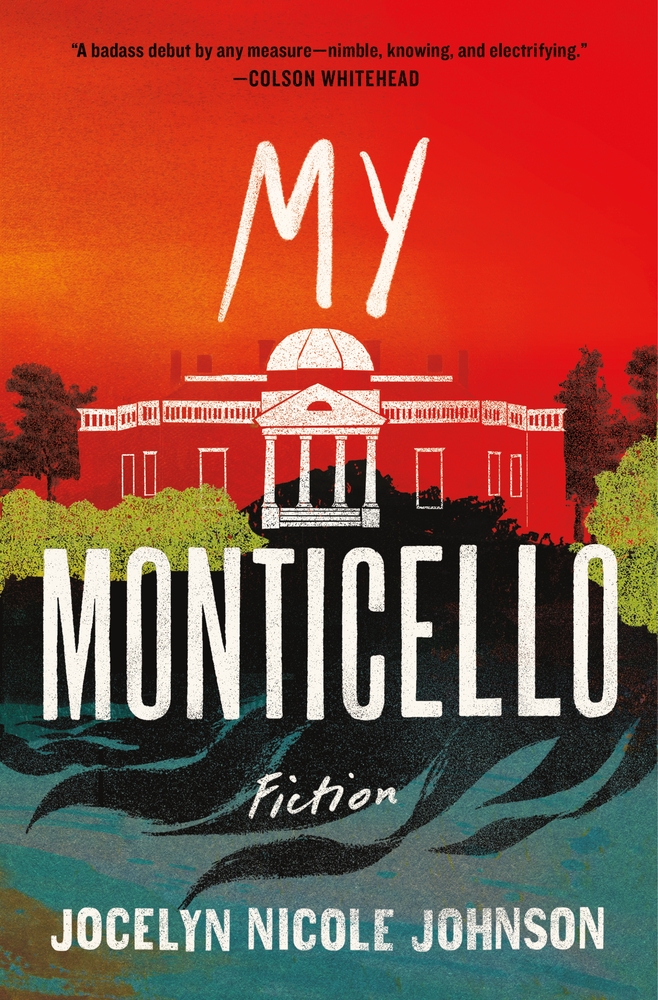
My Monticello — Jocelyn Nicole Johnson
My Monticello, comprising five short stories and the title novella, is a commanding performance by a “new” author in full possession of her writing powers. Jocelyn Nicole Johnson grabs your attention with the opening story, “Control Negro,” and holds it for the next 200 pages. In this story, a university professor has a child with a married grad student and decides to use their son as a sociocultural experiment, anonymously providing him with all the advantages of the “average American Caucasian male.” Not surprisingly, things don’t go quite as the professor planned. Roxane Gay selected “Control Negro” for the Best American Short Stories 2018 collection, calling it “one hell of a story.”
The stories that follow aren’t quite up to that standard but nonetheless display Johnson’s range and talent. “Buying a House Ahead of the Apocalypse” is a biting bullet list of items a Black woman needs to consider in the process of this major purchase. The title character in “Virginia is Not Your Home” decides to change her name and escape her poor rural family. In “King of Xandria” a Nigerian widower who immigrated to Alexandria to provide his children a better life succeeds but ends up feeling disconnected from their lives and American culture.
The heart of the book is the title novella, which is a riveting piece of quasi-dystopian fiction set a couple decades hence in Charlottesville. Taking the “Unite the Right” rally of 2017 as a starting point, Johnson imagines a societal breakdown that leads to white supremacist gangs taking over the city, forcing residents of color to flee. A group of sixteen mostly Black neighbors decides to head up to Monticello, using it as a fortress with a view to the violence below. While the novella could have been simply a page-turner, it is also an absorbing character study of the relationships among these friends, lovers, and families, and an examination of the legacy of life at Jefferson’s Monticello 200-plus years later.
It might sound like “My Monticello” and the accompanying stories are clever, high concept pieces, but Johnson writes with such empathy for her complex characters and the many challenges they face that the collection’s heart remains with you as much as its intellect.

French Braid — Anne Tyler
French Braid is quintessential Anne Tyler. Few writers depict the mundane moments that make up family life as well as she does. Here, we follow the Garrett family of Baltimore over six decades, from 1959 to 2020. Each chapter, set a decade apart, focuses on a different character, so we get to view family members from several perspectives.
Robin runs the family hardware store while Mercy is a stay-at-home-mother who paints when she has time. Robin is resolutely practical while Mercy clearly has mixed feelings about motherhood (a recurring theme in Tyler’s work). But they muddle along until the kids are older, when Mercy rents a room above a neighbor’s garage as a studio and begins to spend more and more time there. Sensible Alice, flighty and boy crazy Lily, and smart, shy David manage well enough with their slightly odd parents and each other. As the decades pass, their children enter the story, taking us through Robin and Mercy’s sunset years. Like all Tyler books, the dialogue is so natural and spot-on that it will have you laughing and wiping away a tear even if you don’t adore her characters.
Tyler is, as always, astutely observant and honest about these people, but her light touch makes the narrative essentially compassionate. It’s a tribute to her skill that most of the characters are not especially likable, but they are very human. Their flaws and eccentricities make them recognizable. If we don’t necessarily have someone like these people in our family, we probably have members who interact in similarly inconsistent and frustrating—and occasionally endearing—ways. It’s because we know them intimately and our lives are so closely connected that we also (usually) tolerate or even indulge them. Each family is its own world, with its own gravitational pull, for better or worse.
As youngest child David realizes once he is a parent, families are like a French braid. “You think you’re free of them, but you’re never really free; the ripples are crimped in forever.” Washington Post book critic Ron Charles described the essence of French Braid perfectly in his review: “Who captures that poignant paradox so well as Anne Tyler, our patron saint of the unremarked outlandishness of ordinary life?”
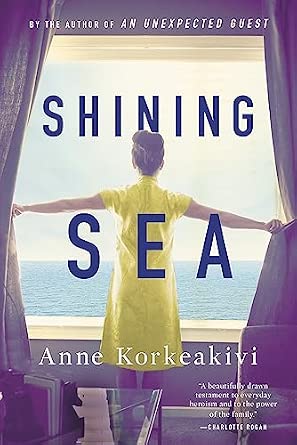
Shining Sea — Anne Korkeakivi
Anne Korkeakivi’s second novel (after An Unexpected Guest) is a family saga set in varying locales ranging from California and Arizona to the UK and Africa and spanning the years between World War II and 2015. Across five “books” she immerses us in the life of the Gannon family, starting in 1962, when 43-year-old Michael Gannon, a WWII vet, suffers a fatal heart attack while painting the house. He leaves behind his beloved wife Barbara, four children, and an unborn baby girl. Death is the unexpected guest in Shining Sea, which explores the seemingly endless ripples Michael’s death — and war generally — causes in the following decades.
The story moves in leaps and bounds through the years, using key social events to shade in the context of the family members’ lives and effective flashbacks to fill in key details from the intervening years. Barbara holds both the family and the story together with her unfailingly generous spirit. Eventually, the story shifts focus from Barbara to middle son Francis, a sensitive soul cast adrift by loss. We follow him to Woodstock, seven years after his father’s death, and later to London’s late 60s “groovy” scene and then to the Inner Hebrides islands off Scotland. Rebellious older daughter Patty Ann struggles with the consequences of repeated poor judgment but gives her mother a grandson whom she adores and who provides light at the end of this often dark novel.
Shining Sea reminded me of a compressed version of Jane Smiley’s Hundred Years Trilogy (Some Luck, Early Warning, and Golden Age). While the latter covers twice as much time, concerns many more characters, and is written with far more detail, Shining Sea has a similar impact. In particular, the novel surprised me with its emotional punch. I was skeptical that Korkeakivi could write a family saga with serious issues at its core in less than 300 pages, but to a large degree she has succeeded. The key to the artistic success of Shining Sea is Korkeakivi’s ability to move the plot and develop her characters by implication; she displays a deft hand at knowing when to move quickly and allow the reader’s general knowledge to fill in the background and when to slow down and focus on the moments in the characters’ lives that will define them and affect us.
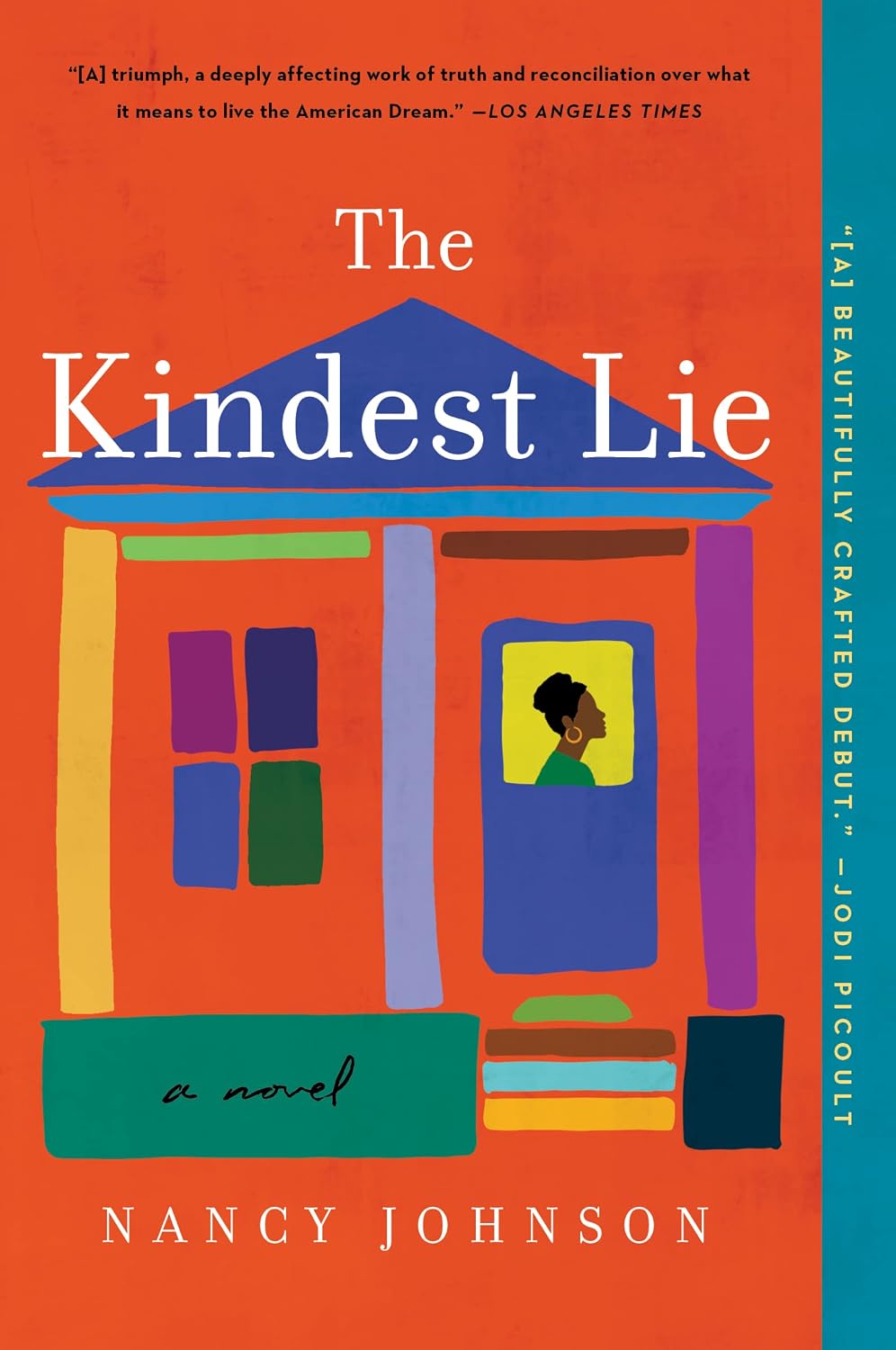
The Kindest Lie — Nancy Johnson
It’s late 2008 and Barack Obama has just been elected president. For a young Black professional like 29-year-old Ruth Tuttle, the future looks bright. A graduate of Yale who works as a consumer products testing engineer in Chicago, Ruth is married to Xavier, a PepsiCo marketing executive who adores her and is excited about starting a family. But instead of looking forward, Ruth is drawn back into her past – a past she has kept secret for 12 years. As a high school senior about to leave her tiny Indiana town for the Ivy League, she became pregnant. Her grandmother, who has raised Ruth since her drug addicted mother abandoned her, convinces her to give up her baby boy for adoption so she can create a new life for herself at Yale.
Just before Christmas, Ruth finally reveals her secret to Xavier, who is upset that she didn’t trust him enough to tell him earlier in their relationship. This bombshell creates a rift that sends Ruth back to Ganton in search of answers . . . and herself. Before she can become a mother again, Ruth needs to sort out exactly what her teenage motherhood means. Her humble hometown has fallen on even harder times. The main industrial employer shut down its factory, sending many local men into unemployment and self-doubt that is fracturing families and futures. Although Ganton is racially divided, both geographically and socially, the economic hardship has hit everyone.
The core of The Kindest Lie is Ruth’s preoccupation with learning what happened to her son. In searching for information about him from Mama and Eli, she discovers that the story she’s told herself for a decade is incomplete. Ruth’s Christmas visit to her hometown leads her down paths she hasn’t taken in a decade, revisiting people and events she has mostly ignored since she went away to college and settled into her upper middle-class lifestyle in downtown Chicago. She realizes she has been distant from her people and parts of herself for too long.
The Kindest Lie skillfully examines the cost to Ruth and her family of achieving her American Dream. She has been lied to — and she has lied to herself — about her past. In sorting out what really happened and why, she struggles to find enough peace of mind to create a future with some kind of happiness.
News of the World — Paulette Jiles
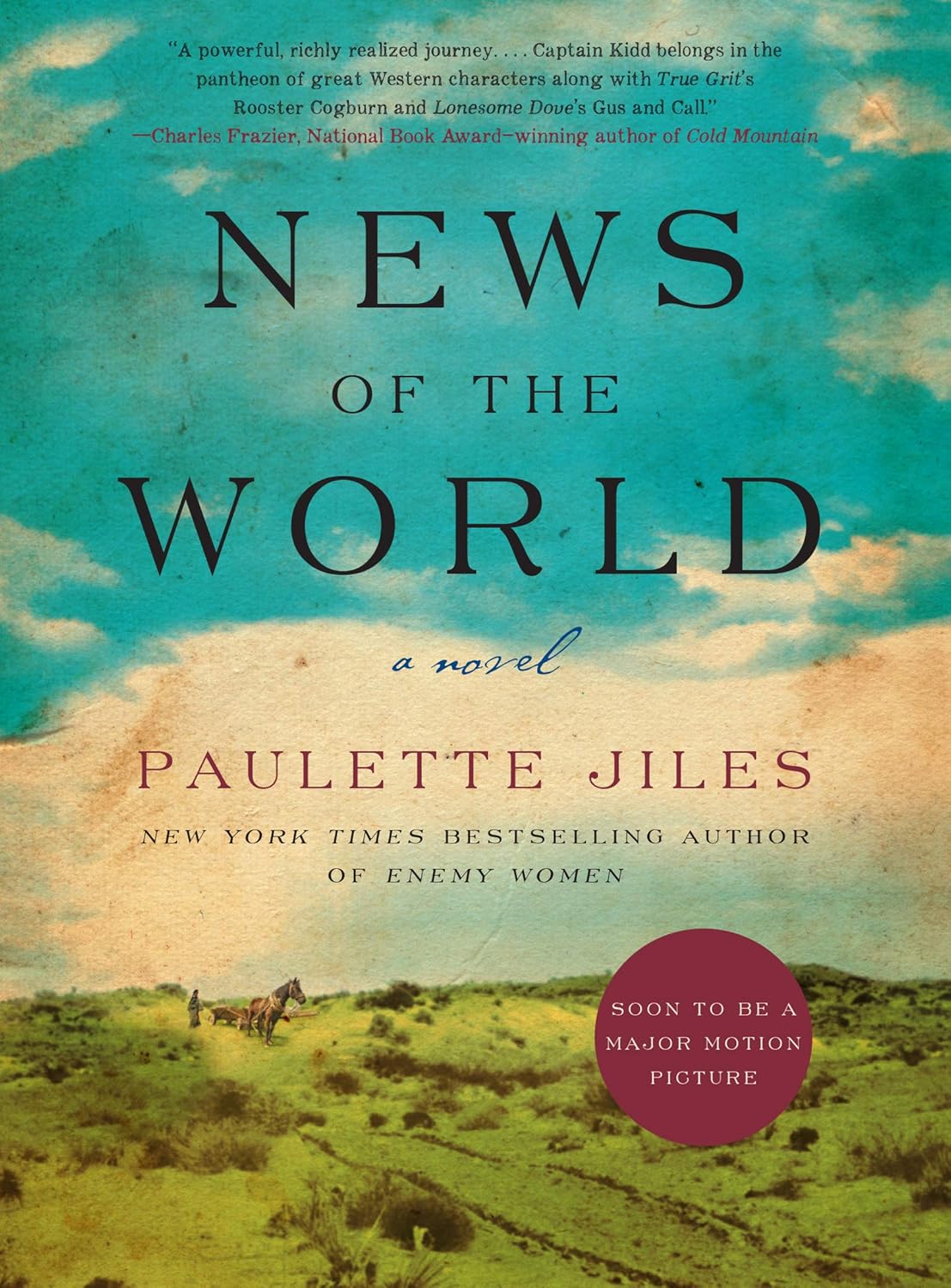
News of the World belongs in the elite group of Old West novels that includes Lonesome Dove and True Grit. This short novel, set in Texas in the post-Civil War years, tells the story of a retired military man-turned-news reader, Captain Jefferson Kidd. While in Wichita Falls to read the news to the isolated locals, he is offered a $50 gold piece to return a young orphan girl to her relatives near San Antonio. Johanna Leonberger was kidnapped at age six by a Kiowa raiding party, and her parents and sister killed. After four years, she is rescued by the Army; but Johanna has been transformed from a blonde-haired, blue-eyed German immigrant girl into a Kiowa who speaks no English and wants nothing to do with the white man’s world or white-haired Captain Kidd. He is reluctant to get involved but sees no other way for her to be delivered home. As a military man, he understands duty.
News of the World immerses the reader in a time and place that most of us know little about: Texas in 1870, two decades after it has been obtained from Mexico in the Treaty of Guadalupe Hidalgo and five years after the end of the Civil War. It is still a mostly lawless land, where a trip from Dallas to San Antonio, 400 miles southwest, is considered dangerous and borderline suicidal. Yet Kidd sets off on this “fool’s errand” with an uncommunicative ten-year-old Indian girl in the back of his wagon. It will come as no surprise that Kidd and Johanna slowly learn to trust each other and then to communicate. Kidd is a widower with little but his news reading travels to occupy him and a hole in his heart where his wife Maria Luisa once resided. So while their developing relationship is predictable, the details provide all the pleasure.
On their journey south, the Captain and Johanna – which she pronounces “Cho-henna” — encounter Army men, a child prostitute trafficker, a collection of crazy brothers who want to know why they’re not in the newspapers, and other colorful and occasionally threatening characters. The Captain gives Johanna English lessons and they discover that she remembers some German from her early childhood. At the same time, she proves to be an astute observer of human nature in both the Captain and the strangers who cross their path, as well as an independent girl with a variety of skills learned in her four years with the Kiowa. Watching their relationship develop is the novel’s chief satisfaction. The other pleasures of News of the World are Jiles’ pitch perfect voice, with its authentic Old Texas sensibility and droll dialogue, and her prose poetry descriptions of the natural world in this mostly empty land.
Underpinning this traditional story is the pragmatic but compassionate soul of Captain Jefferson Kidd. One feels honored to meet this man and get to know him. The world has brought the news to the Captain, and the story of these two vastly different survivors and their second chance at experiencing a sense of family is touching and memorable. It is no surprise that News of the World was a finalist for the 2016 National Book Award for Fiction.
Friendswood — Rene Steinke
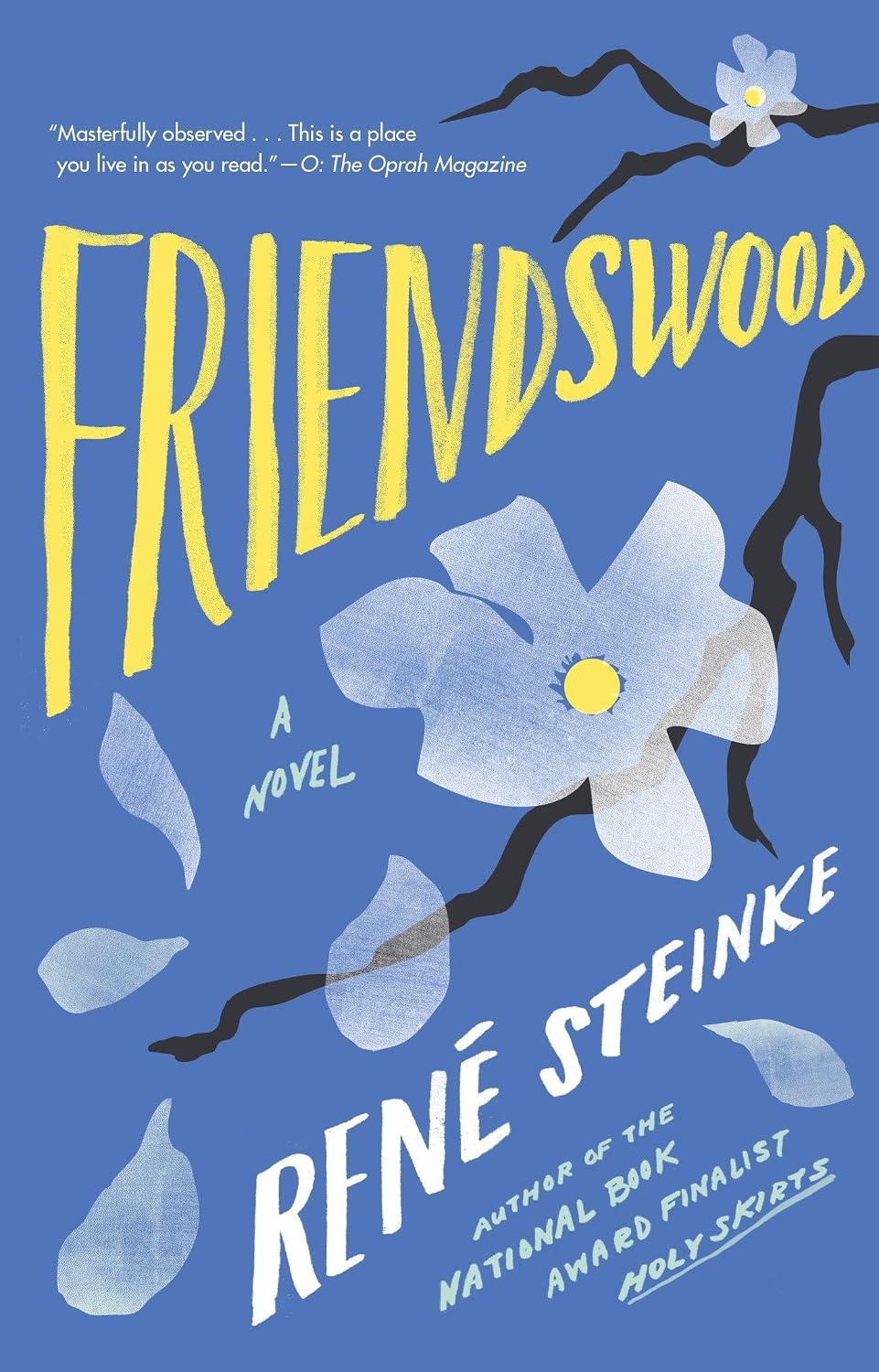
Friendswood explores two issues that are seemingly discrete but are actually intertwined: corporate polluters turning a residential neighborhood into a toxic waste site and sexual abuse by high school athletes in a small town that worships football. In both cases, the immoral and possibly illegal behavior of privileged actors is indulged by the majority, who value economic growth and athletic prowess over questioning their way of life, the choices they make, and the cost of both.
The narrative is shared by four characters. Lee is a mother turned single-minded environmental activist when her teenage daughter Jess dies from a strange cancer. Jess’s death eventually drove Lee and her husband apart; now her life revolves around her part-time job in a doctor’s office and monitoring the adjacent property, the site of a former refinery. When she discovers that the site is belching toxins from the soil again, Lee moves from vigilant to vigilante.
Hal is a former mediocre high school athlete struggling to make a living in real estate; he is living vicariously through the athletic exploits of his son, Cully, and hoping that a recent religious rebirth will save him, his business, and his wilting marriage. Willa is a 15-year-old student with an artistic streak and an eccentric persona that doesn’t fit easily into the culture of this small town located between Houston and the Gulf. Dex is a classmate of Willa and Cully with more on his mind than just football and girls. Their lives intersect in ways they could not predict, even though readers probably can.
Time has passed since the toxic cleanup and town leaders believe part of the former refinery property is safe for new residential development. Big shot developer and former football star Avery Taft wants to bring this project to fruition, and Hal is desperate to persuade Taft to retain him for his realtor services. Lee has discovered worrisome materials during her nocturnal prowling behind the fences and attempts to alert the few influential people who are sympathetic to her unpopular obsession. Dex develops a romantic interest in Willa, as Cully begins to see her as an easily manipulated potential conquest.
The two plot strands overlap in the sense that each involves predators steadily moving toward their distracted prey, while one good-hearted person attempts to intervene to save them. Lee tries to save another round of innocent victims from the health hazards of living near a toxic site. Dex tries to save Willa from the sexual predators and opportunists on the football team, as well as from the town’s illusions about her.
Steinke grew up in the actual Friendswood, Texas; she knows that football, religion, and the oil business are often the Holy Trinity in such places.


I keep telling people, if you want a quintessential book about early America, read “Thanksgiving” by Ellen Cooney. Trust me, it is amazing! She starts with pilgrims, and shooting a turkey for dinner, and then jumps chronologically through 350 years, with a different dish from the meal.
LikeLiked by 1 person