A couple years ago I began posting pieces in which I recommended books that I thought had been overlooked upon their publication and then forgotten amid all the noise surrounding new books. These articles got a stronger response than I expected, so I’ve continued to post them every few months.
So here are eight impressive books that you might have missed at the time, or perhaps you added them to your TBR list but they got lost in the shuffle as time passed and all the bright, shiny buzz books commanded your attention. Now it’s time to read these books!
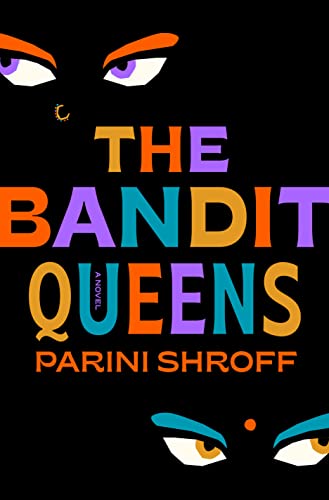
Parini Shroff’s debut, The Bandit Queens (Ballantine Books, 2023), is set in a village in India where things are about to get strange — and then change. When Geeta’s abusive husband disappears, residents of her village believe she killed him. When she realizes they now respect and fear her, she keeps the truth to herself. But when a woman asks her to help murder her abusive husband, she reluctantly agrees.
Thus begins a darkly hilarious story of a group of Indian women fighting back against widespread misogyny and taking control of their own lives. Geeta is inspired by the exploits of the actual Bandit Queen, Phoolan Devi, a lower caste Robin Hood who went on to become a politician before being assassinated in 2001 at age 37. The Bandit Queens is both a story of the power and complexity of female friendship and the injustices caused by India’s caste system, sexism, and corruption. Although it has serious things on its mind, it reads like a revenge thriller and is further enlivened by some very funny dialogue. Shroff, a Bay Area attorney, has written an impressive debut that will keep readers turning the pages to find out what crazy thing will happen next.
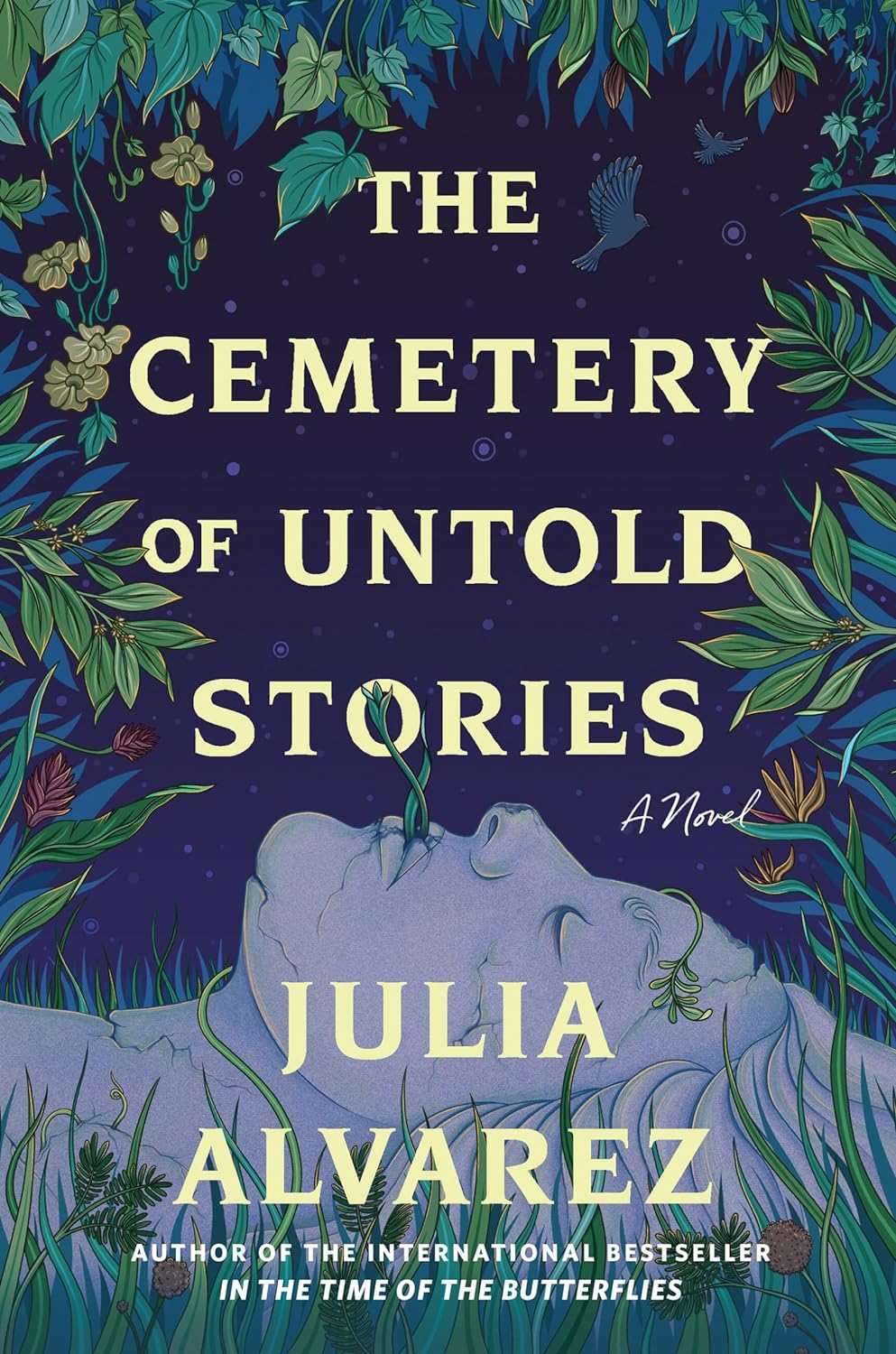
The Cemetery of Untold Stories — Julia Alvarez (2024)
The Cemetery of Untold Stories is the tale of a successful Dominican American writer nearing the end of her career who wants to avoid the fate of a writer friend who became obsessed with finishing her novel, to her detriment. When Alma Cruz inherits a small piece of land in Santo Domingo, she decides to turn it into a cemetery for her unfinished work, believing the ritual burial of her boxes of manuscripts will placate the story gods and calm her own soul. But the stories refuse to rest in peace. The protagonists begin to speak to Filomena, the caretaker, telling her their stories.
The narrative alternates between the present and the past as Bienvenida Trujillo, the wife of the Dominican Republic’s former dictator, Rafael Trujillo, and Dr. Manuel Cruz, a dissident who fled to the United States, tell their complicated and riveting life stories. We learn about the immigrant experience, the sacrifices made for love and family, and why certain stories are never told but should be. I loved watching Alma settle into a quiet life in her working-class neighborhood, her touchy relationship with her sisters, the way Filomena blossoms under the influence of Alma, and the depiction of the various lives Dominican immigrants and their children ended up living in the U.S.
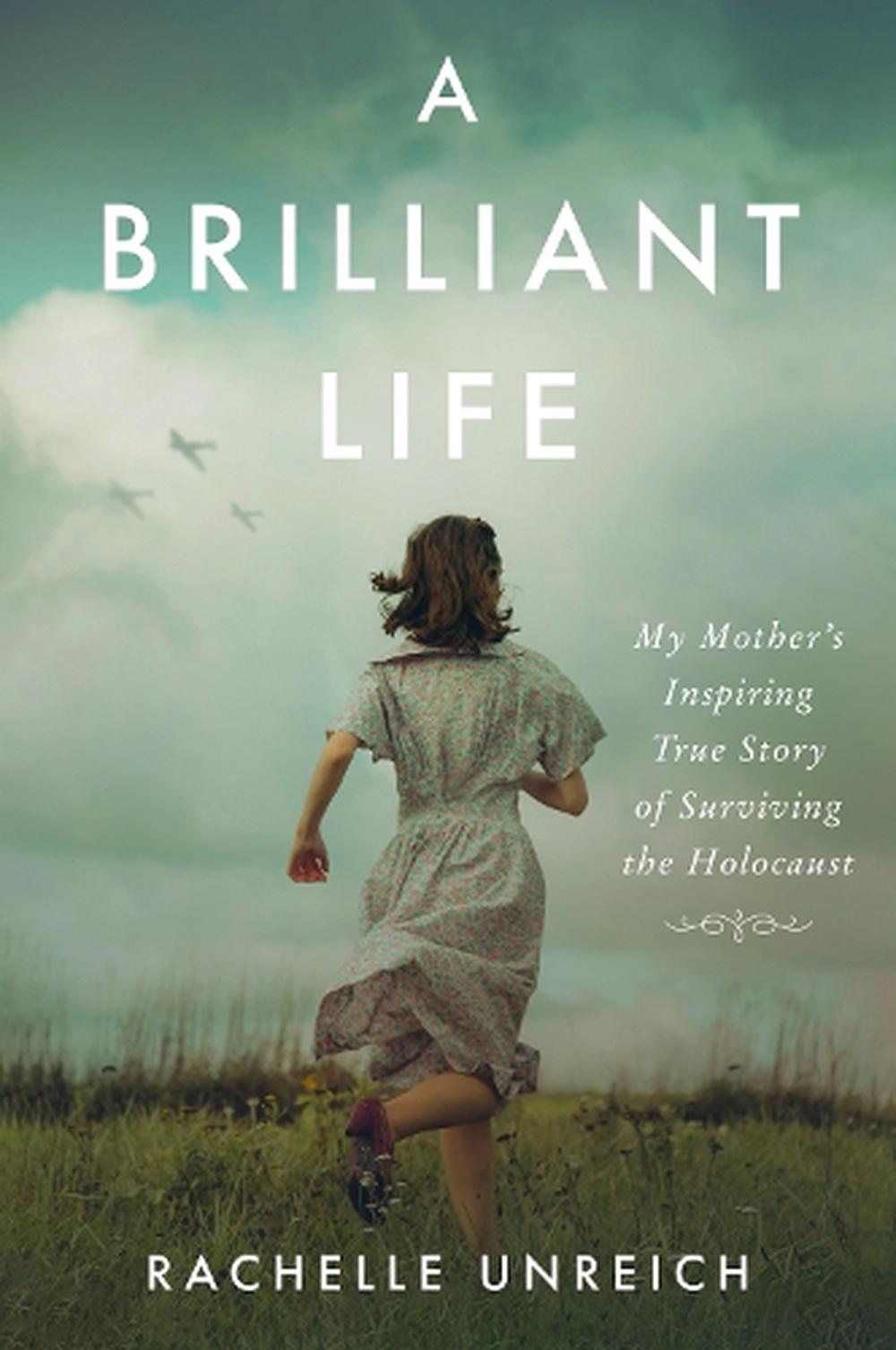
A Brilliant Life: My Mother’s Inspiring True Story of Surviving the Holocaust – Rachelle Unreich (Harper, 2023)
There are a lot of books about the Holocaust, so I’m selective about the novels I read that are set during that time. (The Postcard and We Must Not Think of Ourselves are must-reads.) Generally, I prefer memoirs and nonfiction like All the Frequent Troubles of Her Days by Rebecca Donner, which won or was a finalist for virtually every award. A Brilliant Life is the latest biography to impress me.
Rachelle Unreich tells the remarkable story of her mother’s early life in Czechoslovakia before and during the Holocaust. Mira is a charming and optimistic young woman who endures one deprivation and form of brutality after another, yet she manages to survive thanks to her instincts and personality, as well as some fortuitous occurrences. After the war, she emigrates to Australia, where she lived until 2017. When Mira was diagnosed with cancer at age 88, Unreich interviewed her to finally get the full story of her early years and her life as an immigrant. It was then that Unreich was able to make sense of her mother’s past and its impact on her own life. A Brilliant Life explores how Mira built a life after surviving four concentration camps and a death march. It’s an indelible portrait of a mother, wife, businesswoman, and philosopher that you won’t soon forget. It’s impossible not to love Mira.
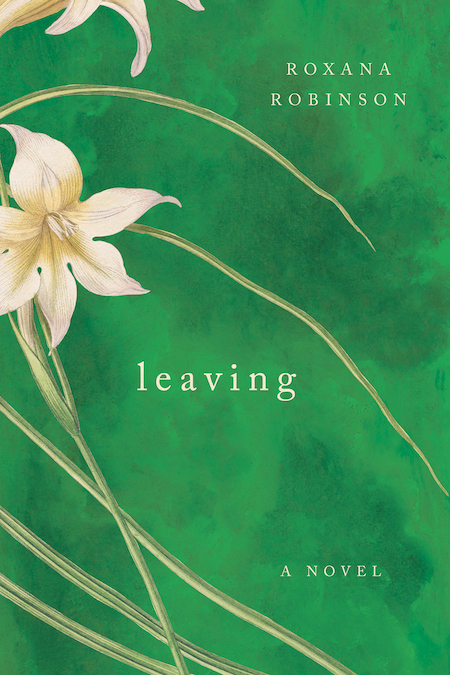
Leaving – Roxana Robinson (W. W. Norton & Company, 2024)
Most stories of passionate love feature young people, but Leaving is the story of two 60-year-olds who reconnect nearly 40 years after their college love affair ended due to a misunderstanding. Sarah is a widow, and Warren is married but unhappy. When he runs into Sarah at the opera, he realizes she was his true love, and their connection is instantly re-established and undeniable.
Robinson expertly handles the fallout from their affair, exploring the many moral and practical consequences of their decision to proceed despite some misgivings. She has created complex, believable characters and examines their thoughts, emotions, and actions with her usual psychologically astute approach. Like the opera at which Sarah and Warren meet in the first chapter, Leaving is about passion, honor, betrayal, and choosing the life you want.
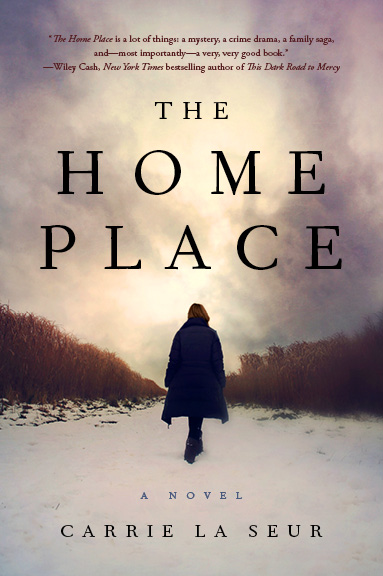
No matter how hard we try to escape it, our past is with us. We may succeed in fooling ourselves and others for a certain length of time, but the past has a way of sneaking up on us and tapping on our shoulder. As William Faulkner wrote, “The past isn’t dead. It’s not even past.” The same axiom holds true for family and place, the two inescapable, powerful sources that shape us. In Carrie La Seur’s debut novel, The Home Place (William Morrow, 2015), her protagonist, Alma Terrebonne, has done everything possible to leave her dysfunctional family and its tragic history behind in Montana. She escaped by earning a scholarship to Bryn Mawr College, where she distinguished herself, before attending Yale Law School. Now, 15 years after the winter car accident that killed her parents and took her younger sister Vicky’s leg, Alma is a hard-charging workaholic corporate attorney in Seattle living the sophisticated urban life. She is content, or has at least persuaded herself that is the case.
But a phone call from Billings changes everything. Vicky has been found dead of exposure in one of the city’s drug-infested neighborhoods, and Alma is called home to help arrange for the funeral. Alma returns home warily but with the sense of obligation and honor that has always served her well. Once back in Billings, she learns the details of Vicky’s death, which generally appears accidental but which has also raised a few red flags for Detective Ray Curtis, a Crow Indian whom Alma knew in high school. With her lawyerly mind now fully engaged by a complex problem, Alma works with Curtis to dig out the truth of Vicky’s death from under its mysterious circumstances. While her mind is thus engaged, Alma’s heart is pulled back into the past by her family and their ancestral ranch an hour out of Billings. The Home Place is a character study of Alma’s belated coming-of-age as she faces her family’s tragic past and complicated present, a mystery that becomes increasingly suspenseful, and a love letter to the Big Sky country of southeastern Montana.
Infinite Country — Patricia Engel (2021)
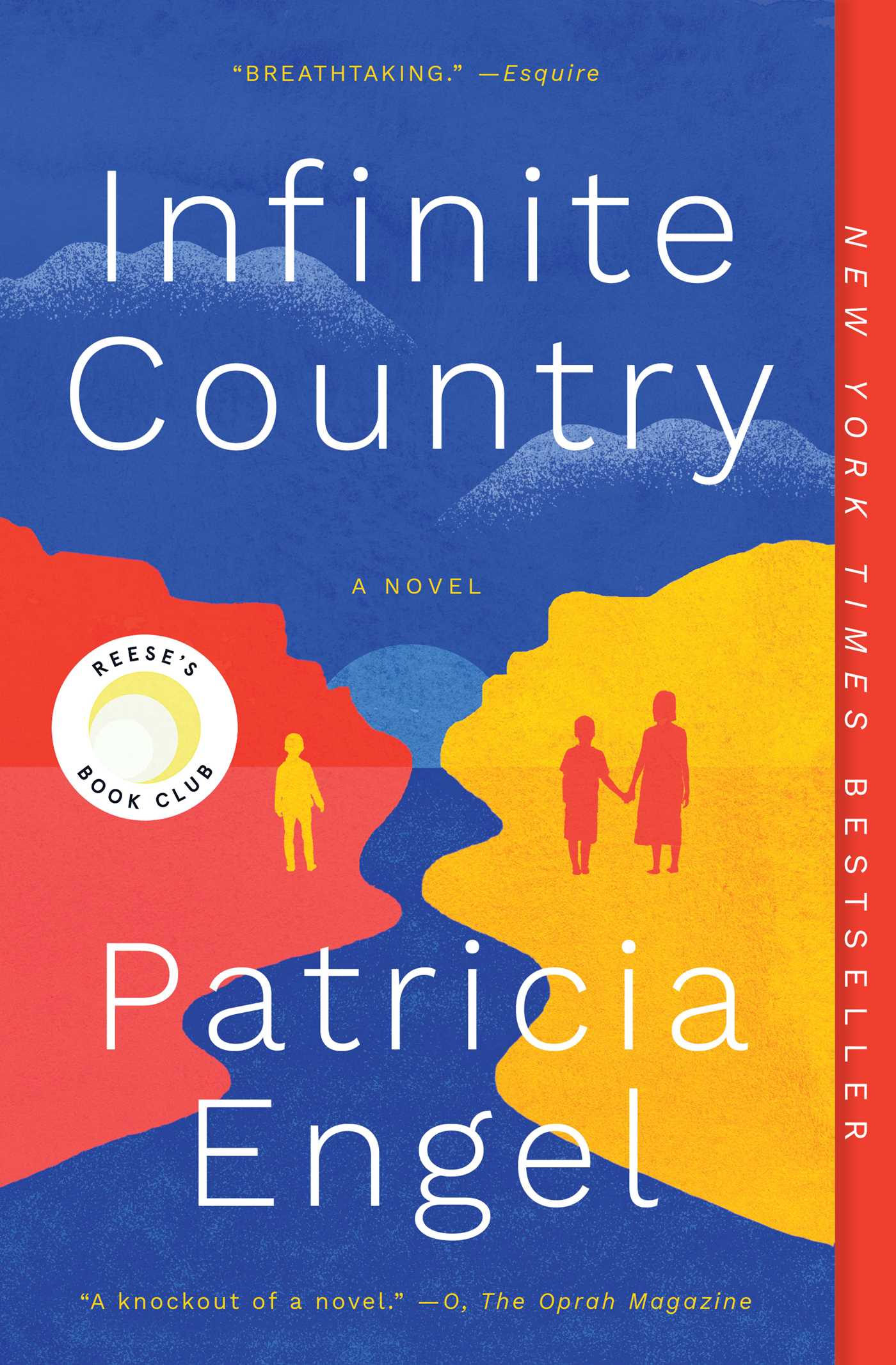
At just 200 pages, Infinite Country is a fast read, but that doesn’t lessen its power. Engel begins near the ending of the story. Fifteen-year-old Talia is in a correctional facility for adolescent girls in the mountains of Colombia following an act of violence. Engineering the escape of several girls and herself, she must find her way home to Bogota, where her father and a plane ticket to New Jersey await. Infinite Country depicts the events leading up to what is actually Talia’s return to America.
It’s the story of a young couple, Mauro and Elena, who decide to abandon Bogota for the chance of a better life in the United States. When they decide to overstay their visa, they become undocumented immigrants. Before long, their family expands with the births of son Fernando and daughter Talia, making them a mixed status family of three undocumented Colombians and two American citizens. The catalyst for the novel’s core narrative is Mauro’s arrest and deportation. As a result, we see how each type of immigration and citizenship status affects the holder and their relationships with other family members. Engel weaves the stories of Talia, Mauro, and Elena into a tri-color cloth akin to the Colombian flag: Talia is the wide yellow band, while her parents are the blue and red bands.
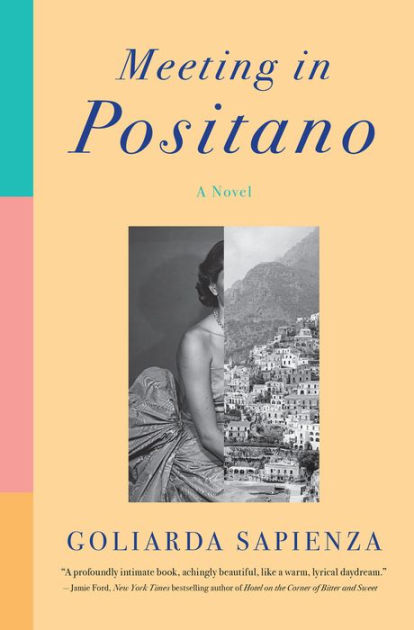
Goliarda Sapienza may be virtually unknown to Americans, but in Italy she was a famous stage and screen actress in the 1940s and 1950s who turned to writing autobiographical works and fiction in the 1960s. Sapienza worked with some of Italy’s most famous filmmakers and became part of the intellectual elite. She was shaped in part by her experiences during World War II. In 1943, at age 19, she took a break from her acting studies to join an anti-fascist brigade, and she remained an outspoken political activist throughout her career. In Meeting in Positano (Other Press, 2021), Sapienza tells a story, based on her own experiences, of an unusual friendship with a mysterious young widow named Erica in the isolated town on the Amalfi Coast during the 1950s, before it became a famous getaway favored by celebrities. It is a tribute to a very specific time and place and to a particularly intense friendship with a woman who could not have been more different.
Erica, in her late 30s, is a wealthy widow, beautiful in an imperfect way, who is lonely and, as she admits, not good at making friends. For Goliarda, it is platonic love at first sight, as she is utterly taken by Erica’s unique appearance and charisma. In fact, most of the residents of Positano–a charming, eccentric group of supporting characters–appear to be in love with her. But no one really knows much about her background. Slowly, the two women, separated by nearly a decade in age, become “the sisters,” as some in the town start to call them. Meeting in Positano is both an intriguing dual character study of two unusual women and a love letter to a town that no longer exists in its charming 1950s incarnation, before new roads made it easier to reach. Goliarda describes Positano as “a place that was still isolated from the barbaric advances of products, merchandise, and urban madness.”
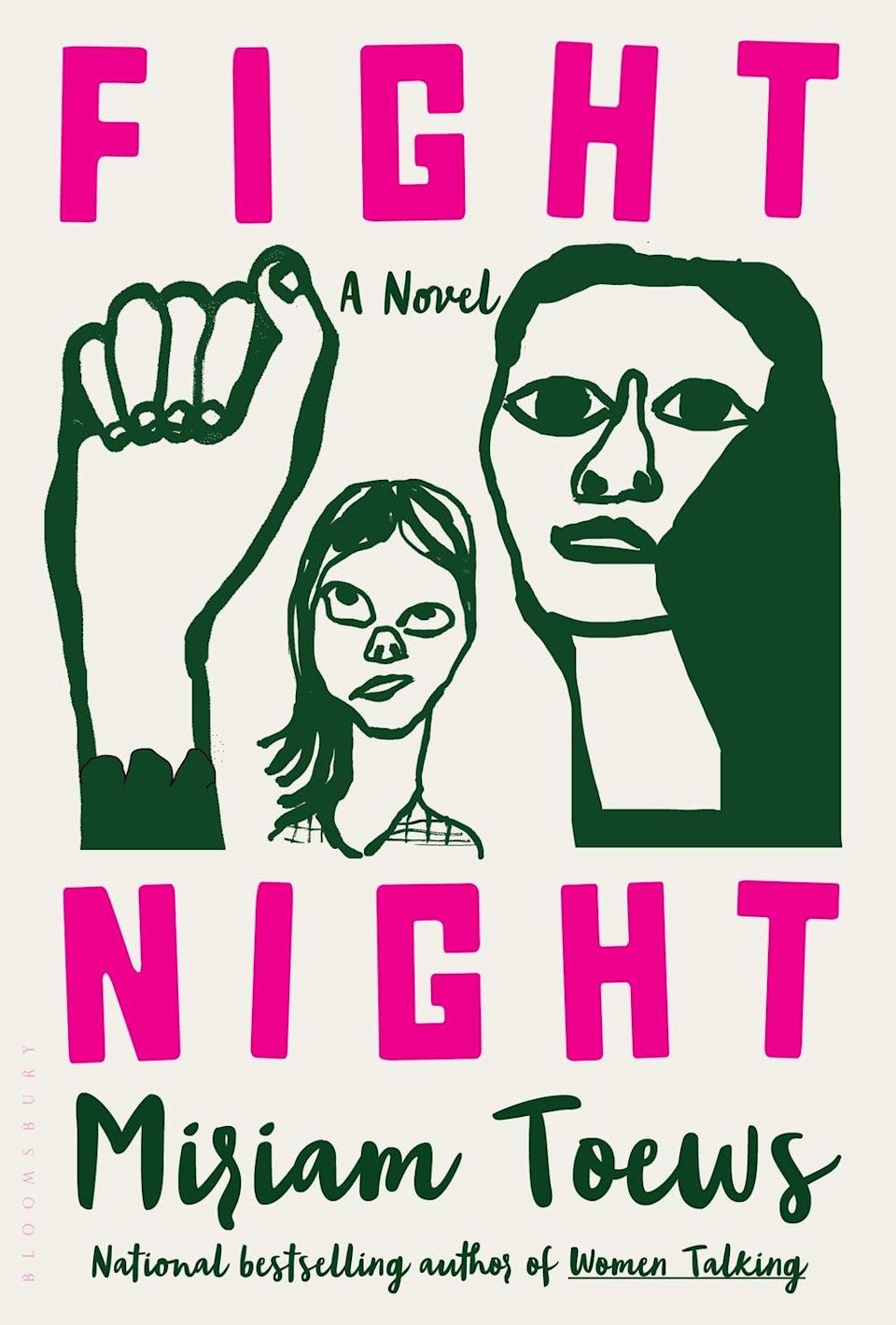
When I began reading Fight Night (Bloomsbury Publishing, 2021), I only knew Miriam Toews as the author of two serious, dark novels about two sisters coping with mental illness (All My Puny Sorrows) and women in a closed religious community fighting back against its oppressive patriarchal culture (Women Talking). But within a few pages, Toews’ new novel had me laughing. And I continued to laugh for the next 250 pages. That’s not to say Fight Night is a lighthearted romp. The context for the humor includes misogyny, religious repression, mental illness, suicide, growing old, and fitting in to a society that just doesn’t understand you.
Fight Night introduces us to three generations of women living in close quarters in Toronto: grandmother Elvira, her pregnant daughter, and her nine-year-old granddaughter Swiv. The narrative is in the form of a letter from precocious Swiv to her father, who has abandoned his wife and daughter. Swiv has been suspended from school for fighting, so she takes care of Grandma, who is suffering from a variety of maladies, and Grandma home schools Swiv in her own quirky, common-sense way. Mom is away most of the time rehearsing for a new play. She is in the third trimester of her pregnancy with a baby they’ve named Gord (quintessentially Canadian) despite not knowing the baby’s sex. In short, their home life is very complicated. Grandma teaches Swiv early on that life involves fighting every day for the right to be yourself and to find some kind of happiness. But the key to her philosophy is to be cheerful and flexible about the obstacles and setbacks she will encounter. When something unexpected comes up, Grandma shouts, “Fun and games!” Elvira was raised in a religious community that Swiv describes as “escaped Russians.” They spent some time in Germany before arriving in Canada. Grandma eventually escaped from the community to live a resolutely independent life, marching to her own drummer. But her drummer plays loud enough that her daughter and granddaughter can follow the beat, too.
So yes, it sounds unrelievedly dark. But Swiv’s narrative — in the voice of a smart, fierce, and often appalled girl — captures their frequently hilarious conversations and misadventures and the life lessons she learns from Grandma. The second half of the novel is essentially an odd couple road trip (via airplane) to Fresno. No plot spoilers here; I will only note that Grandma continues with her exploits and Swiv, far from home and Mom, grows up even faster. Grandma and granddaughter make it back to Toronto for a conclusion that makes perfect sense.
Fight Night gives us a close-up view of how grandmothers pass their hard-earned wisdom on to their granddaughters. As the reviewer in Booklist so eloquently said, “Elvira espouses an uplifting legacy: the wisdom that we’re born with is a light inside of us; that our job is to not let it go out; and that our ancestors are ahead of us to light the path.”

