By Shannon Bowring
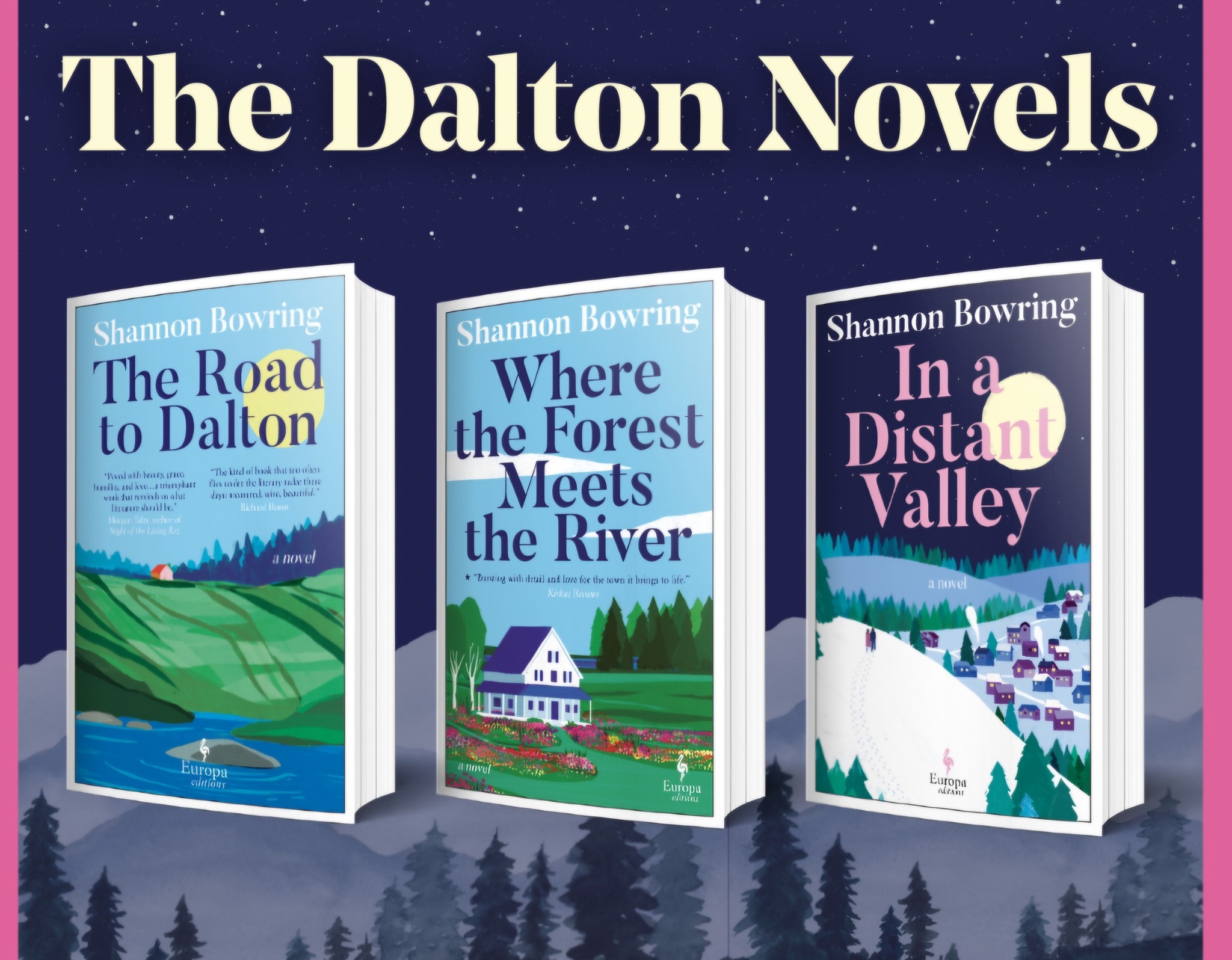
I often joke that the Dalton Novels trilogy took either three years or thirty years to write, depending on how you look at it. Though the books were published in quick succession between 2023 and 2025, the process behind writing them took nearly my entire lifetime.
The fictional town of Dalton, Maine is inspired by the town where I was born and raised in Aroostook County, the isolated, sweeping swath of land that forms the crown of the state. In this region of Maine, there are a lot of trees, a lot of farm fields, and not much else. Just like Dalton, my hometown offered little in entertainment beyond walks to the corner store for a Slush-Puppy and limitless opportunities to create your own make-believe with only the pines as witness.
Despite the restlessness I felt growing up in this insular place, I was compelled to write about it in my fiction. Even after leaving the County when I was nineteen, my stories almost always returned there. Though the scenarios and people I wrote about were imagined, the landscape was familiar; characters shaped by the same roads, rivers, forests, and potato fields that formed so much of who I was as a person. Something about the place had taken hold of me at a cellular level. Writing about Dalton became a fixation, a way to understand the town that had raised me and to invite readers to find something there for themselves as well. A resonance. A deep, humming recognition.
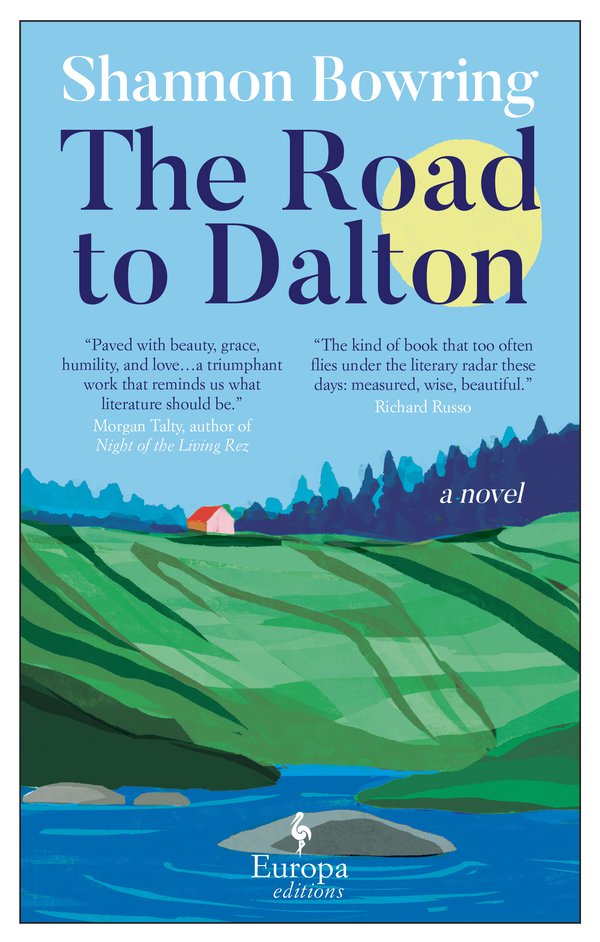
#1: The Road to Dalton
When I entered the MFA program at Stonecoast just before my thirtieth birthday, I had a vague concept of a collection of linked stories that centered around Dalton, examining how such an isolated setting shapes the people who live there. Throughout my two years at Stonecoast, I built this collection as my thesis, guided by mentors who helped me uncover which characters I wanted to focus on and the best structure to support those characters’ overlapping stories.
By the time I submitted the thesis in late 2021, it had turned into a real book, The Road to Dalton. Shortly after, I began querying agents. Around this time, I had a short story appear in Raleigh Review that got the attention of an agent who reached out to me to see if I had a book-length manuscript. Whether you call it fate, luck, or readiness meeting preparation, it all worked out—she loved Dalton and offered to represent me. After a few rounds of edits to make the collection feel more like a novel (a novel is easier to sell), my agent began submitting the book to publishers, a mix of big houses and independent presses, in the spring of 2022. It took nearly thirty rejections before the book landed in the hands of Kent Carroll at Europa Editions, who passed it on to his associate editor, Autumn Toennis. In another instance of kismet, Autumn had grown up in a Montana town very similar to Dalton. “I know these people,” she told me when we were introduced. “I know this place.” It was a match made in literary heaven.
Because Europa is a smaller indie publisher, they often have a quicker turnaround than one of the major publishing houses. I signed in the fall of 2022, and The Road to Dalton was published in June of 2023. In the interim, Autumn and I worked on more edits, reached out to reviewers, and began arranging what would become my first book tour, focusing on bookstores and libraries in Maine. I also worked closely with the team at Europa to land on the right cover art, a rare privilege. It was a highly collaborative process, as exciting as it was terrifying. After three decades of honing my writing skills and longing to share my Dalton stories with the world, it was finally going to happen: I was going to be a Real Author.
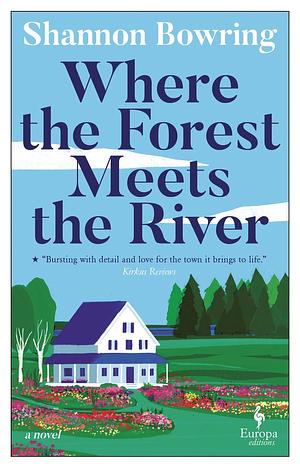
#2: Where the Forest Meets the River
While waiting for The Road to Dalton to be published, I began writing another novel, set in a different part of Maine. At the time, I wasn’t sure how Dalton would be received, and I wanted to explore other stories. But in the end, I couldn’t stop thinking about the characters and narrative arcs I had begun in Dalton, and I knew I needed to go back. In early 2023, I shelved the other book and turned my attention to what would become Where the Forest Meets the River.
From a creative standpoint, it felt good to return to a familiar setting with new ideas for the characters I had featured in the first book. It was satisfying to witness the evolution of my characters and of Dalton itself, which by that point still felt a lot like my hometown, but also more and more like its own place. The topography began to shift; my fictional rivers meandering in directions not true to their real-life counterparts. It was a strange sort of morphing. I began to envision Dalton when I tried to describe my hometown. I even started confusing the fictional names of Dalton’s streets with the real ones I had walked on since I was a child.
Forest took about six months to write. Once it was complete, my agent brought it to Europa. (This is what might be most surprising to readers: each book was sold separately, after I finished writing it, not as part of an advance three-book deal.) Following a similar trajectory to the first book, Forest was accepted in the summer/fall of 2023 and released in September 2024. What was different for me at that point was learning how to balance the creative part of a writing career with the logistical and administrative side of things—touring around with Dalton, finalizing edits and cover art for Forest, promoting both books on social media… all while working toward the conclusion of the trilogy.
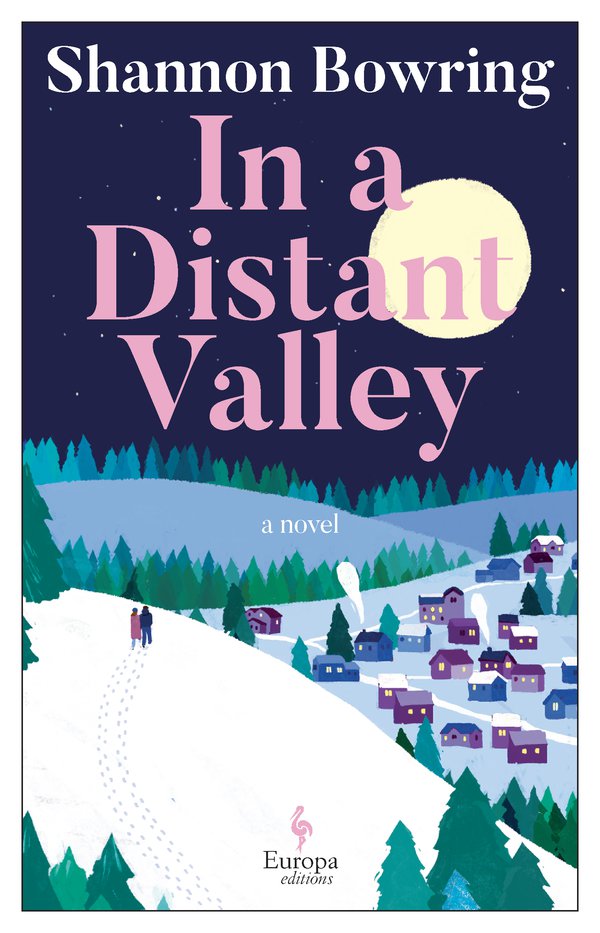
#3: In a Distant Valley
I took a couple months off from writing after the release of Where the Forest Meets the River. I needed time to work out how the series would conclude. Ending it after a third novel felt natural both for the characters and for my own writing journey. By then, I had built a loyal fan base of readers as interested in the lives of Dalton’s residents as I was. I intended to end the trilogy in a way that honored these readers’ investment while still bringing the story to an authentic close. In other words, I wanted to give people a bit of a hopeful ending, but I didn’t want to wrap everything up for my characters in a neat and tidy bow. For one thing, life doesn’t work that way. For another, I wanted to keep the door ajar for any future Dalton stories.
Once I settled on a direction for In a Distant Valley, I wrote with obsessive ferocity, finishing it within five months. The evolution of Dalton that had started in Forest became more prominent in this final book, feeling like it carried an echo of my hometown while emerging as its own unique place. I also drew back a bit from describing the landscape of Dalton so I could focus more on the characters, examining their inner lives and personal relationships.
My agent sold Valley to Europa in early fall 2024, in perfect synchronicity to when Where the Forest Meets the River was released—I was actually en route to the launch event for Forest when I got the email that we had an official deal for Valley. More creative/business balancing was needed as I promoted and toured with Forest, this time traveling as far as Minnesota. The editing process for Valley took a bit longer than with the first two books, because Autumn and I were paying close attention to the structure and tone of the novel. There were several characters with heavy arcs, and we wanted to balance their storylines with chapters that felt more lighthearted. After edits, we followed the usual pre-pub routine: Cover art, reviews, marketing, etc.
In a Distant Valley was published in October 2025, the conclusion to a whirlwind few years; a hectic and harried and wonderful culmination of a lifetime spent wanting to tell these stories of a small town filled with people you know, no matter where you grew up.
As for life beyond the trilogy… All I can say for now is that I’m not done with Dalton. I imagine an ever-expanding literary universe, stories set in different time periods, told through different characters’ perspectives, all amid the familiar backdrop of Aroostook County. It might be an isolated, lonely place, but with each Dalton story I write, I find something new and recognizable there. I hope readers do, too.
You can buy these and many other books I’ve featured at my Bookshop.org store. Purchases help fund this blog. https://bookshop.org/shop/openbook
Shannon Bowring’s award-winning work has appeared in numerous journals and has been nominated for Pushcart and Best of the Net prizes. Her Dalton Novels trilogy, published by Europa Editions, has been recognized by Kirkus Reviews, Publisher’s Weekly, Indie Next, NPR, and Oprah’s Best list. The first book in the series, The Road to Dalton, received a Kirkus Starred Review and won the Maine Literary Book Award for Fiction. Shannon was born and raised in Northern Maine and now resides in the mid-coast region of the state. She is an avid supporter of libraries, independent bookstores, and mental health awareness. When she isn’t writing, she can be found reading, rewatching her favorite shows, feeding the crows and squirrels who visit her backyard, and cuddling with her many-toed, three-toothed cat, Rosie.
 READ HER LIKE AN OPEN BOOK