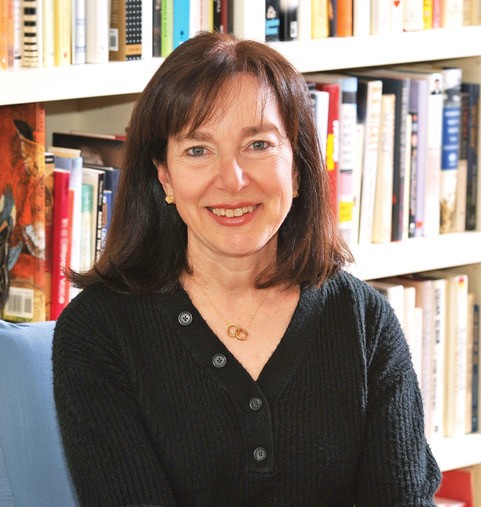
By Guest Author Reyna Marder Gentin
Mother’s Day is this coming Sunday, May 10. Whether you rail against the day as a Hallmark holiday or embrace it as a well-earned celebration of the hardest working member of the family, the whole range of emotions will be on display on the second Sunday in May, from nostalgia to frustration to regret. Perhaps your mother is your best friend. Perhaps she’s your nemesis. If, as in my case, your mom is no longer alive, the day can feel bittersweet. One thing is certain: there are very few people who have entirely neutral feelings about their mothers, and that should get the creative juices flowing in the novelist.
Writing a fictional mother for the main character in your story is a delicate task that provides an enormous opportunity to explore and expose a central force shaping the personality and values of the protagonist. If you as the writer are brave enough to go there, don’t waste the opportunity. Get down and dirty and show your reader the woman who made your protagonist who she is today!
So how do you go about formulating a mother character with enough complexity and depth to mimic the maternal influence we see in our own real-life experience? Even the totally absent mother, in reality and in fiction, wields an enormous amount of emotional power. How do you decide what qualities are important to emphasize to have the character carry her weight?
Every writer has her own way of thinking about character formulation. I call mine the believable eulogy. As I hit 60 and attend more funerals, I find myself listening more and more closely to the eulogies given by the children of the deceased. Of course, the remarks are filled with specific details of the many positive character traits and good deeds of the person who has passed. How she sacrificed her career as a high-powered executive to take care of her family, volunteered at an animal shelter, checked on her infirm neighbor every morning, and always had a smile on her face. These facts form the likeability quotient, the critical mass that we need to care about real people as well as fictional characters.
But the eulogies that stop there don’t interest me as much as those that go on to tell us something of the person’s quirks, hinting at the questionable aspects that make real people and fictional characters complex and credible. Nothing that would violate the admonition of not speaking ill of the dead, but just enough to pique my interest and make me believe the deceased was a real person. Tell me that she picked fights with the mailman just for kicks, that she had a heavy foot on the gas and racked up an impressive number of speeding tickets, that she hasn’t spoken to her ex-best-friend in ten years. These are the kinds of disclosures that let me see the person, real and fictional, as human.
I’ve written three novels in which the protagonist’s mother, a character somewhere on a sliding scale from Lorelei Gilmore to Joan Crawford, acts on her daughter in ways that enrich and add depth to the story. And in each successive narrative, the mother has taken on a larger and more complex role.
In my debut novel, Unreasonable Doubts, the mother, Phyllis, was so stereotypically good that she didn’t pass my own “believable eulogy” test. Writing the novel while still in the early stages of grief over my own mother’s death, Phyllis took on every positive trait my mother had, and then some. In the novel, she is kind and wise, a sounding board for her 30-year-old daughter Liana, who is in crisis both professionally and personally. Phyllis has endless patience and always knows the right thing to say. I went further, indulging in writing Phyllis as fulfilling the fantasies I harbored for my own mother. Both widows, Phyllis, unlike my mom, finds the strength to sell the family home, rent a cool apartment in Manhattan, and, most critically, give love a second chance in her golden years.
Phyllis was entirely lovable, the kind of mom who baked chocolate chip cookies at the drop of a hat and never raised her voice in anger. She made sense for the story, but in retrospect she lacked the nuance required to be a credible mother character. If I ever decide to revisit Unreasonable Doubts, I will make Phyllis less of an enabler; I’d have her tell Liana that she needs to grow up and take responsibility for herself.
In my second novel, My Name Is Layla, written for middle grade readers, the protagonist’s mother has a role that impacts the story in a more profound way. Referred to only as “Mom,” her central purpose is as the parent to Layla and her brother. A single mother, she supports the family, working nights as a nurse. She’s estranged from the children’s father, and this time around, I didn’t indulge the fantasy of writing in a new love. This real mom keeps everything afloat, but she’s stretched to the limits. As a consequence, she misses the one thing that is most critical to the protagonist’s story: Layla is failing in school. Mom’s distractions, however justified, help create the situation that allows Layla’s destructive act that finally gets her the attention she deserves.
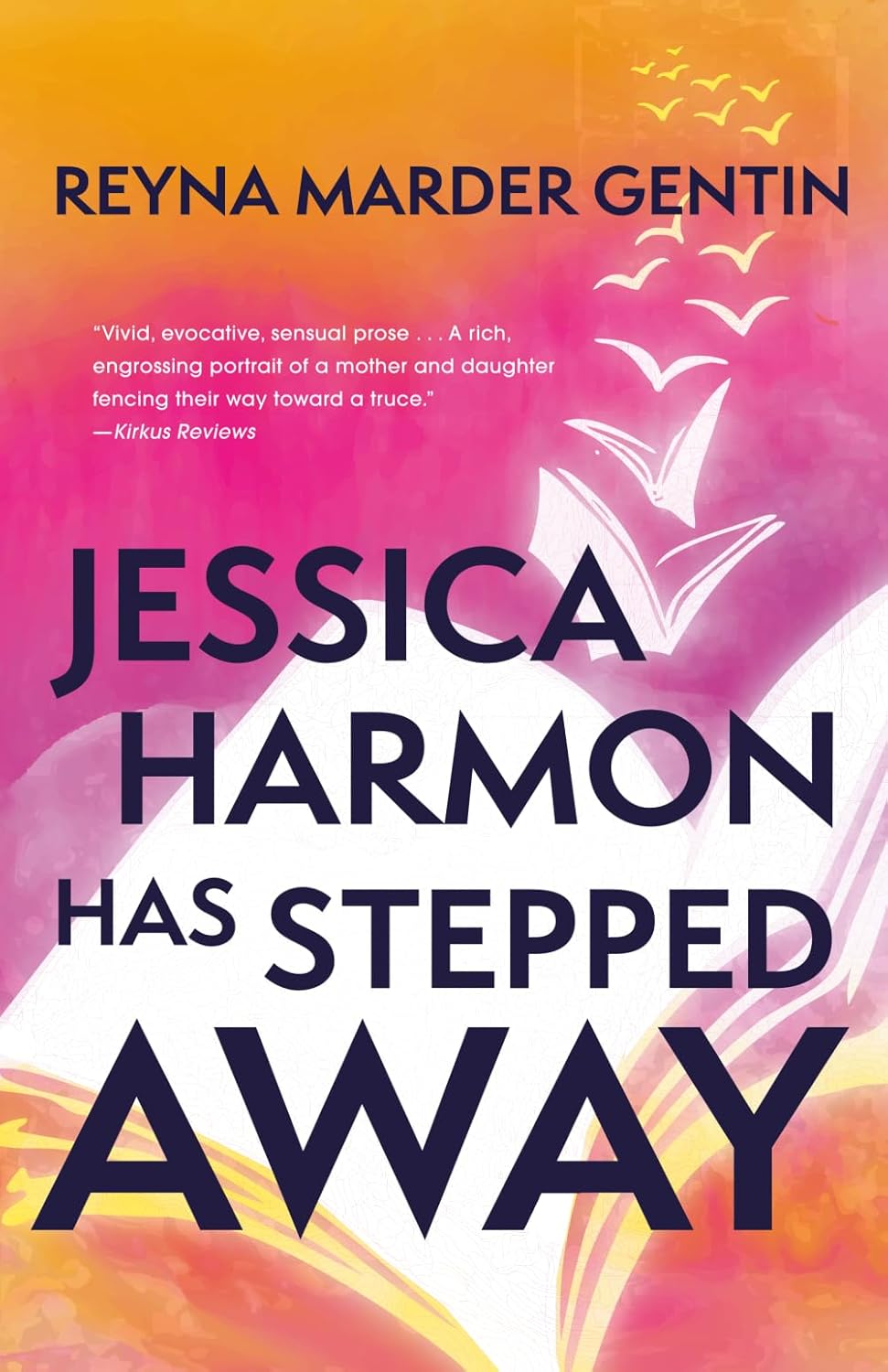
While Layla’s mom was understandably negligent, Cynthia, the mother in my latest novel, Jessica Harmon Has Stepped Away, is narcissistic, cruel, and emotionally disengaged from her needy daughter, Jessica. She seems to care only about her own ambition, career, and art. Cynthia cultivates the fawning admiration of her colleagues and students, ignoring her own child. The relationship between the two women is not just a byproduct of their personalities, it is the story itself. Jessica’s quest to unravel Cynthia’s secrets and figure out whether forgiveness is possible is the central point of the novel.
So how far can the writer go in portraying a mother who is someone I wouldn’t wish on my worst enemy? It all comes back to the believable eulogy. An early reader of the novel commented to me that Cynthia is “a monster.” Certainly, there will be mother characters who deserve that moniker: ones who physically abuse and torment, perhaps those who abandon a child or otherwise emotionally abuse. I didn’t intend Cynthia to be so far off the grid that her eulogy would contain none of the positive qualities and only the negative ones. A writer should keep in mind that the characters, like all of us, are human. They don’t have to be balanced–Lord knows, Cynthia is unbalanced–but she has her good moments and her strengths. She is not unredeemable, because readers want to like the mom, at least a little.
Chekhov famously said that if there’s a gun on the wall in Act One, you must fire the gun in Act Three. I have a different principle: Chekhov’s Mom. If there’s a mother in your story, she should serve a vital, functional, and complicating role. Moms are too important to squander.
Reyna Marder Gentin grew up in Great Neck, New York. She attended college and law school at Yale. For many years, she practiced as an appellate attorney with a public defender’s office before turning to writing full-time. Reyna has studied at the Writing Institute at Sarah Lawrence College, and her work has been published widely online and in print. Her debut novel, Unreasonable Doubts, was named a finalist for the Women’s Fiction Writers Association Star Award in 2019. Her first middle grade novel, My Name is Layla, came out in January 2021 and won the 2021 gold medal in the Moonbeam Children’s Awards in preteen fiction. Both Are True was published in October 2021. Her latest novel, Jessica Harmon Has Stepped Away, was published by Ten 16 in November 2025. Reyna is currently working on a collection of linked short stories entitled Open Twenty-Four Hours. She lives with her family in Scarsdale, New York.
Starting May 5, you can grab the eBook of Jessica Harmon Has Stepped Away for only 99 cents.

