By Allyson Reedy, author of Mrs. Wilson’s Affair: A Great Gatsby Retelling
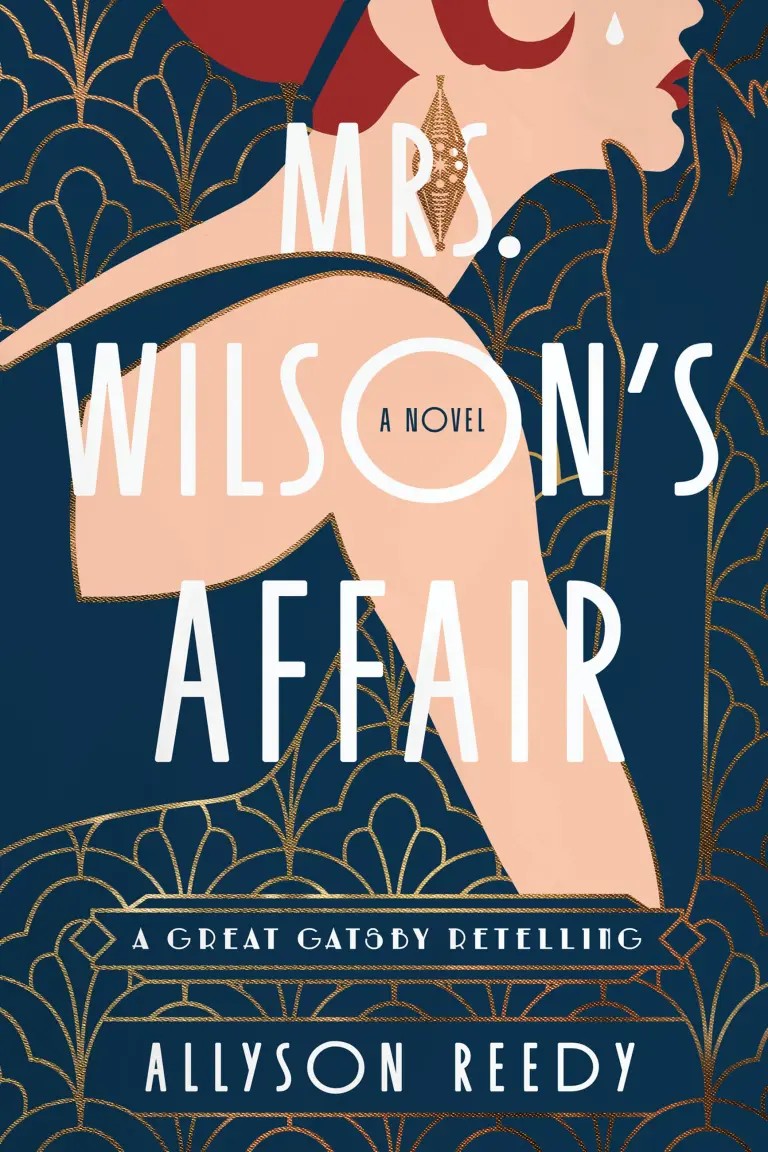
I own 52 copies of The Great Gatsby. I’ve re-read it countless times since I first fell in love during my junior year of high school. I believe its diction is so perfect that it’s the first book I read my newborn babies when I brought them home from the hospital, their best possible introduction to the English language. Heck, I even named my dog Gatsby. And still I rewrote it.
It almost seems blasphemous to tinker with this iconic story, the 180 pages that have widely become known as the Great American Novel. Or if not that, maybe the most read American novel. But I’m not the only one who’s taken a character and reimagined the story from their eyes —Daisy and Jordan for Jillian Cantor’s Beautiful Little Fools, Daisy again in Libby Sternberg’s Daisy, Myrtle Wilson for my own Mrs. Wilson’s Affair, Nick in Michael Farris Smith’s Nick, and Gatsby as a younger man in R. M. Spencer’s Agent Gatz prequel.
I’ve been lucky enough to speak to some of these fellow re-writers, and of course I know my own experience. We all agree that The Great Gatsby is a masterpiece. So why did we all feel compelled to rewrite it?
For my novel, Mrs. Wilson’s Affair: A Great Gatsby Retelling, I rewrote Gatsby’s events from the perspective of Myrtle Wilson (Tom Buchanan’s money grubbing, social climbing mistress in the original). I latched onto Myrtle because, of all the characters, Fitzgerald treated her with the least sympathy. I mean, just look at her ending.
Shallow in both her attributes and character development, I felt there was more to her, and I wanted to flesh her out, consider her motivations for having an affair, and look at that glittering 1920’s world from a, let’s just say, ashier POV.
I couldn’t relate to having pockets so deep I could bankroll a small city’s worth of champagne and hors d’oeuvres, or to being a man so privileged I could shrug off a catalog of cruelties. It was easier for me to connect with a woman who couldn’t transcend her working-class status, whose desire for more seemed almost delusional. Fetishized and discarded, Myrtle is literally destroyed by the ruling class and their toys.
Sash Bischoff also had a feminist take in 2025’s Sweet Fury, a twisty thriller unfurling the relationship between an actress filming Fitzgerald’s Tender is the Night and her therapist. She went down a Fitzgerald rabbit hole while researching it, devouring all of his works and reading several biographies. She began to understand his shortcomings—the sometimes racist, classist, antisemitic, and sexist ideals in his books—and she wanted to specifically address the misogyny in his writing and turn it around, which Sweet Fury does beautifully.
Kyra Davis Lurie took on race, reimagining Gatsby as a Black American story in 2025’s The Great Mann. Not a retelling so much as a response, Davis Lurie fully reimagines the story through her own lens, and brings us back to the old argument about whether you can separate a man from his art. How many liberties do we give for being a product of their time?
Yes, Fitzgerald wrote a century ago, but how could he write so brilliantly about a wealthy man trying to recapture his youth but leave Myrtle as a one-dimensional, opportunistic floozy? Maybe he was focused on the rest of the crew—the Big Four of Tom, Daisy, Gatsby, and Jordan—but that just left me room to explore my Myrtle. I can’t speak for everyone, but I believe we’re rewriting this iconic book not because we’re trying to do better writing-wise, but because we’re trying to do better for Fitzgerald’s slighted, undervalued characters.
Allyson Reedy is a fiction writer, food journalist, and restaurant critic. Her work has been published in several newspapers and magazines, including The Denver Post, Bon Appétit, and 5280. She is the author of several cookbooks, including 50 Things to Bake Before You Die and The Phone Eats First. She lives in Broomfield, Colorado with her husband, children, and pug.

