I took a break for summer vacation that ended up lasting longer than I expected thanks to a computer crash. Now, a few weeks and a new laptop later, I’m back to writing again.
I’ve read several books in the last month but thought I would review them two at a time rather than in one long piece.
Today I’m reviewing a new book by an author whose previous books I’ve enjoyed and a debut novel by an author from Louisiana.
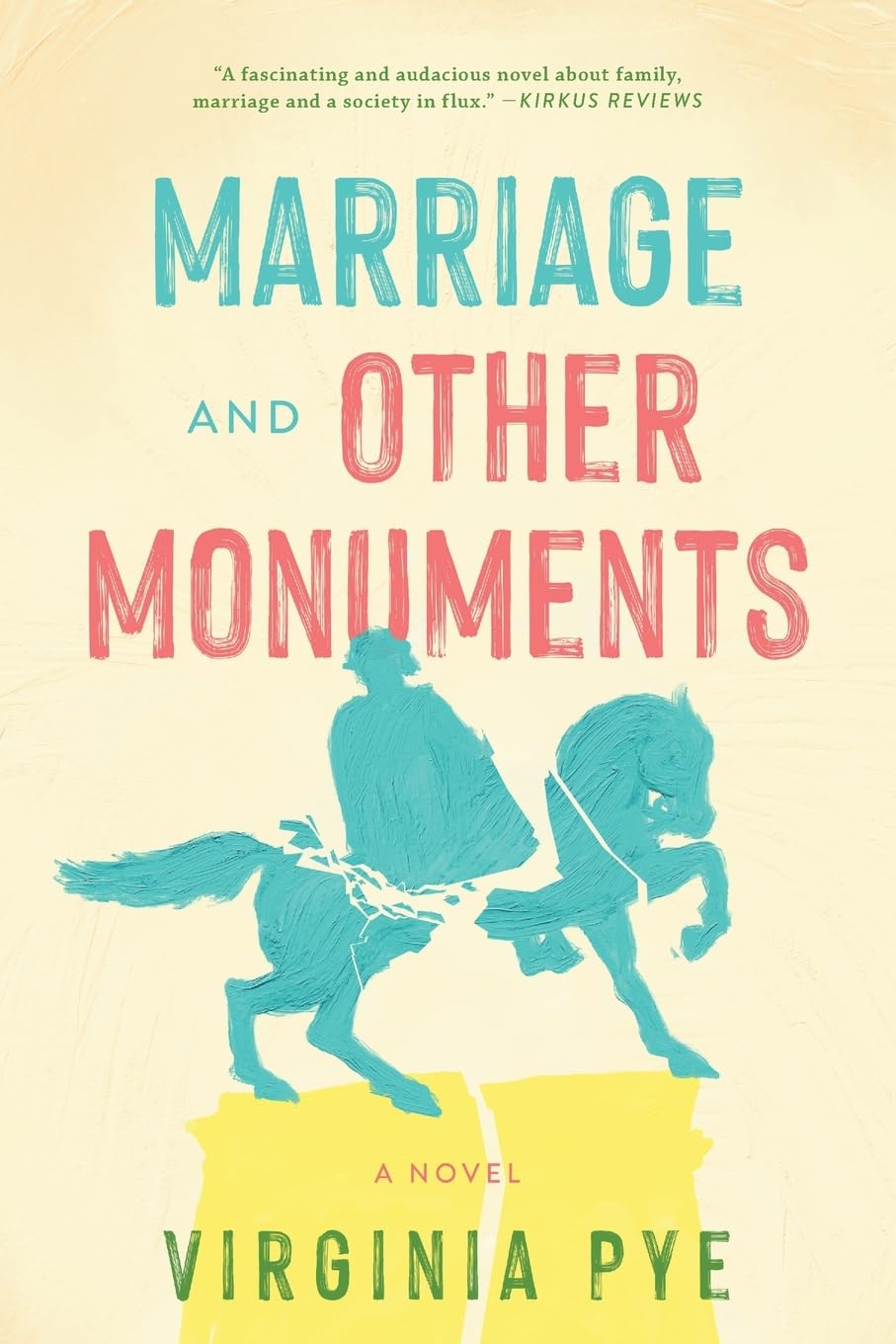
Marriage and Other Monuments — Virginia Pye (Koehler Books, Feb. 2026)
Like Louise Erdrich’s The Sentence, Virginia Pye’s latest novel, Marriage and Other Monuments, is set during the summer of 2020, with the Covid pandemic and Black Lives Matter protests as the backdrop for the characters’ unsettled lives. Where the former was set in Minneapolis, where the BLM protests began after George Floyd was murdered by the police, Pye’s book is set in Richmond, Virginia, where the protests were focused on the removal of statues of Confederate army officers.
The plot follows two sisters as their marriages falter. Melissa is a passionate social justice activist who becomes caught up in the monument removal protests. Her husband, Marshall, who is Black, thinks she has gone overboard and doesn’t fully understand the true nature of things. He is more interested in running his business and letting change take place incrementally. When they married, their differences complemented each other, but over time they have begun to find the other difficult to understand.
Cynthia, a CPA, is married to Bobby, the scion of a wealthy family who has never been able to find his own path to success. His grandfather, part of Richmond’s Old Guard, is furious about the protesters disrupting life in his neighborhood near Monument Drive and frustrated with Bobby’s lack of killer business instinct. Cynthia has lost patience with Bobby in the way that Marshall has lost patience with Melissa. Matters are complicated by the fact that Cynthia and Melissa are polar opposites and have been estranged for some time. Communication breakdowns are running in every direction.
All four characters are forced to deal with turbulence in their personal lives while daily life in Richmond is turned upside down. They are each trying to find a way to live a life with purpose and make it work within their marriages. Pye does a nice job of portraying their perspectives, allowing readers to get a full picture of their dreams and motivations and the background of both marriages. On the societal level, Pye shows us the many ways in which the past is still very present in Richmond, as well as how the social justice movement is pulling it toward the future.
One of the other strengths of Marriage and Other Monuments is the complex plot, especially the way the various subplots quickly grow together like kudzu vines. The family history of two characters presents a challenge and an opportunity for the characters to create a better future for themselves and their city. The monuments are coming down, to be replaced by more practical examples of racial equity that reflect the reality of 21st century Richmond. Will Melissa, Marshall, Cynthia, and Bobby also be able to move into a future where they reframe their marriages more realistically?
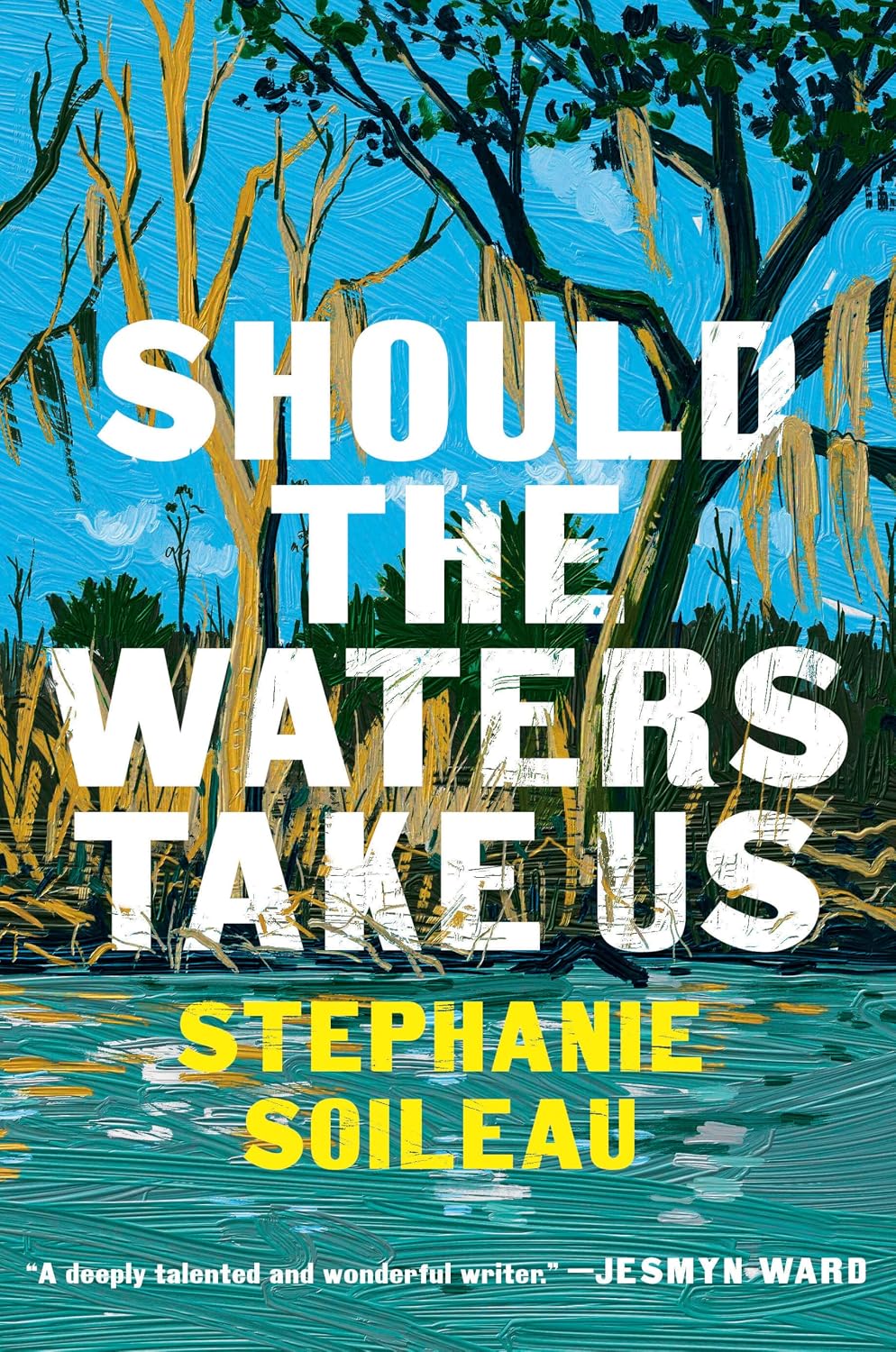
Should the Waters Take Us — Stephanie Soileau (Doubleday, July 2026)
I’ve always been drawn to novels set in Louisiana. With its history as a French colony, it’s one of the places in the United States that is truly unique. The history, diverse cultures, topography, and weather combine to form a rich setting for stories and plays, from Tennessee Williams to James Lee Burke.
Stephanie Soileau’s first novel, Should the Waters Take Us, is set in the rural Gulf Coast that has long been home to the Cajun community and which is rapidly being swallowed up by the rising water levels. The multi-pronged narrative follows the lives of two closely connected families, the Terrebonnes and the Broussards, across several centuries, from immigrants to the area in the 17th century to the main events of the story in 2010.
Wilford “Boy” Broussard finds himself saddled with a teenage daughter he barely knows when his ex-wife takes a job on an oil rig in the Gulf. He’s trying to eke out a living fishing on land that belongs to his aunt and uncle, Rosalie and Jacot Terrebone, but which he believes was wrongfully wrested from him. He has his hands full with taking care of Lee, who is just as unhappy to be living with this stranger in questionable conditions on the coast. The parish priest, an immigrant from Nigeria, takes Lee under his wing while Boy struggles to make a living. Mistrust is rampant in an area of diminishing resources and infrastructure.
The effects of climate change and mismanagement of the sensitive bayou region by oil companies and the state have made daily life difficult enough for the residents. But the situation goes from bad to worse when an oil rig explosion sends epic amounts of oil heading toward the coast, setting in motion events that change the lives of everyone in Pelerin Parish. Add the threat of another in the seemingly endless series of hurricanes that strike the area, and everything is hanging by a thread.
Soileau’s narrative rotates among the characters, focusing on Boy, Jacot, Father Fabian, and Jamie, the grandson of Jacot and Rosalie. There are occasional chapters providing historical context for the events of 2010. Soileau writes beautifully about the watery land and the people who have been shaped by it. Her characters are in over their heads but cling desperately to the land and life they know in a state that has been devastated by a century of illegal actions by corrupt state officials and rapacious oil companies. As always, nature will have the last word.
One paragraph late in the novel, in a chapter focusing on Boy Broussard, struck me: “There’s nowhere to live that isn’t under threat from one thing or another. Tornadoes, hurricanes, brush fires, tidal waves, oil spills, drive-by shootings. Earthquakes, which seem a hell of a lot worse than any storm. Just wait around, and some disaster will find you. Watch for the lantern (you’ll see it too late): one if by land, two if by sea. Turn around, don’t drown. The great, swooping forces of fate will dip down, haphazard, not fate at all really, it isn’t personal. More like a cosmic accident, a dog knocking over your beer with its tail. Nothing with a capital N, brushing your shoulder, whispering in your ear: Tag, you’re it.”

