My first foray into acting was as a seven-year-old Israeli immigrant at PS 179 in Brooklyn, New York. Each afternoon I was taken out of class and escorted into a closet-sized room on the first floor with a speech teacher whose name I no longer remember, but whose pile of dark lacquered hair and sparkling cat eyeglasses remain seared in my memory. She had me run through tortuous tongue twisters and tongue placement exercises that eventually excised my slurred s’s and swallowed u’s, and helped me articulate the dreaded th sound, all of which abolished the phonological transfer of Hebrew language into my speech in English. In those sessions, I would pretend to be a normal American girl whose mouth would open, and words would flow in a clear stream. Eventually, my Israeli accent became barely noticeable except when I attempted to say words like “ridiculous” (a word I still stumble over sometimes when I’m not careful).
Still, for all of my speech woes, my fourth-grade teacher cast me as the second Sally Bowles in our sanitized production of Cabaret, where I sang about “going out like Elsie.” Two years later, for our sixth-grade graduation, we saluted the American songbook by singing Rodgers and Hammerstein showtunes. The performance was blasted over the school’s loudspeaker. I sang two solos: “I Enjoy Being A Girl” from Flower Drum Song and “You’ve Got to Be Taught” from South Pacific, musicals that interrogate prejudice and the life of the “other.”
This love of acting, singing, dancing and being on stage would remain with me into adulthood. After high school, I returned to Israel to attend Tel Aviv University. Most of my Anglo friends there applied to study English Literature, but I chose theater and acting. Before entering the university, I enrolled in their one-year preparatory program where I relearned the Hebrew that had been excised from my tongue.
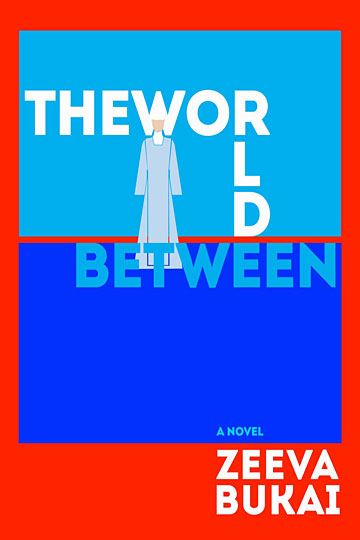
Until that point, my Hebrew was the kitchen variety. I could order a meal in a restaurant and have a casual conversation with a friend, but what I needed now was the ability to comprehend Racine’s Phaedra and recite Descartes’ famous one liner, I think, therefore I am, in Hebrew. I told myself this was also part of my training as an actor, retrieving the accent that I had worked so hard to lose. The irony wasn’t lost on me. In America I was an Israeli and in Israel I was an American. Like the narrator in my novel, The World Between, who is a former Yiddish stage actress, I was nicht ahin, nicht aher, neither here nor there. But on stage, no matter what accent I employed, I was the character I played–grounded, not suspended between worlds.
I didn’t finish my degree at Tel Aviv University; instead, I joined the Seminar Le’Kibbutzim’s drama program where I studied with actor and teacher Reuven Adiv and the director, Hanan Snir. Reuven’s approach was strictly method acting. Hanan, meanwhile, employed dance elements to embody a character’s physicality and psychological state of mind. One semester, I studied with the great Yiddish actor and choreographer Benjamin Zemach. His brother, Nachum Zemach, was one of the founders of Israel’s national theater, Habima. This combination of avant garde and traditional acting techniques gave me insight into character development from the inside out. When I returned to the U.S., I continued studying acting. But that sense of straddling two worlds, of being neither here nor there, has never left me, and it remains central to everything I write.
Decades later, writing The World Between, it felt natural and right that the narrator was an actor who shed her skin each time she stepped into character, an actor in the fading world of the Yiddish theater, a woman who lives primarily in memories that are as fragile as thinly blown glass.
“Life,” said Tennessee Williams in his play The Milk Train Doesn’t Stop Here Anymore, “is all memory except for the one present moment that goes by you so quick you hardly catch it going.”
What I love most about fiction writing is the intimacy. It’s just me and the page, a dark stage with no audience, a world I’ve built in my head populated with characters I’ve set in motion in a place and situation I want to explore. But even after I completed an MFA in Fiction, I still struggled with how to actually write a novel. What I knew was that I wanted to tell stories using my words, my characters, and for that I would need to marry imagination to memory.
I am a memory thief. Sometimes they are my own memories. Sometimes, however, they come from my parents or grandparents, or family members I’ve never met, all of them people who lived ordinary lives in extraordinary times. Like my mother, who was born in Siberia in 1940 at the start of WWII and placed in a children’s home in a gulag. She never spoke about it, so I didn’t know much more than this bit of information, but I wanted to, and so the unnamed narrator I created in The World Between also spent her childhood in a Siberian gulag during the war. Memory and imagination fill this story and my mother’s. I feel no guilt or remorse over stealing my family’s history to serve the stories and characters I create. It’s how I keep them alive.
I learned to approach storytelling by tapping into my training as an actor. It is how I understand the world, the lens through which I observe it. It is how I build setting, plot, character, dialogue, dramatic tension, conflict, a narrative arc, a scene, rising and falling action, climax, resolution, dramatic irony.
In his text, Building a Character, the great Russian acting teacher, theorist, and director, Konstantin Stanislavski said, “In every physical action, unless it is purely mechanical, there is concealed some inner action, some feelings. This is how the two levels of life in a part are created, the inner and the outer. They are intertwined. A common purpose brings them together and reinforces the unbreakable bond.” That “feeling” is emotional memory, an emotion triggered because of something that happened in a character’s past. This drives the character’s behavior, which can reflect the character’s objective.
At the midpoint in my writing process, when I have a clearer idea where a story is going, I will ask myself, what does the character want, why do they want it, and what are they willing to do to get it? Without being conscious of it, people often react to situations because of the things they experienced in the past. Memory lives in the body. The great Polish theater director, Jerzy Grotowski, said, “Our body is memory. It doesn’t mean that the body has a memory; it is memory.”
This isn’t everything a writer needs to know, but it’s a good start.
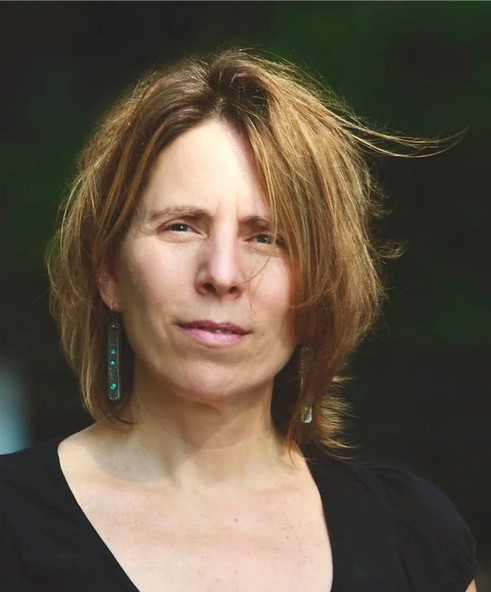
Zeeva Bukai is the author of the novels, The Anatomy of Exile (2025) and The World Between (2026). Her stories have appeared in Carve Magazine, The Master’s Review, Mcsweeney’s Quarterly Concern, and elsewhere. Her honors include a fellowship at the New York Center for Fiction, residencies at Hedgebrook Writers Colony and Byrdcliff AIR program in Woodstock, New York. She is the recipient of the The Master’s Review Fall Fiction Prize, the Curt Johnson Prose Award, and the Lilith Fiction Award. Her work has been anthologized in Smashing The Tablets: Radical Retellings of the Hebrew Bible, Frankly Feminist: Short Stories by Jewish Women from Lilith Magazine, and Out of Many: Multiplicity and Divisions in America Today. She holds an MFA from Brooklyn College and is the Assistant Director of Academic Support at SUNY Empire State University. She lives in Brooklyn with her family.
 READ HER LIKE AN OPEN BOOK