In December readers are inundated with ads and posts about new “buzz books” and bestsellers. Although we’re susceptible to this approach because we like shiny new things, it’s good to remember that there are a lot of books sitting unread on your bookshelves or stacked on your floor. And then there are the books that you never heard about because so many books are published each year, many by smaller, independent presses with limited budgets for marketing and publicity. This gives me a chance to share some books with you that you may have missed. Maybe they’re unfamiliar to you or perhaps you remember hearing about them when they were published but have since lost track of them. So in this post I’m going to familiarize you with some great books or remind you of some books you forgot about, as the case may be. I hope you find a few to add to your TBR list. As Ann Patchett says in her weekly video post from Parnassus Books, if you haven’t heard of it, it’s new to you.
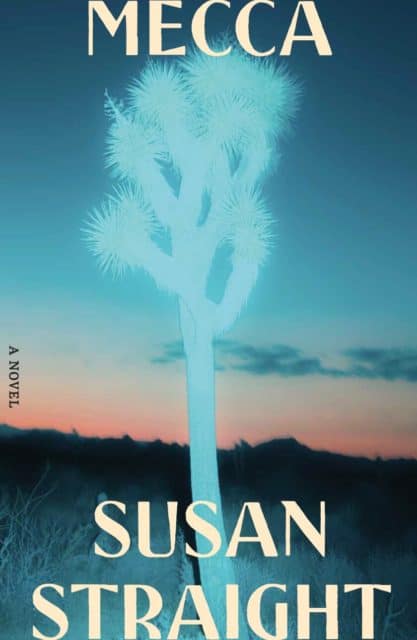
In light of her new novel Sacrament recently hitting bookstores, this seems like a good time to remind you of Susan Straight’s Mecca (2022), a book that has not received the acclaim it deserves. Straight’s storytelling is best described as contemporary California noir. Mecca braids three narratives concerning the harsh reality of working-class life in Southern California, where the so-called glamour of places like Hollywood, Beverly Hills, and Santa Monica are irrelevant. As a lifelong Californian, Straight knows well the sprawling suburbs, mountain canyons, and desolate deserts of eastern Los Angeles County, as well as the Inland Empire of Riverside County, which runs to the east and south of Los Angeles. Mecca follows a Hispanic police officer patrolling the endless freeways on his motorcycle; Mexican immigrants struggling to make a living at a desert resort, and a Black family whose young son gets caught up in an act of violence. Straight writes with insight and empathy as she slowly brings the three narrative strands together, revealing the connections among these characters’ lives.
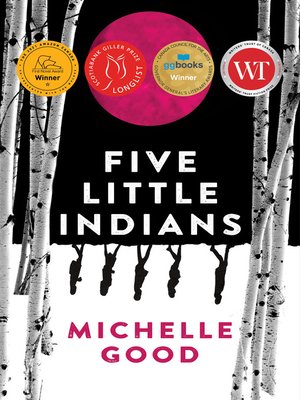
Five Little Indians by Canadian writer Michelle Good also deserves much more attention, at least outside of Canada (it was published in 2020 and has won several awards). It’s the riveting story of five Indian children taken from their families by the government to have their Indian heritage and culture replaced by mainstream white Catholic culture at an isolated residential school run by the Catholic Church. Good tells us their individual stories, immerses us in the brutal environment of the residential school (think re-education camp), and then follows them in the years after their release (or in one case, escape). The trauma they endured haunts them in varying ways, with some managing to find a little peace of mind and to forge ahead better than others. Indian Residential Schools and their attempts to erase First Nations and Native American culture are an inexcusable racist black mark on the history of Canada and the United States. (I also recommend Stealing by Margaret Verble for an American version of this sad tale focusing on one girl.)
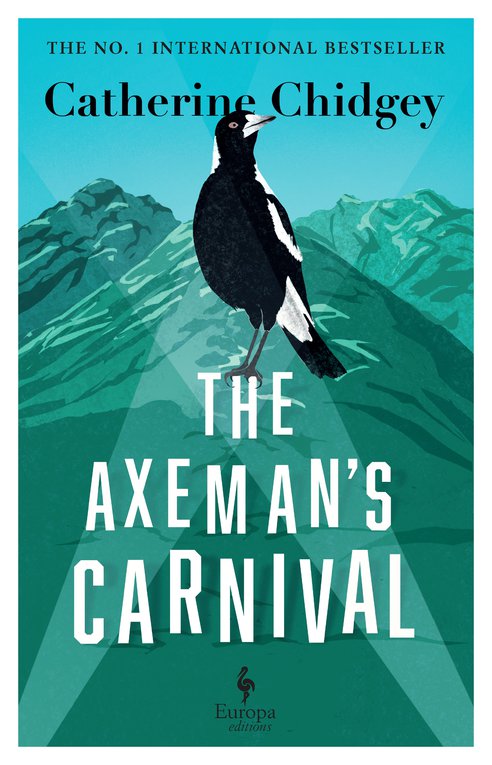
The Axeman’s Carnival by Catherine Chidgey (2023) is unlike any book you’ve read. Marnie, a young wife on a farm in New Zealand, rescues a baby magpie and decides to raise it, against the wishes of her domineering husband, Rob. The magpie, named Tama, learns to talk. Mostly he repeats words and phrases, often to hilarious effect. But soon Tama learns about the human world and observes everything that is taking place in the house and on the farm. Oh yeah, and he narrates the story. On paper it sounds dubious, right? But in the hands of Catherine Chidgey it works brilliantly. The young couple’s farm and marriage are in trouble, but when Marnie posts some videos of Tama on social media, they go viral, and soon he is a global pop culture sensation. Through Tama’s deadpan (and occasionally foulmouthed) observations, Chidgey examines the dark side of a marriage, rural life, social media fame, and the impact of a wild animal being raised by humans. It all culminates in the year’s big event, the Axeman’s Carnival, for which Rob has been obsessively training to maintain his crown in the face of a threat from a young upstart. You won’t be able to put this book down. When you finish it, you’ll want to read Chidgey’s previous books, Pet and Remote Sympathy, as well as her latest, The Book of Guilt (which is brilliant).
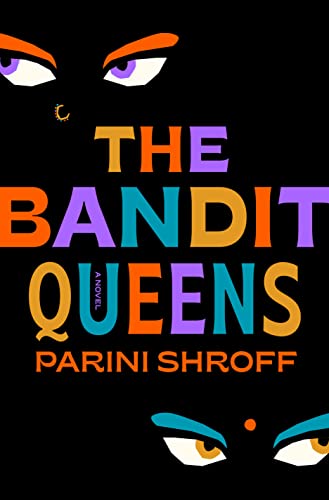
Parini Shroff’s debut, The Bandit Queens (2023), is set in a village in India where things are about to get strange — and then change. When Geeta’s abusive husband disappears, residents of her village believe she killed him. When she realizes they now respect and fear her, she keeps the truth to herself. But when a woman asks her to help murder her abusive husband, she reluctantly agrees. Thus begins a darkly hilarious story of a group of Indian women fighting back against widespread misogyny and taking control of their own lives. Geeta is inspired by the exploits of the actual Bandit Queen, Phoolan Devi, a lower caste Robin Hood who went on to become a politician before being assassinated in 2001 at age 37. The Bandit Queens is both a story of the power and complexity of female friendship and the injustices caused by India’s caste system, sexism, and corruption. Although it has serious things on its mind, it reads like a revenge thriller and is further enlivened by some very funny dialogue. Shroff, a Bay Area attorney, has written an impressive debut that will keep readers turning the pages to find out what crazy thing will happen next.
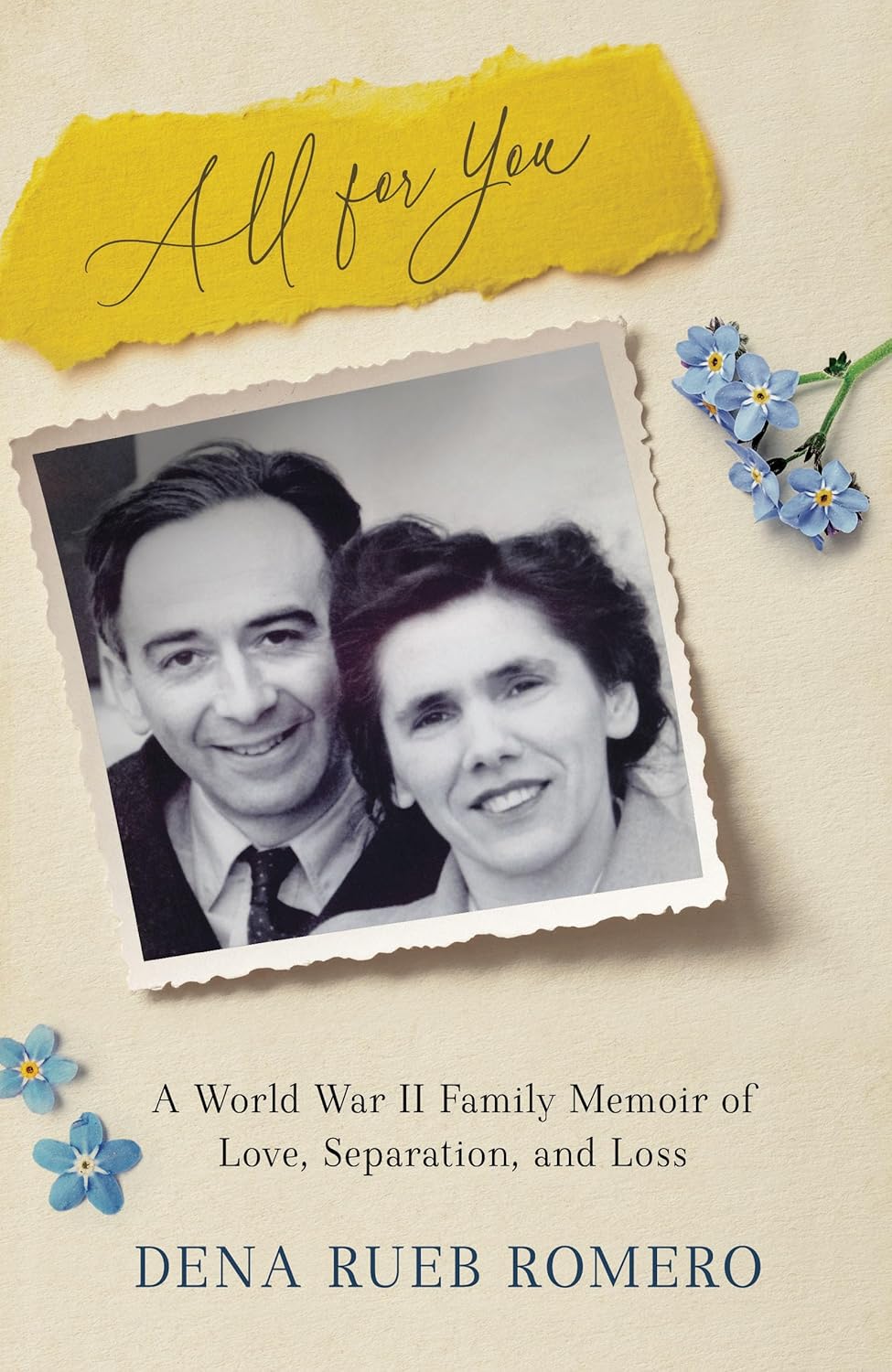
All for You: A World War II Family Memoir of Love, Separation, and Loss by Dena Rueb Romero (2024) focuses on one family’s remarkable story of trying to survive the Holocaust. Using letters and other historical documents, Romero follows her Jewish father, Emil, and Lutheran mother, Deta, as they respond to the changes in their lives and maneuver their way to safety in Germany and then England and the United States. Running from the late 1930s to 1946, All for You is a classic love story of two people who aren’t supposed to be together but fight to remain a couple. Staying alive means that in the short term they will have to be separated, as Deta becomes a nanny in England and Emil manages to escape to New York City, where he works in a photo studio. We also follow the lives of their family members in Germany as the situation worsens. All for You is made even more haunting by the inclusion of photos of Emil, Deta, and their families, as well as passports and travel documents. Occasional short chapters set in Hanover, New Hampshire, depict the life Emil and Deta created after the war. If you want an immersive view of one family’s struggles during the Holocaust, where you truly sense the tension, fear, risk, and loneliness of the people involved, this is the book for you.

Elizabeth O’Connor’s debut, Whale Fall (2024) can best be described as a cross between the thorny issues at play in Audrey Magee’s The Colony and the spare but powerful novellas of Claire Keegan. Set in 1938 on an inhospitable island off the coast of Wales, it’s the story of Manod, a smart and ambitious 18-year-old who is starting to feel restless with the restrictive lifestyle and limited opportunities on the island. She and her younger sister have been raised by their widower father, a fisherman; Manod is fluent in English while her sister refuses to speak anything but Welsh. When two ethnographers from Oxford arrive to study the islanders’ life, they take to Manod because she reads and speaks English so well. She is intrigued by Edward and Joan, who represent a link to the outside world. While they learn about life on the island, Manod learns about life in England and, from Joan, how some modern women are choosing to live. A foreboding mood hangs over this triangle, which soon becomes fraught with the characters’ varied purposes and ambitions. This friendship is Manod’s first experience with outsiders and profoundly affects her. This is a slow-paced, pensive story, but I found it completely absorbing, in part because of its palpable sense of time and place and O’Connor’s lovely poetic prose. Whale Fall is an auspicious debut from a writer I will continue to watch.
You Are Here by Karin Lin-Greenberg (2023) follows the community of people who work in a suburban Albany mall that is scheduled to close, possibly to be converted into apartments. Tina Huang owns a hair salon but dreams of returning to her true passion, art. Her son Jackson comes in after school every day to sweep up, do his homework, and secretly learn magic tricks. He befriends Maria, a high school student and aspiring actress who works in the food court. Tina’s most reliable customer is a lonely elderly woman named Ro, whose next-door neighbor, Kevin, manages the bookstore but is supposed to be finishing his dissertation. Kevin and his wife, who is Black, live with her mother. When her parents first moved to the neighborhood decades earlier, they were ostracized by Ro and everyone else. The looming closure of the mall is the catalyst that causes their lives to become increasingly intertwined in complex and thought-provoking ways. In one sense, everyone is misunderstood because they are hiding key aspects of their true selves. But the glue that holds these people together is a latent community spirit, which shows up in unexpected ways. In the end, tragedy leads to surprising results.
The Bullet Swallower by Elizabeth Gonzalez James (2024) is the story of Antonio Sonoro, a bandit working the Texas-Mexico border in 1895. He’s running low on luck and money, and the tiny town in Mexico where he lives with his wife and children is suffering from a long drought. So when he hears about a train carrying gold across southern Texas, he thinks his problems are solved. But the trouble is just beginning. Sixty-nine years later, his grandson Jaime is Mexico’s most famous actor and singer. Unfortunately, his ancestor’s bad luck is about to visit him as well – unless he can find out the truth behind the violent criminal life of Antonio, the legendary El Tragabalas, The Bullet Swallower. I really enjoyed the section where Antonio and a sidekick he ends up saddled with try to outrun the Texas Rangers. It’s gritty and violent with a palpable sense of place, a bit like a more accessible Cormac McCarthy. This debut novel is a family drama, an adventure, and a mystery that takes on racism, Tex-Mex border politics, and the trauma that is passed from one generation to the next.
Heirlooms by Rachel Hall (2016) flew under my radar, most likely because it was published by a university press, but it absolutely deserves a wider audience. Hall has used her family history as a springboard to a series of stories that follow four generations of a family from 1939 to 1989 and from France to Israel and the United States. Hall writes with sensitivity and insight about the issues of familial, community, and national loyalty and duty, as well as faith and forgiveness, and loss and survival. Heirlooms is particularly relevant in its depiction of the fraught experiences of refugees and immigrants. The cumulative effect of reading these stories is akin to completing a puzzle. Sections reveal specific issues and experiences, but when the entire puzzle is finished, the result is something larger and more memorable. The title story is especially heartbreaking. The narrator details what the family is leaving behind as they depart France for the U.S. Furniture, of course. Clothes, personal belongings and mementos – simply too much to bring. But also family members buried across France, their friends, their language, and even strong, flavorful cigarettes. It’s not difficult to see why Heirlooms won the G.S. Sharat Chandra Prize for Short Fiction, judged by Marge Piercy. It’s a compelling and memorable collection.
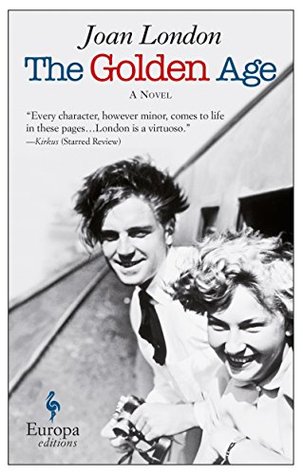
The Golden Age by Joan London (2016) is the best of Australian novelist Joan London’s books. In The Golden Age, she examines the polio epidemic that began in 1949 and continued for a decade. Twelve-year-old Frank Gold, a recent immigrant to Perth from Hungary, is sent to the children’s hospital, The Golden Age, to recover, where he befriends another patient, Elsa Briggs. They keep up each other’s spirits through the vicissitudes of the dread disease and its various treatments, including the iron lung. The Golden Age is also the story of their parents, who cope with their children’s illness and life in Australia in varying ways. Frank’s mother was a famous pianist in Budapest and remains in denial that their life is in uncultured Western Australia now. His father, Meyer, is a hard-working delivery man who is grateful for the second chance Australia has given him and his family, and he intends to adapt and thrive, whatever the cost. Elsa’s mother, a perfectionist, struggles to accept that Elsa will not be the daughter she wants. Her attentions shift to Elsa’s siblings, making Frank’s friendship ever more valuable. The director of The Golden Age, Sister Penny, serves as a bridge between the parents and their sick children, and her relationship with one parent becomes particularly important. Though dedicated to her charges, she has her own vulnerabilities. This is an absorbing and deeply compassionate novel by an author who deserves a much wider audience. When you read it, you will see why it won the Prime Minister’s Award for Fiction, The Patrick White Literary Award, The Queensland Literary Award for Fiction, and The New South Wales Premier’s People’s Choice Award.
 READ HER LIKE AN OPEN BOOK