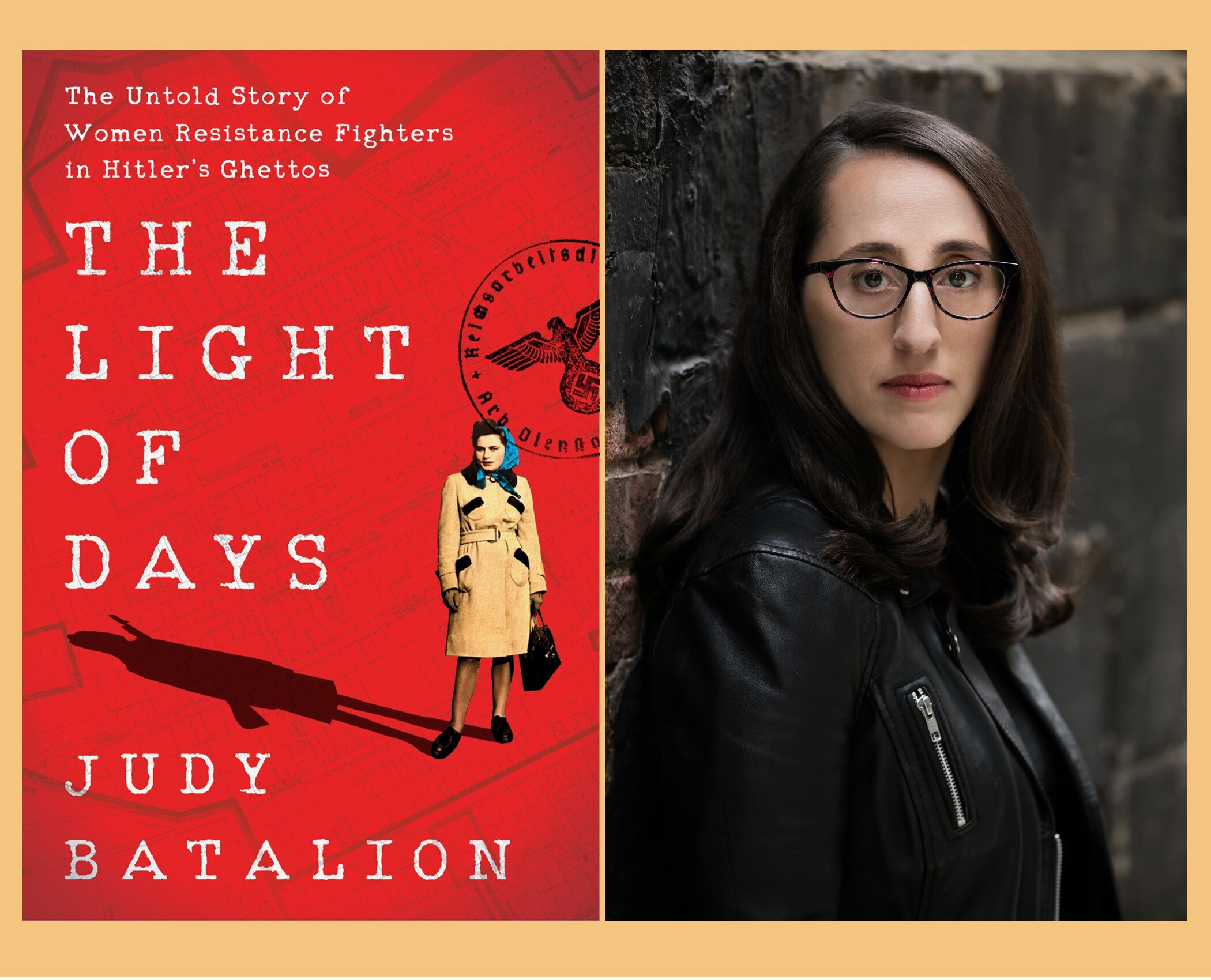
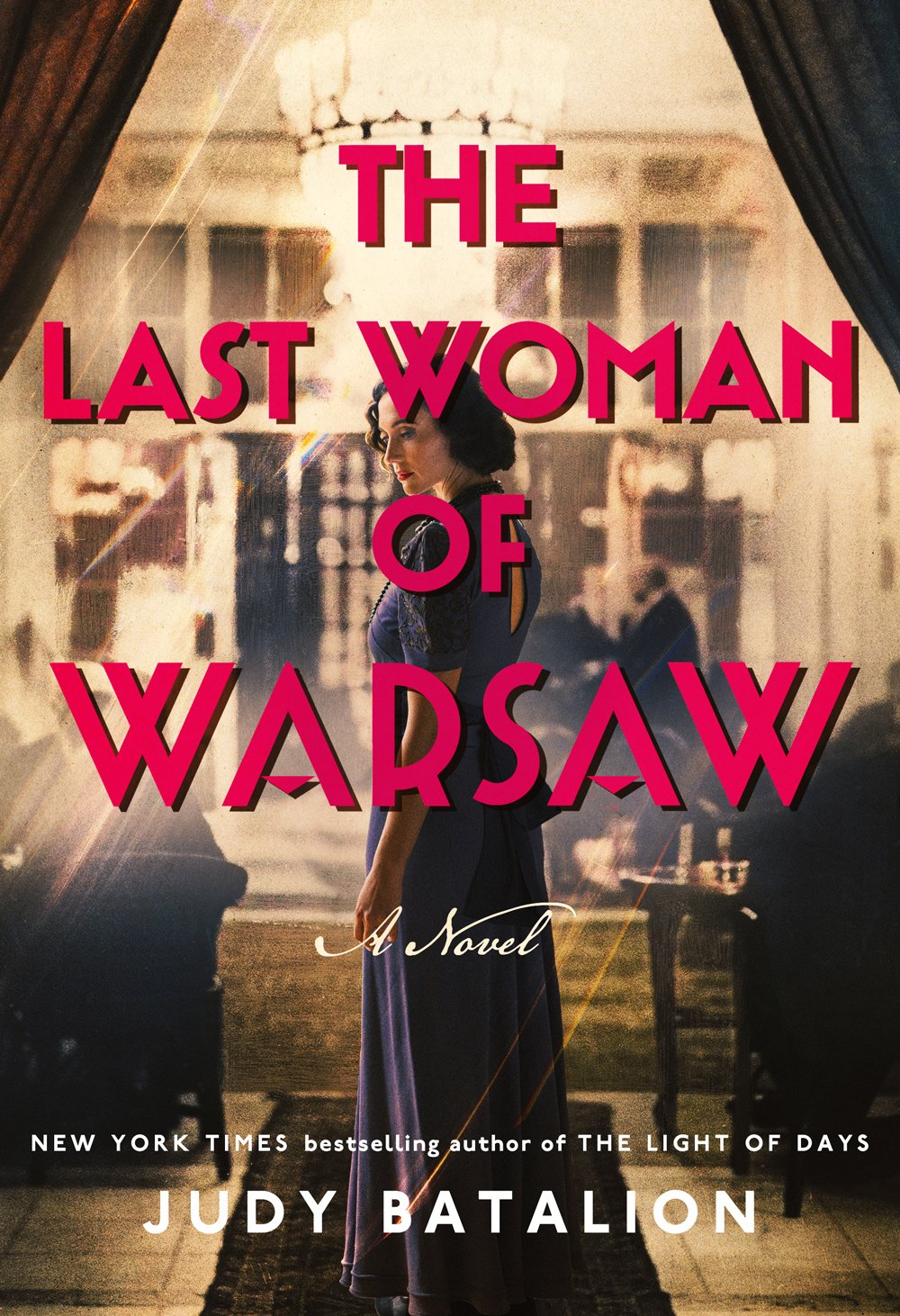
Judy Batalion is the New York Times bestselling author of several books of award-winning nonfiction, most recently The Light of Days. Judy’s work has appeared in The New York Times, The Washington Post, Vogue, The Forward, Salon, The Jerusalem Post, and many other publications. The Last Women of Warsaw (out today) is her debut novel. She lives in New York City with her husband and three children.
Interviewed by Nicole Bokat for Read Her Like an Open Book
Q. As a memoirist, essay writer and the author of your New York Times bestseller, The Lights of Days, what inspired you to turn to fiction?
A. I’ve always been writing fiction. I have digital drawers filled with unpublished novels and short story drafts! So while this is a pivot in my publishing career, it’s not a huge creative shift. In this case, I started writing The Last Woman of Warsaw as a novel for both practical and creative reasons. I came up with the idea for the book in 2021, while “virtually” touring for The Light of Days, the true story of Jewish teenage girls who had fought the Nazis from the ghettos in Poland. I noticed that my readers were interested in understanding more about the world that had created these stylish, daring and educated young Jewish women, a world that didn’t match our Fiddler on the Roof conceptions of the era.
However… it was the pandemic. It feels like a million years ago and we’ve all repressed memories of that period, but if you recall, in early 2021, vaccines were only just available and our worlds were limited. I couldn’t fly to Poland for new historical investigations; even the archives a few blocks away from my apartment in New York City were shut! (In fact, I remember telling my agent about my idea on a phone call while I was wearing a mask – outside!) So I decided to start with the research I’d already amassed and make up my own story. Also, after years of endless footnotes and endnotes and fact checking, I craved the freedom to delve into a character’s psychology, to imagine dialogue, to even throw in a bit of humor… Hence, the novel.
Q. The Last Woman of Warsaw takes place pre-World War II, when Warsaw was a thriving city. In one section, you tell us that: “In the 1930s, Warsaw had the largest Jewish community in all of Europe, second only to New York, and Jews made up roughly thirty percent of its population,” that “Over 3,000 Jewish publications were produced in the country” and that “Much of this artistic production was Jewish.” Fanny’s fiancé, Simon, asserts that half the doctors and a third of the lawyers in the country are Jewish and that the city can’t exist without their contributions to society. Now, looking in hindsight—and without judgment—do you think some of the upper-class Jews miscalculated that money and status would protect them from the Nazis?
A. I think most people – of all classes – miscalculated what the Nazis would do. For most of the 1920s and 1930s, Poland’s Jews thought of themselves as “post-war.” Even as a new war loomed, and people understood that strife was imminent, no one predicted the horrific and grotesque genocide to come. What always struck me about this period is that most people imagined that the Nazis’ attack would be similar to the ambush they experienced in WWI: they were expecting a repeat. Men ran away, with the assumption that women and children would be safe. We look to what we know, but the future often plays out differently, and in that case, it was much, much worse.
Q. While novels about the Holocaust abound, there are few I’ve read that focus on this particular time period in Poland. In your author’s note, you explain: “This is not the story about how Jews died in Poland, but rather a story about how they lived there,” which seems to be uncharted territory. Wanda, a famous photographer and Fanny’s professor, lectures that “Not all art is overtly political, but politics are always implied.” What are the political implications in The Last Women of Warsaw that you want the reader to grasp, implications that transcend that particular time and place?
A. Again, I began writing this book in 2021, drawn to exploring 1930s Warsaw, a city and time that had been, to my mind, misunderstood. Warsaw was a dazzling cultural capital that overflowed with theaters, cabaret, nightclubs with revolving dance floors, fashion shows (it was “the Paris of the North”) and 180 Jewish magazines and newspapers! My book was catalyzed by my desire to share this exciting period with my readers.
As I worked on the book, however, from 2021 to 2026, over five long, divisive, political and difficult years, I began to witness many elements of the history I was reading about reappear in real time: antisemitism on university campuses (this was a plot point I chose years before October 7th), nationalism, political extremism, a faltering world order. I began to understand that 1930s Warsaw was so much like our own time; what happened to their sophisticated world can so easily happen to ours.
Q. You inhabit the two worlds through two points of view: Fanny’s affluent, sophisticated world as a secular Jewish woman who feels integrated into society—at least until the early influences of Nazi Germany infiltrate Warsaw—and Zosia’s rural community, which feels small and oppressive to her. Was it challenging for you, as the writer, to capture such different experiences?
A. This was my favorite part of the writing! On a historical level, I wanted to show the diversity of Poland’s Jewish community. I’d always imagined it as a place of exclusively religious shtetl Jews, but that was not the case. Poland’s Jewish community included the urban and the small-town, the religious and the secular, the traditional and the assimilated, the poor and the wealthy. On top of that, “the odd couple” is rife with humorous possibility and the chance for character growth. I loved exploring how each one saw the same event from an entirely different perspective; how they each moved through Warsaw with different bodies and experiences – one as an owner, one feeling like an unwanted guest. But also, I loved examining how each one saw the other, and then, made the other see something new in herself.
Q. In their own ways, both of your heroines are feminists, although they might not have used that language to describe themselves. Fanny is engaged to marry a rich man, Simon. But she realizes, “It would never be a life with a Leica [her camera]. It would never be a life in which she could have her own vision.” Zosia’s dedication is to the Jewish socialist movement and to making a new home in Israel, not to romance and creating a family. How common was it for Jewish women in 1930s Poland to embrace their independence?
A. No, they didn’t use the word “feminism,” but in the 1930s, Polish-Jewish women were educated, emancipated and employed. In 1931, 44.5 percent of Jewish wage earners were female, though they earned less than men. Girls were required to attend elementary school, and many attended university (the majority of females in Polish universities were Jewish women). Jewish women were poets, novelists, journalists, shopkeepers and dentists. The Yiddish Scientific Institute in Vilna (YIVO) held writing contests for young Jewish men and women; a brief scan of these and other memoirs of the time reveal numerous teenage girls who hoped to become doctors. Poland prided itself on female athletics and many women played sports. Polish women received the vote in 1918, before most Western countries. Women wore fitted blazers, red lipstick and shoes that allowed them to run.
Q. The theme of “home” and what home means to one’s identity permeates the novel. Different members in Zosia’s youth movement, Dror, assert, “Home is where you’re free,” and “Home is where you can be yourself, inhabit all the elements of your identity.” Fanny states, “Home is an extension of self,” while Zosia proclaims, “Home. . . is where you stop running away.” As the author, a Canadian from Montreal, who spent a long time living in London and now lives in NYC, what is your vision of home?
A. Everything I write is about a search for home – from art criticism to memoir to fiction. For years, I worked in a museum of living rooms. Even my PhD examined domestic representations in contemporary art. I come from a family of Holocaust survivors and refugees; I am always the outsider looking in. I have never really felt at home, which I suppose means comfortable, which is why all my characters are looking for it. For comfort. For belonging. For safety.
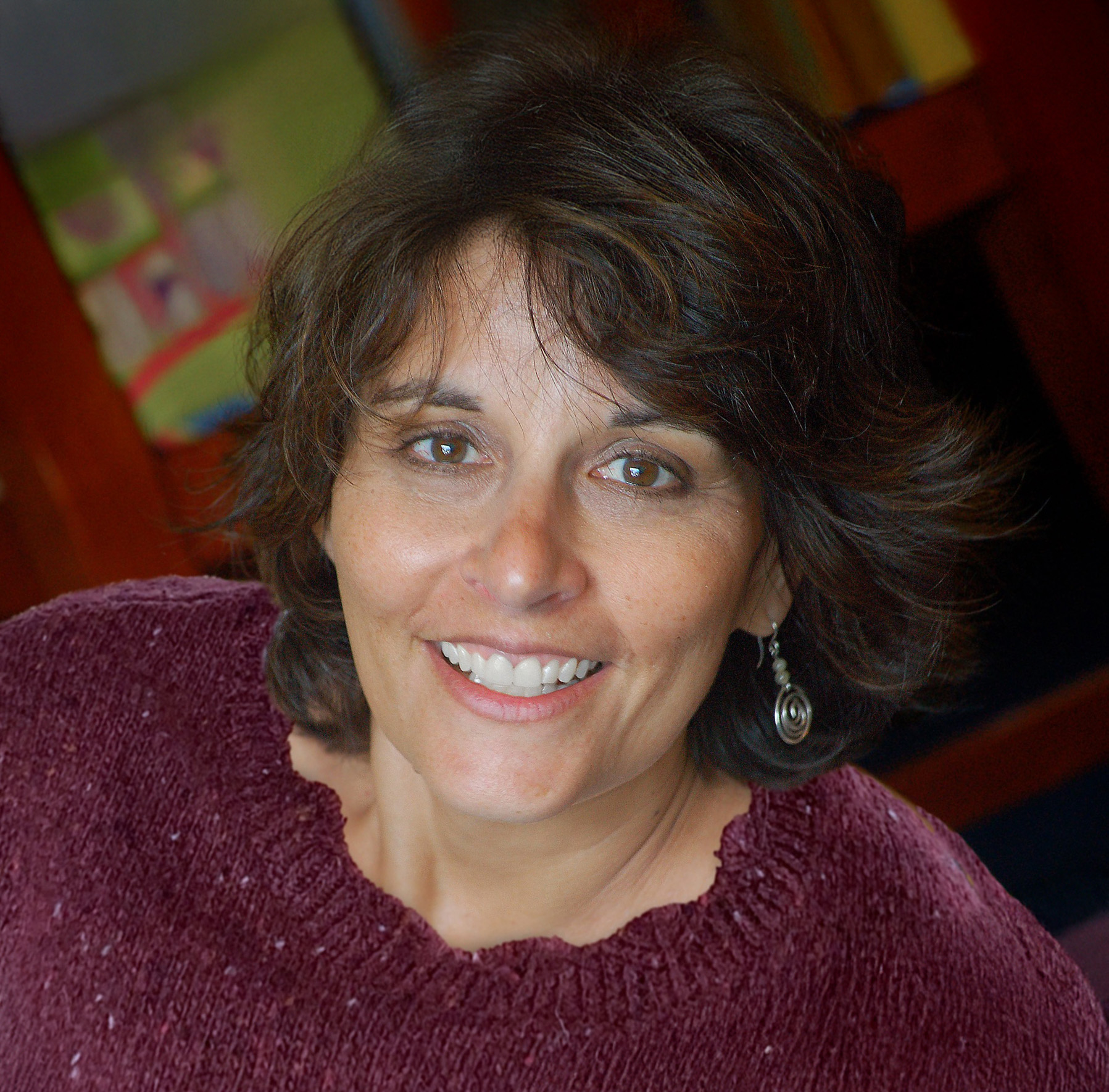
Nicole Bokat has published four novels: Redeeming Eve (2000), What Matters Most (2006), The Happiness Thief (2021), and Will End in Fire (2024). Redeeming Eve was nominated for both the Hemingway Foundation/PEN award and the Janet Heidinger Kafka Prize for Fiction. Bokat is also the author of a book on novelist Margaret Drabble and has written essays for several publications, including The New York Times, Parents, The Forward and Zibby Owens’ Substack, On Being Jewish Now. She lives in New Jersey, with her husband and dog, Ruby, and has two adult sons.
 READ HER LIKE AN OPEN BOOK