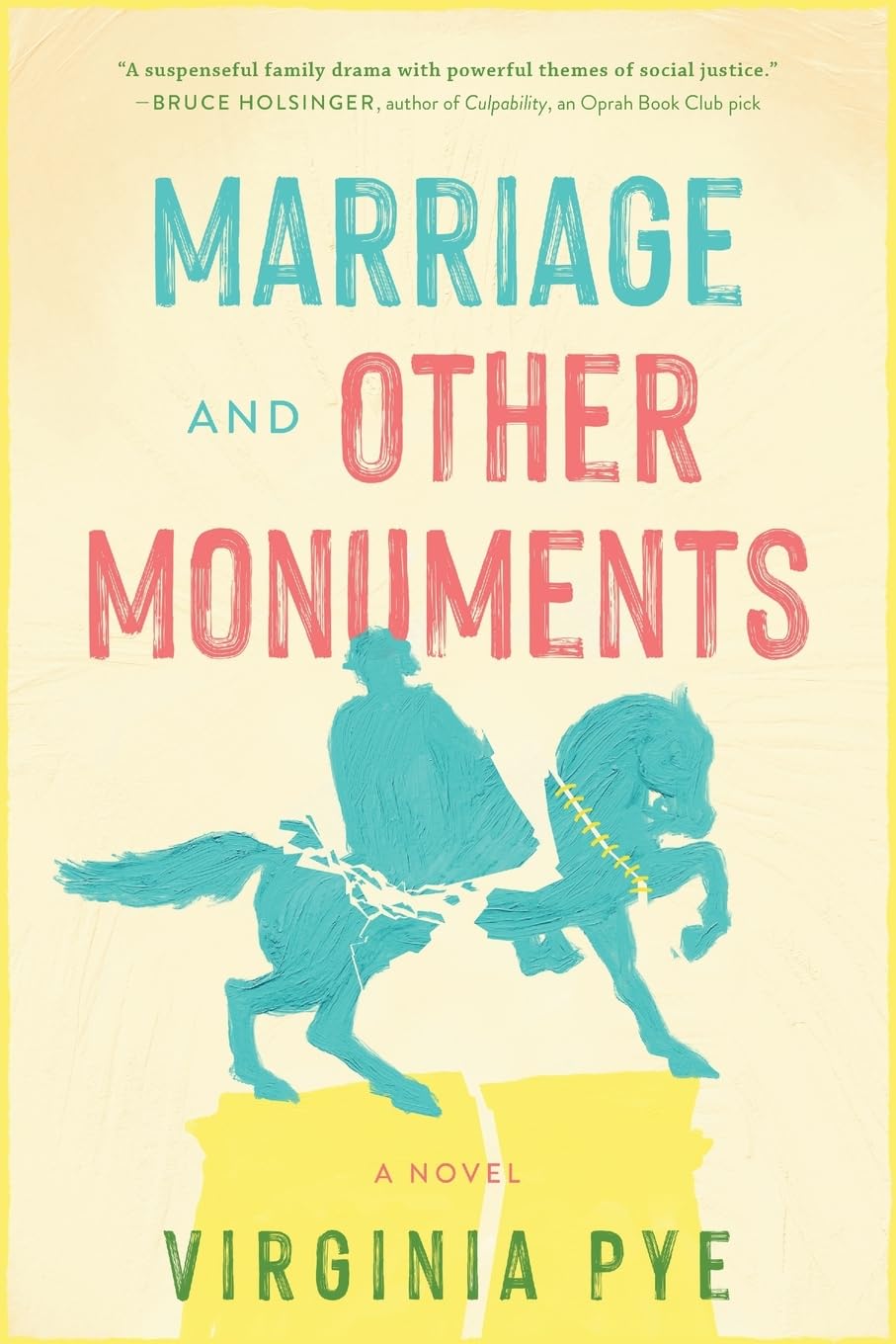
My latest novel, Marriage and Other Monuments, has just come out, two years and four months after my previous book. In today’s publishing world, that’s seen as lighting speed. People ask me how I did it. The trick, I say, is to have more than one project going at once. The best way to keep producing new books is to recognize that each has its own seasons with productive periods, fallow periods, and finally, if you’re lucky, harvest time. Working on more than one book at the same time can allow the work to evolve as it needs to, with its own timeframe and rhythm.
Marriage and Other Monuments went through many iterations. Back in 2017, I wrote a novel set in Richmond, Virginia about two estranged sisters whose marriages implode at the same time. It was my attempt to capture the city where I had lived in all its complexity, with characters from different backgrounds and classes, from a wealthy real estate patriarch to a BMX biker living with other rootless kids on an island in the James River at the heart of the city. My agent didn’t succeed in selling it, so I put it in a drawer (a computer file) but didn’t forget it. I knew it was there, its heart beating softly.
My husband and I moved to Cambridge, Massachusetts after seventeen years in Richmond. In 2020, after the murder of George Floyd, I watched from afar as social justice protests filled the streets of the city I had loved. Night after night, brave student journalists live streamed the encounters between police and activists on handheld devices. I watched into the early morning hours, even “witnessing” live the mob that pulled down the first Confederate statue on prominent Monument Boulevard.
The once sleepy city I had known was being rocked by change. My son lived near the action, and I feared for his safety as tear gas leaked through his windows and, one night, flames from a dumpster fire rose up the side of his apartment building causing him to flee. The city, and our country, was in flux and like everyone else, I wondered if things would ever go back to how they had been. Richmond, I assumed, would never be the same.
Such musings led me to open the computer file of the earlier manuscript. My desire to tell that story hadn’t died with those rejections from publishers, but recent events had redefined the narrative. By then I had secured a publisher for another novel, The Literary Undoing of Victoria Swann, and with its editing completed, my mind could veer in a very different direction—towards Richmond in its fraught moment. Several of the key characters still seemed viable to me and I used sections in their POVs from previous drafts. But a whole new narrative began to emerge, one that could only be set in 2020.
The new story grounded the personal more deeply in the political, reflecting our nation in that moment of upheaval. I still wanted this next novel, which at the time I called Monuments and Marriages, to be filled with scenes of places I remembered fondly. But the feeling of dramatic change would alter the story. Several Black characters became central. A radicalized soccer mom would join the protests and soon commit herself to an activist life. With change in the air, the two couples would each follow their own separate arcs to discover new lives.
The tides of change can recede frighteningly fast, as we’ve seen with the reactionary wave of anti-DEI and anti-Black Lives Matter. As I evolved the new book from the beating heart of the earlier version, I saw how important it would be to honestly portray the optimism and heroism of 2020. My novel begins in late May 2020, and ends some twelve weeks later in mid-August, before the last of the Confederate monuments has been removed. As I was finishing the book during Trump’s second presidency, I knew there would be added poignancy as the reader would bring to it knowledge of the pendulum swing to come.
When people ask me the trick to writing one book after the next, I like to suggest we take the material of our lives—whatever captures our attention through experience or research—and allow time to mold it and change it. To let the work evolve as we evolve in relation to it, including diving back in to revive an earlier work when we have a renewed sense of excitement about it. And then, without hesitation, to sit down and write new material. Nothing happens without the hours at our desks.
Right now, I’m returning to a novel I drafted in the early 1990s. I want to see if there are gems hidden in the words I wrote so long ago. I have to believe there’s a good reason I wrote it then, a reason that still deserves respect. Revisiting old work and breathing new life into it is a way of understanding how one’s thinking has developed. It’s a form of self-reflection. I encourage every writer to look back over earlier, unfinished work and be open to where it leads you. It might just be your next book.
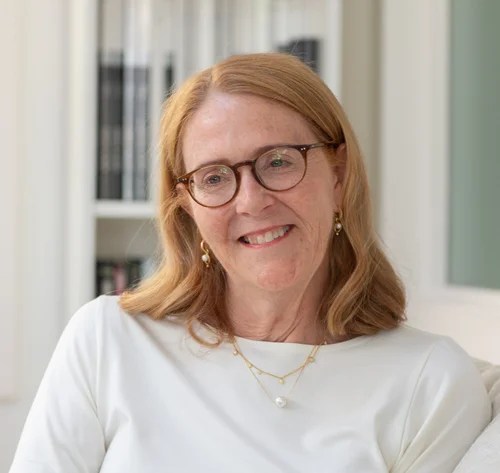
Virginia Pye is the author of four award-winning books of fiction, including two post-colonial historical novels set in China, River of Dust and Dreams of the Red Phoenix, and the short story collection, Shelf Life of Happiness. Her last novel, The Literary Undoing of Victoria Swann, is a love story to writers and readers set in Gilded Age Boston. Virginia’s essays have appeared in The New York Times, Literary Hub, Publisher’s Weekly, Writer’s Digest, The Rumpus, and elsewhere. She has taught writing at New York University and the University of Pennsylvania, and, most recently, at GrubStreet in Boston. Virginia is Fiction Editor of the literary journal Pangyrus. To learn more about her, please visit: www.virginia@virginiapye.com
You can buy these and many other books I’ve featured at my Bookshop.org store.
Purchases help fund this blog. https://bookshop.org/shop/openbook
Marriage and Other Monuments is a multi-generational drama set against a tumultuous time of racial tension in the South. In the summer of 2020, social justice protests and the removal of Confederate monuments rock the city of Richmond as the marriages of two estranged sisters implode. Marriage and Other Monuments concerns secrets within marriage, the erosion of trust, and how partners must ultimately decide what’s more important: being true to who they are as individuals or holding on to illusions of the past.
“Marriage and Other Monuments is a riveting contemporary narrative that intertwines suspenseful family drama, powerful themes of social justice, and a plot ripped soulfully from the headlines. Pye tells a story of race, marriage, and politics ideal for book club discussions and sure to satisfy readers of every stripe.” – Bruce Holsinger, Culpability
“The personal is political in this smart, engaging novel as the sister’s marriages become entangled with new allegiances and both couples are forced to examine what truly matters for all time.” – Alice Elliott Dark, Fellowship Point
“An engrossing, timely family saga, Virginia Pye’s Marriage and Other Monuments explores complicated truths about race and class–and love and desire–in the contemporary South, shining a brilliant light on the turmoil of 2020 through the lens of history.” —Joanna Rakoff, My Salinger Year
 READ HER LIKE AN OPEN BOOK