One unexpected benefit of starting a blog with the intention of promoting literary fiction (and the occasional memoir) by women was my exposure to books in translation. I’ve gone from reading almost nothing in translation to regularly reading works from around the world (I’d estimate it at around 20 percent of my reading). Discovering Europa Editions, Other Press, Graywolf Press, and New Vessel Press has made a huge impact in this regard. I hate to think about all the great novels I would have missed if I hadn’t taken this journey in my reading. While translated fiction occasionally makes the bestseller list or at least catches on with readers of literary fiction (e.g., Elena Ferrante’s Neapolitan Quartet, Frederik Backman’s many books, and Thomas Schlesser’s recent novel, Mona’s Eyes), most of these books remain below the radar, counting on word of mouth to reach appreciative readers.
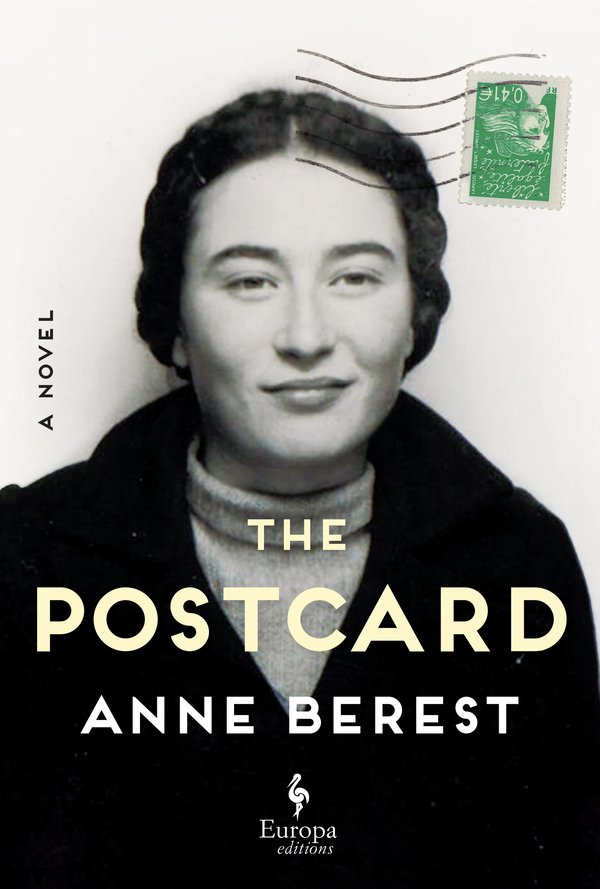
The Postcard by Anne Berest, Translated from the French by Tina Kover, Europa Editions, May 2023
In January 2003 a postcard arrived at the Paris home of writer Anne Berest’s parents. The only message: the names of her maternal great-grandparents and two of their children, all of whom had been murdered in the Holocaust. There is no return address and the handwriting is unusual. Who sent it and why, 60 years later?
In an attempt to discover the identity of the sender, Berest and her mother (the daughter of the oldest child, the only family member to survive the Holocaust) begin investigating the past to learn what happened to her great-grandparents and their children. (Berest’s surviving grandmother refused to talk about the Holocaust.)
The result of their search is this memoir/novel hybrid. It’s a history of the Rabinovitch family who fled Russia to Latvia after the Revolution, then emigrated to Palestine, and finally settled in France, where they were caught up in the Nazi genocide of Europe’s Jews. Berest also explores what life was like for Jews in Vichy France, at the societal and personal levels, with its collaborators and resisters.
The Postcard is also an examination of the effect of the Holocaust on one Jewish family’s descendants. Berest, a secular Jew, is compelled to examine her upbringing and reconsider her relationship to Judaism. And yes, she eventually learns who sent the postcard and why.
The Postcard is a riveting and heartbreaking read. It was the clear choice for my favorite book of 2023.
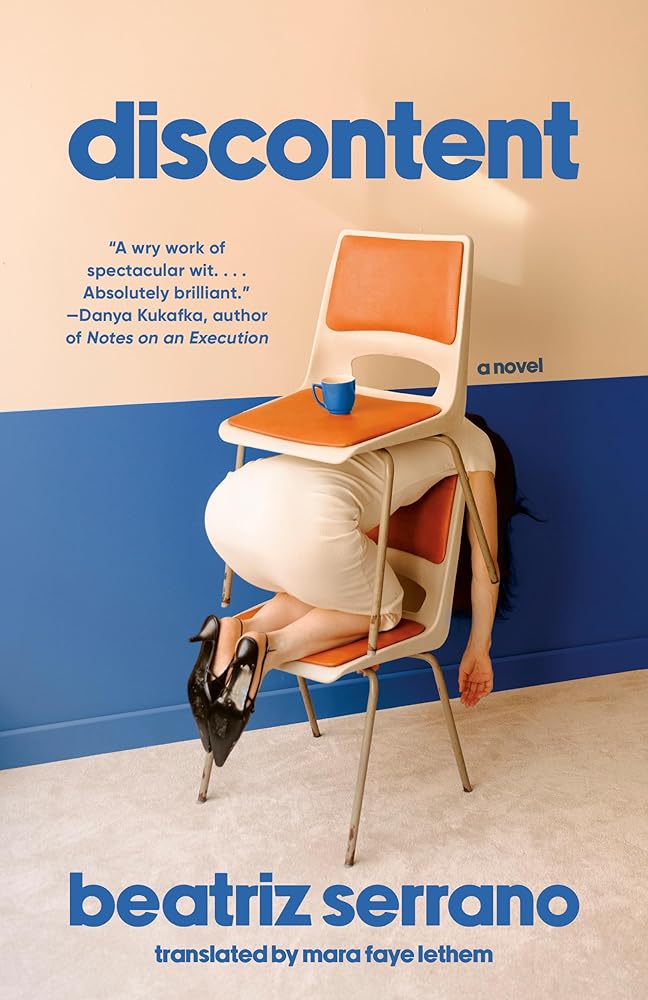
Discontent — Beatriz Serrano, Translated from the Spanish by Mara Faye Lethem, Vintage, 2025
I discovered Discontent when it was a Book of the Month Club selection for September 2025. Although it’s set in Madrid, it captures the nearly universal disenchantment experienced by those in the corporate world. From the outside, Marisa appears to have it all: she’s a middle manager at an advertising agency, lives in a nice apartment in a high-rise building, and has a convenient male friend a few floors away. But she hates her job, despises most of her co-workers, and has developed an anxiety disorder.
Discontent follows Marisa through various encounters that brilliantly depict everything people hate about modern work life. She is an expert at pretending to be busy, speaking in corporate jargon when necessary, and managing to produce (or steal) work that is competent enough to keep her employed. She often finds reasons to leave the office and go to the museum or a restaurant. It’s an alternately cringeworthy and hilarious story; my copy has a couple dozen Post-It flags marking the times Serrano completely nailed the many torturous aspects of corporate life or made me laugh out loud. The situation goes from bad to worse when the company plans a team-building retreat in the Segovia forest. Suffice to say, things spin out of control. I don’t want to say any more than that and spoil the fun.
While I enjoyed Discontent, it was also a little like reading a snarky blog. It’s very episodic and the close first-person narrative felt claustrophobic at times. But most of the time it’s a darkly humorous read full of incisive observations.
The Hebrew Teacher: Three Novellas by Maya Arad, Translated from the Hebrew by Jessica Cohen, New Vessel Press, 2024
The Hebrew Teacher, the first of Maya Arad’s eleven books to be translated into English, examines the lives of three Israeli women in the U.S.
Ilana teaches Hebrew at a Midwestern college but finds herself feeling threatened by a young Hebrew literature professor with different political views. Miriam travels to Silicon Valley to visit her son and his family and finds that everything is not as she expected. Efrat attempts to support her middle school daughter but makes a serious lapse in judgment when she jumps into the social media fray.
The Hebrew Teacher won the National Jewish Book Award for Hebrew Fiction in Translation in 2024. (Other notable winners include The Safekeep by Yael van der Wouden for Debut Fiction, Songs for the Brokenhearted by Ayelet Tsabari for Fiction, and 10/7: 100 Human Stories by Lee Yaron for Book of the Year.) Arad’s latest novel, Happy New Years, was published last August.
Fresh Water for Flowers by Valerie Perrin, Translated from the French by Hildegard Serle, Europa Editions, July 2020
It might seem surprising that a book whose protagonist is a cemetery caretaker would contain everything life offers, but that’s the case with Fresh Water for Flowers, the second novel by French writer Valerie Perrin and the first to be translated into English. On first impression, this 474-page novel appears to be a charming and quirky story with a distinctly French sensibility.
It’s the story of Violette, a former foster youth working as a bartender who is swept off her feet by the older and magnetically appealing Philippe Toussaint. Before long, they are working for the railroad as level-crossing keepers; they live in a small house next to the tracks in rural France and only have to lower the barriers every few hours when a train passes by. Violette does the work while Philippe plays video games or goes on long rides on his motorcycle.
The core of the story concerns the shocking events in 1993-1996 that led Violette to the cemetery caretaker position, which she maintains for the next 20 years. Along the way we meet Sasha, the older gentleman who held the caretaker position before Violette and who serves as something of a surrogate father figure; the small group of men who work at the cemetery and often gather in Violette’s small house on the grounds for coffee and the desserts she bakes for them; and Julien Seul, a detective from Marseilles who comes to the cemetery to place his mother’s ashes, befriends Violette, and ends up revealing a mystery concerning a lawyer who is buried there. There is far more to everyone than meets the eye.
The story is heartbreakingly dark in one subplot in which Perrin displays great skill as a writer of mystery and suspense. Another subplot concerns the reasons behind the request of Seul’s mother that her ashes to be placed on the grave of a man Seul has never heard of. Perrin keeps the reader off-balance as she weaves these seemingly unconnected strands together into a life-encompassing whole. And all the while we root for Violette to build the life she deserves and experience the love she has been so long denied.
So this novel set mostly in a cemetery is in fact entirely concerned with life. Yes, there is loss, but there is also love and longing, passion and pain, heartbreak and healing. Fresh Water for Flowers is a completely engrossing reading experience.
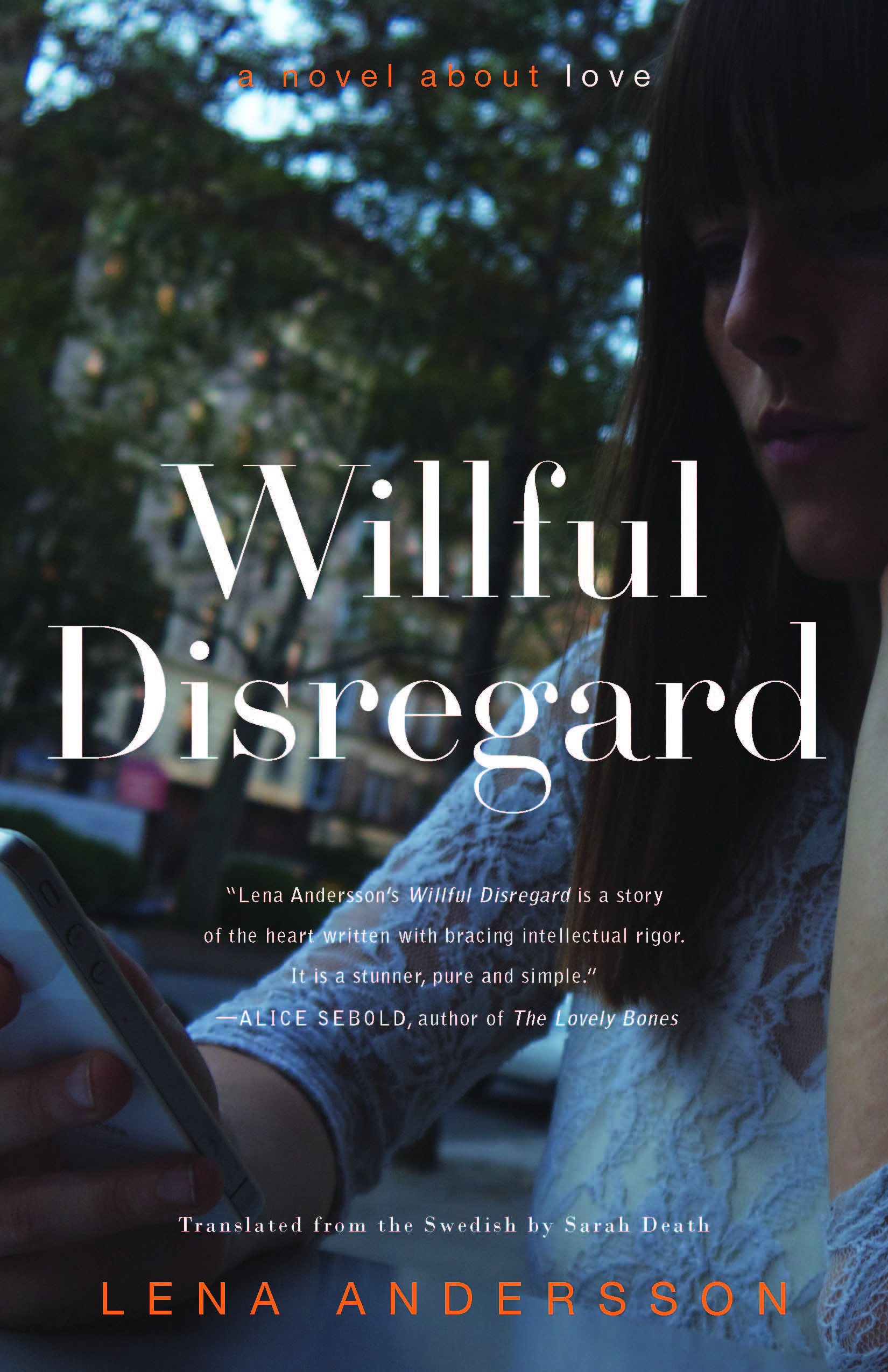
Willful Disregard by Lena Andersson, Translated from the Swedish by Sarah Death, Other Press, Feb. 2016
Lena Andersson is a well-known newspaper columnist, social commentator, and novelist in Sweden. Willful Disregard, her fifth novel and winner of Sweden’s highest literary honor, the August Prize, was her first book to be published in the U.S., and it is an impressive introduction to a writer with keen insight into love in both its universal characteristics and its modern trappings.
Andersson probes the mind of 31-year-old journalist Ester Nilsson, who becomes infatuated with artist Hugo Rask when she is asked to write an in-depth profile of the semi-legendary older man. From their first interview, they seem to be intellectual kindred spirits, and Ester is entranced. She is so convinced that her future lies with him that she leaves her long-term boyfriend. Undoubtedly, Ester reasons, Rask is disengaging from his other commitment as well. Ester hangs on Rask’s every word, gesture, and action, obsessively analyzing each for its true meaning with regard to his feelings and their burgeoning relationship. She squeezes impossibly rose-colored interpretations out of the most minor of words and deeds.
The ruthlessly unsentimental narrator sees through Ester’s pretensions and rationalizations into her true motives, flawed thinking, and overwhelming need to “only connect.” In doing so, Andersson has written one of the most accurate explorations of the self-deception and madness of new love that I have ever read. But Andersson also displays a sharp wit and the ability to find the bittersweet humor in most situations. Although Andersson never introduces Ester’s friends individually, she makes effective and drily humorous use of them as a background character. “The girlfriend chorus was kept very busy. It interpreted, comforted, soothed, exhorted and indicated new directions of travel. She had to break free, it said, and she repeated: I’ve got to break free from this idiocy.”
As I read Willful Disregard, my reactions ranged from cringing and shaking my head in disbelief, to laughing and nodding my head in agreement — all in recognition of its essential truth.
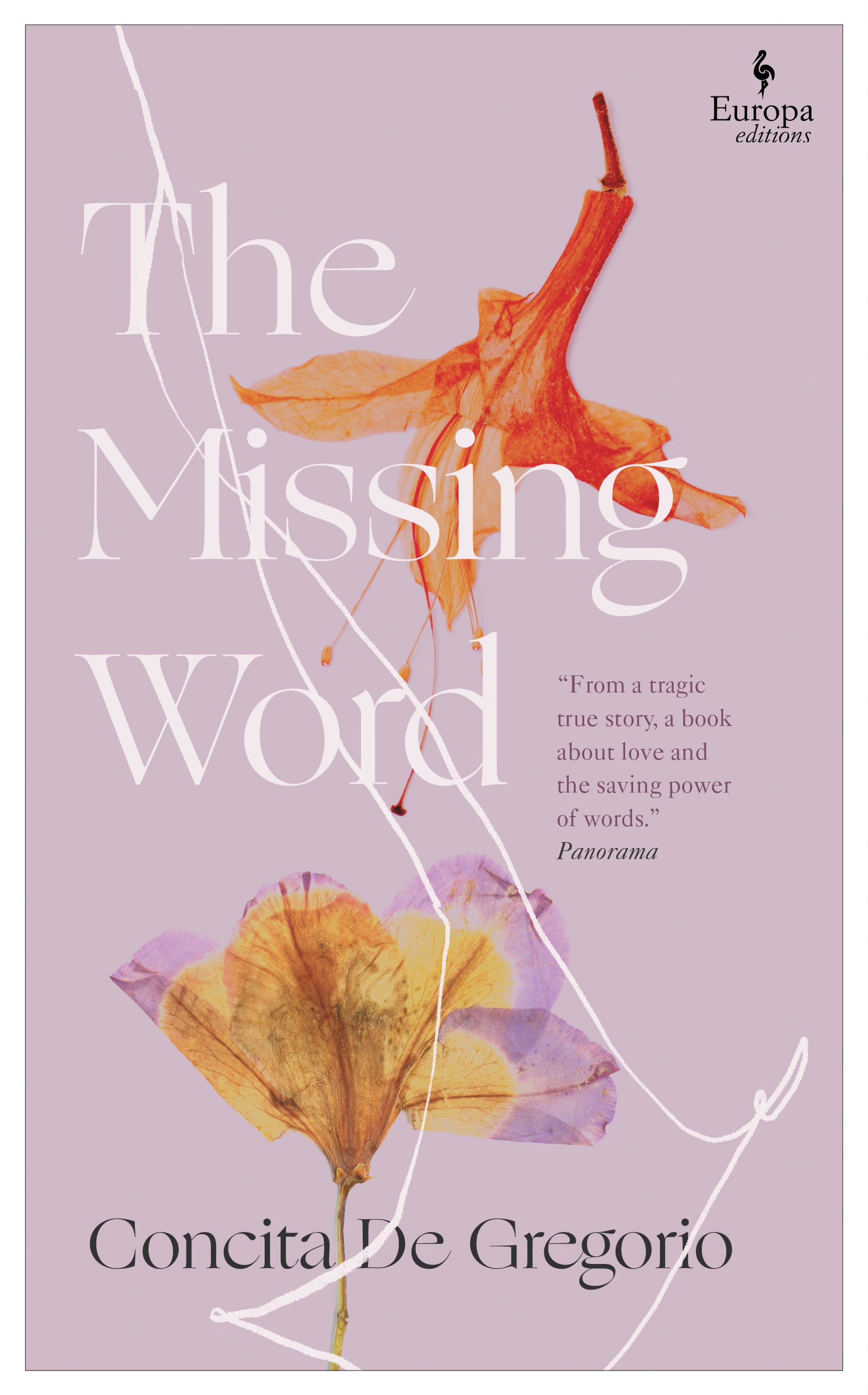
The Missing Word by Concita De Gregorio, Translated from the Italian by Clarissa Botsford, Europa Editions, July 2022
Irina is an Italian lawyer living in Switzerland with her husband Mathias and their two daughters, Alessia and Livia. Their marriage ends after years of tension, and they maintain a relatively cordial relationship for the benefit of the girls. But one weekend Mathias fails to bring the girls back. They’ve disappeared. Then Mathias’s body is found, an apparent suicide. But where are the girls? Dead, lost, hidden?
In The Missing Word, journalist and broadcaster Concita De Gregorio imagines Irina’s life following this traumatic event. In a fragmented first-person narrative, De Gregorio puts us in the mind of a mother bereft of her children and relentlessly searching for them. She examines everything and everyone in an attempt to stitch together an explanation and find the girls, even if, as she eventually concedes, they are dead.
There are letters to her husband, friend, therapist, and grandmother, as well as to the girls’ teacher, a prosecutor, and a judge (asking her to review the inconclusive investigation). In short chapters, Irina writes psychologically revealing lists titled “Anger,” “Happiness,” “Words,” and “Memory.” But the heart of the story is contained in chapters focusing on episodes past and present involving Mathias, the nanny, Irina’s mother-in-law, her brother and father, and her new boyfriend, Luis.
The Missing Word is a riveting and heartbreaking exploration of parental love, memory, and the saving grace of words. But the missing word is one that describes a mother who has lost her children.
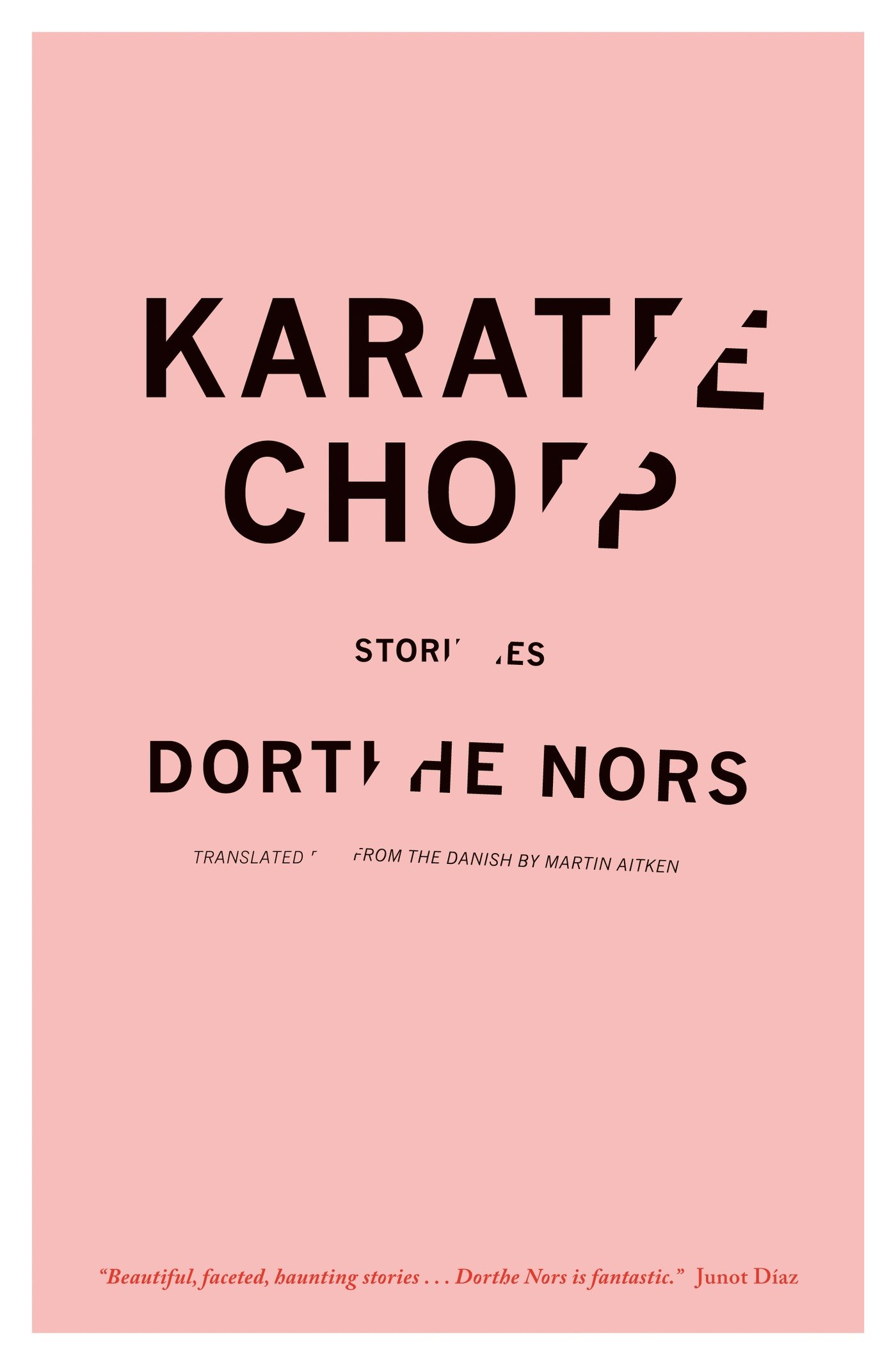
Karate Chop: Stories by Dorthe Nors Translated from the Danish by Martin Aitken, Graywolf Press, 2014
Dorthe Nors’s Karate Chop is one of the few books that truly deserves to be described with that overused adjective, “unique.” The Danish novelist’s first collection of stories is a short, sharp shock that hits you like, well, a karate chop to the neck. In fifteen stories that run from three to eight pages, Nors examines key moments in the lives of her quirky, very human characters as they struggle to make sense of other people in their surreal world. She gets right to the central conflict, stripping everything else away. It’s probably cliché to say, but there is a palpable Scandinavian coolness and efficiency to her stories. Her prose is crisp and economical, with nary a word out of place. She has polished these diamonds to an icy sparkle.
The best stories are glimpses into strange lives or at least strange moments that lead to unexpected results. “The Buddhist” follows a corporate type as he climbs the ladder to the top, where things don’t go quite as he planned. The narrative voice is so cynical and knowing, so droll, that what might be a dull and predictable series of incidents in the hands of a less talented author is instead taut and suspenseful. In “Female Killers,” a husband feeds his addiction to weird websites. “Mutual Destruction” examines the relationship of two friends, Henrik and Morton, who hunt together and have agreed to shoot each other’s dogs when the time comes to put them down. But Morton’s wife Tina has left him, and there is clearly something amiss as Henrik watches Morton and his dog from just inside a stand of trees on a hill above Morton’s property.
The title story is one of the most powerful and haunting stories you are ever likely to encounter and should be widely anthologized. Annelise, a school psychologist, is dating Karl Erik, the father of a young boy she counsels. He told her when they met that “he had a temper, was something of a coward, and a poor father to boot,” but “she never believed what these men said about themselves. Mostly, she had considered this self-deprecation, if not a form of politeness.” But Karl Erik had not lied to her. Pressures and misunderstandings in their relationship had reached a head, and she had applied a metaphorical karate chop to the problem. The ramifications of her course of action remain unmentioned, and the last paragraphs reverberate in the reader’s mind.
These concise, elegant, and disturbing stories require (and reward) rereading. This slim volume packs quite a punch.
 READ HER LIKE AN OPEN BOOK