I didn’t plan for this topic of “must-read books you might have missed” to be a three-part series, but the first part got such a positive response that I decided to do a second. Then the same thing happened with Part 2, so I figured I’d push my luck and regale you with one more. So now you have 15 outstanding books that many people missed when they were published and which have been left behind in the intervening years due to the flood of books that are published every year.
If you’ve read any of these books, I’d love to hear your thoughts. And if this post leads you to add one or more to your reading list, let me know.
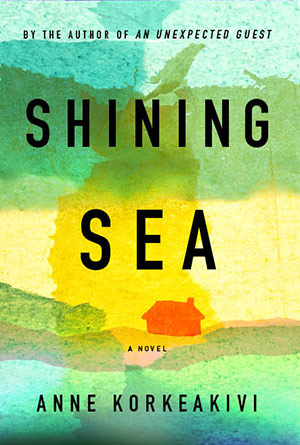
Shining Sea
Anne Korkeakivi
Little, Brown & Company, 2016
Anne Korkeakivi’s second novel (after An Unexpected Guest) is a family saga set in varying locales ranging from California and Arizona to the UK and Africa and spanning the years between World War II and 2015. Across five “books” she immerses us in the life of the Gannon family, starting in 1962, when 43-year-old Michael Gannon, a WWII vet, suffers a fatal heart attack while painting the house. He leaves behind his beloved wife Barbara, four children, and an unborn baby girl. Death is the unexpected guest in Shining Sea, which explores the seemingly endless ripples Michael’s death — and war generally — causes in the following decades.
The story moves in leaps and bounds through the years, using key social events to shade in the context of the family members’ lives and effective flashbacks to fill in key details from the intervening years. Barbara holds both the family and the story together with her unfailingly generous spirit. Eventually, the story shifts focus from Barbara to middle son Francis, a sensitive soul cast adrift by loss. We follow him to Woodstock, seven years after his father’s death, and later to London’s late 60s “groovy” scene and then to the Inner Hebrides islands off Scotland.
Rebellious older daughter Patty Ann struggles with the consequences of repeated poor judgment but gives her mother a grandson whom she adores and who provides light at the end of this often dark novel.
Shining Sea reminded me of a compressed version of Jane Smiley’s Hundred Years Trilogy (Some Luck, Early Warning, and Golden Age). While the latter covers twice as much time, concerns many more characters, and is written with far more detail, Shining Sea has a similar impact. In particular, the novel surprised me with its emotional punch. I was skeptical that Korkeakivi could write a family saga with serious issues at its core in less than 300 pages, but to a large degree she has succeeded. The key to the artistic success of Shining Sea is Korkeakivi’s ability to move the plot and develop her characters by implication; she displays a deft hand at knowing when to move quickly and allow the reader’s general knowledge to fill in the background and when to slow down and focus on the moments in the characters’ lives that will define them and affect us.
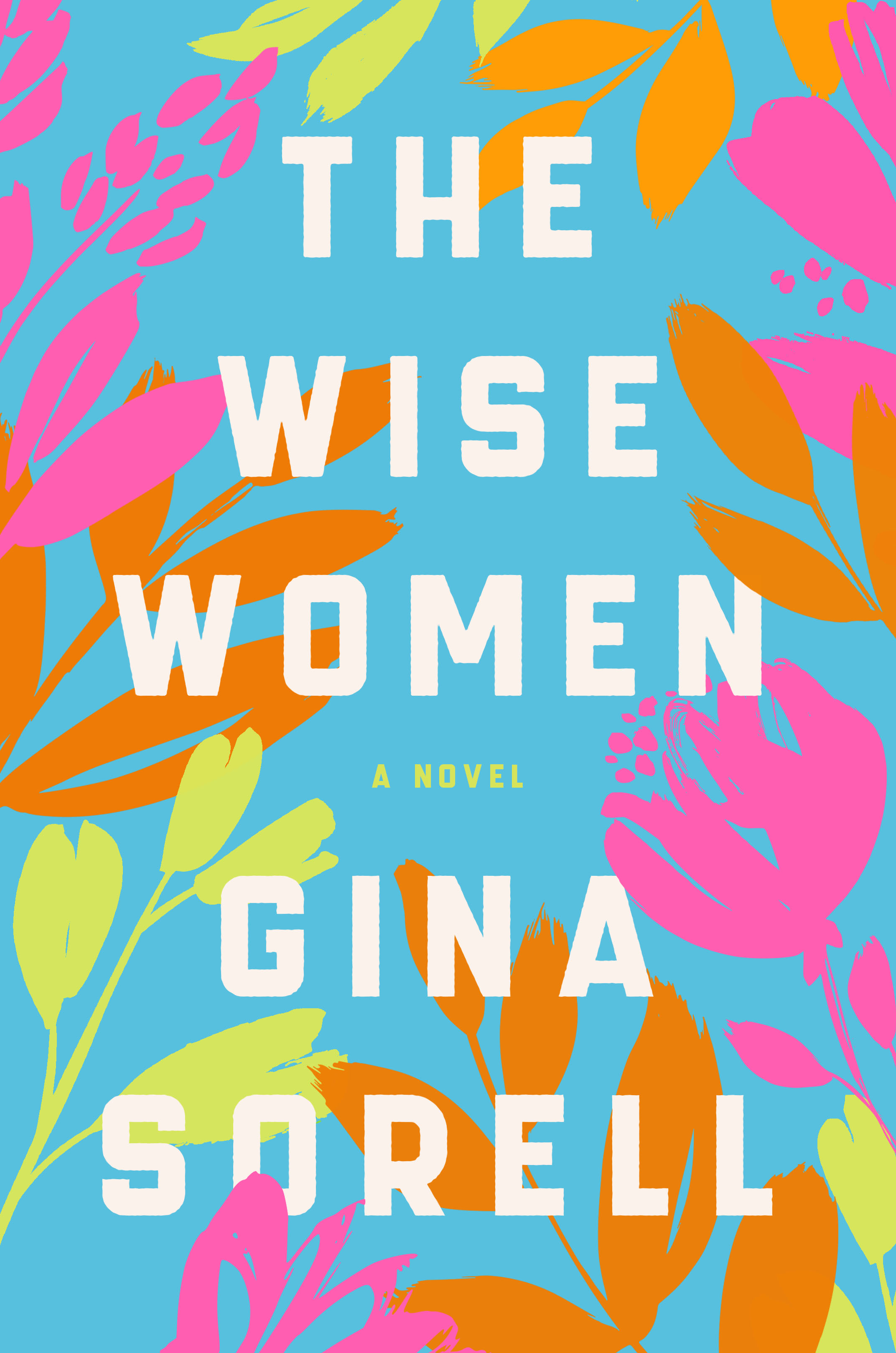
The Wise Women
Gina Sorell
HarperCollins, 2022
Wendy Wise has been a popular advice columnist for four decades. But her daughters, Barb and Clementine, have opposing views about the value of her advice—to readers and especially to them. The former has a testy relationship with her mother, while the latter remains a mostly dutiful daughter.
The mother-daughter and sibling relationships get complicated when all three women enter transitional phases. Clementine discovers that her ambitious but impractical husband Steve has taken the money she had given him to buy their Brooklyn house and used it for a carbonated vegetable water venture he is convinced will make them rich. To make matters worse, Steve has disappeared. Clementine has her hands full trying to make rent and take care of her six-year-old son, Jonah. Barb’s architecture firm is experiencing financial issues and her relationship with fitness trainer Jill is on the rocks after Jill cheated on her. Barb also has decidedly mixed feelings about designing residential towers of shoebox condos despite the relentless demand for housing in Brooklyn.
The novel follows the three Wise women as they try to untangle their personal and professional lives. While this synopsis might make it sound like The Wise Women is a sobering read about the struggles of modern life, it’s a fast-paced, sweet, and often funny story. Sorell brings these complex women to life with heart, wit, and insight into their difficult circumstances. While there are perhaps a few too many crises hitting these characters at the same time, the deft plotting, sharp dialogue, and (mostly) sympathetic characters carry you along.
The Wise Women also has a lot on its mind: secrets, lies, and misunderstandings in relationships; gentrification in Brooklyn; the price we’re willing to pay to chase our dreams; the sacrifices parents make for their children; the challenges of getting older; the power of social media influencers; and more. It’s also a love letter to New York City, especially Brooklyn. It’s a breezy but thought-provoking read.

Honor
By Thrity Umrigar
Algonquin Books, 2022
India is a land of contrasts: a Hindu culture going back more than 2,500 years and a booming, high tech economy; small villages with a traditional lifestyle and some of the largest cities in the world; a population that is majority Hindu with a significant Muslim minority; grinding poverty and eye-popping wealth; oceans, plains, and mountains; the list goes on. India contains multitudes.
In Honor, Thrity Umrigar puts the tension between these contrasts to good use in the story of Smita, a thirty-ish Indian American journalist. She is called away from a vacation in the nearby Maldives to help her close friend Shannon, an American journalist based in Mumbai who’s in the hospital with a broken hip and urgently needs help covering a major story. Smita returns to Mumbai for the first time since her family emigrated to the United States 20 years earlier and finds herself entangled in the story she’s been asked to cover. Her trip to a city she swore she would never set foot in again triggers memories of her childhood and the complex series of events that led her parents to flee to the U.S.
The core of Honor concerns the case of Meena, a poor Hindu girl from the distant village of Vithalgaon who upsets the balance in her family when she and her younger sister decide to work outside the home. Her older brothers, traditional Hindus, are responsible for Meena and Radha. No woman in their village has ever held a job, and her brothers are outraged by the humiliation their actions have caused. Their wounded pride turns to fury when Meena falls in love with a Muslim co-worker.
This is the hornet’s nest that Smita encounters. What follows is an engrossing novel that is both a character study and a page-turner. Honor probes the tension between traditional and modern Indian culture, Hindu and Muslim, the individual and the community, independence and interdependence, the dual identity of an Indian American, and the central human issue of what we owe each other. What constitutes honor? How do we choose to honor each other?
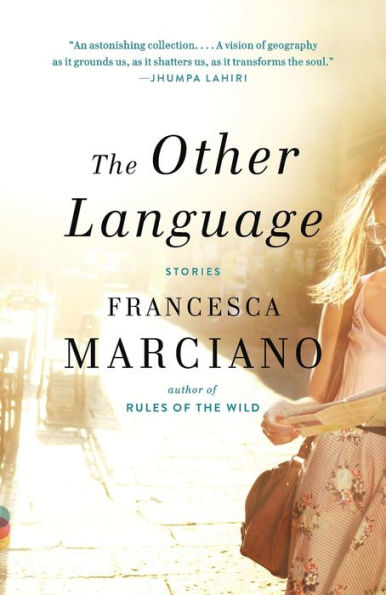
The Other Language: Stories
Francesca Marciano
Vintage Contemporaries, 2015
Francesca Marciano is not well known to the American reading public despite three novels and two impressive short story collections, The Other Language and Animal Spirits. In this collection, Marciano tells the stories of characters who find themselves on unfamiliar turf, literally and figuratively. Most involve people who have traveled to exotic locales (a Greek island in the title story, Tanzania in “Big Island, Small Island,” “An Indian Soiree”), moved from a city to a village (“The Presence of Men,” set in far southern Italy and “The Club,” which is set in Mombasa and coastal Kenya), or who live amidst a different dominant culture (“The Italian System” and “Quantum Theory”). All are disoriented by language or culture, leading them to stray from their normal behavior.
The standouts are the longest stories here: “The Other Language,” “The Presence of Men,” and “An Indian Soiree.” In the title story, twelve-year-old Rome resident Emma travels to a Greek island for a vacation with her father and two younger siblings following the death of her mother. There she encounters two slightly older English brothers, with whom she is fascinated because they speak that “other language.” That “language” is both English and their seeming worldliness.
“The Presence of Men” follows a divorcee from Rome as she renovates an old house in a tiny southern Italy village. Of course, she takes several missteps, alienating the locals, but the interest is in watching her develop a relationship with the village matriarch Mina, a seamstress. The plot thickens when her brother Leo, a film agent, comes to visit with his movie start client, Ben Jackson, and they befriend Mina. In “An Indian Soiree,” a married couple who have grown tired of each other take a trip to India. They love each other, but the life has gone out of their relationship, and they seem not to know how to rekindle it.
Marciano is unsparing in her depictions of these characters’ foibles, but she also shows us their essential humanity. She writes with a strong sense of place, one that is often palpable. But what stands out most in these stories is Marciano’s clean, elegant prose. Even the less impressive stories in this collection are a pleasure to read, as you sail along on her controlled and well-crafted sentences. Marciano’s stories can be deceptively subtle, and she doesn’t rely on pat endings that tie up all the strands.
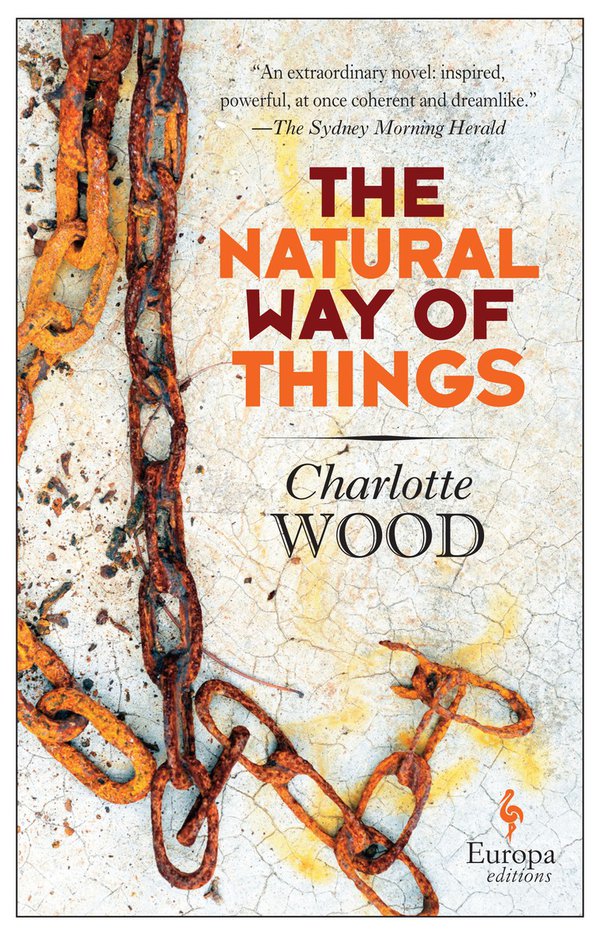
The Natural Way of Things
Charlotte Wood
Europa Editions, 2016
Australian novelist Charlotte Wood has written a novel set in the near future that is nevertheless a story of and for these times. It is in the narrowest sense a dystopian novel, in that it describes a circumstance that does not yet exist but that requires very little suspension of disbelief to accept. It is this close to being plausible. It made a big impression in Wood’s home of Australia, where it was awarded the 2016 Stella Prize as the best novel by an Australian woman.
The story begins as two young women, Yolanda and Verla, awaken from a drug-induced sleep to find themselves prisoners of some sort. They have no idea where they are, who is responsible, or how they got there. Nor do they know why they are in this silent place. Before long, they discover that they are on an isolated, abandoned sheep station in the Australian bush, along with eight other girls in their late teens and twenties. They begin to recognize a few of the girls from sex scandals involving powerful and influential men in the government, organized religion, and business world. What follows is an experiment in punishment and degradation that seems to have been concocted by modern-day sadistic Puritans.
The ten girls face their desperate circumstances in varying ways, some believing their families will find them and release them, others soon concluding that no one knows what has happened to them–that they have essentially disappeared–and unsure of whether escape is even possible. Over time tenuous friendships and fierce rivalries develop. The other girls alternate between supporting and terrorizing each other in a situation reminiscent of Lord of the Flies. Thoughts of escape are thwarted by various methods.
Wood’s narrative is taut and unrelenting; we experience the dire circumstances along with the girls, as both the characters and reader slowly discover what they are dealing with. The Natural Way of Things is a riveting read, as you charge through the book seeking answers to several burning questions. Wood uses the allegory of this group of young women imprisoned for their sexual escapades to explore the contemporary landscape of widespread misogyny, in which victims of rape and sexual assault are put on trial in the media and in the courtroom. It is a world where people seem more fully engaged on social media than in their actual lives and where faceless corporations are an inextricable part of our lives, often knowing more about us than we could imagine.
Wood’s prose has a spare, poetic beauty that matches the austere beauty of the Australian bush setting, which is palpable. One can feel the blazing heat, see the dust in the air, and hear the oppressive silence from the isolation. In The Natural Way of Things Wood has created a world that is equal parts Mad Max: Fury Road and Margaret Atwood’s The Handmaid’s Tale. In the last 50 pages, the narrative increases in pace and intensity, hurtling toward its jaw-dropping conclusion.
 READ HER LIKE AN OPEN BOOK