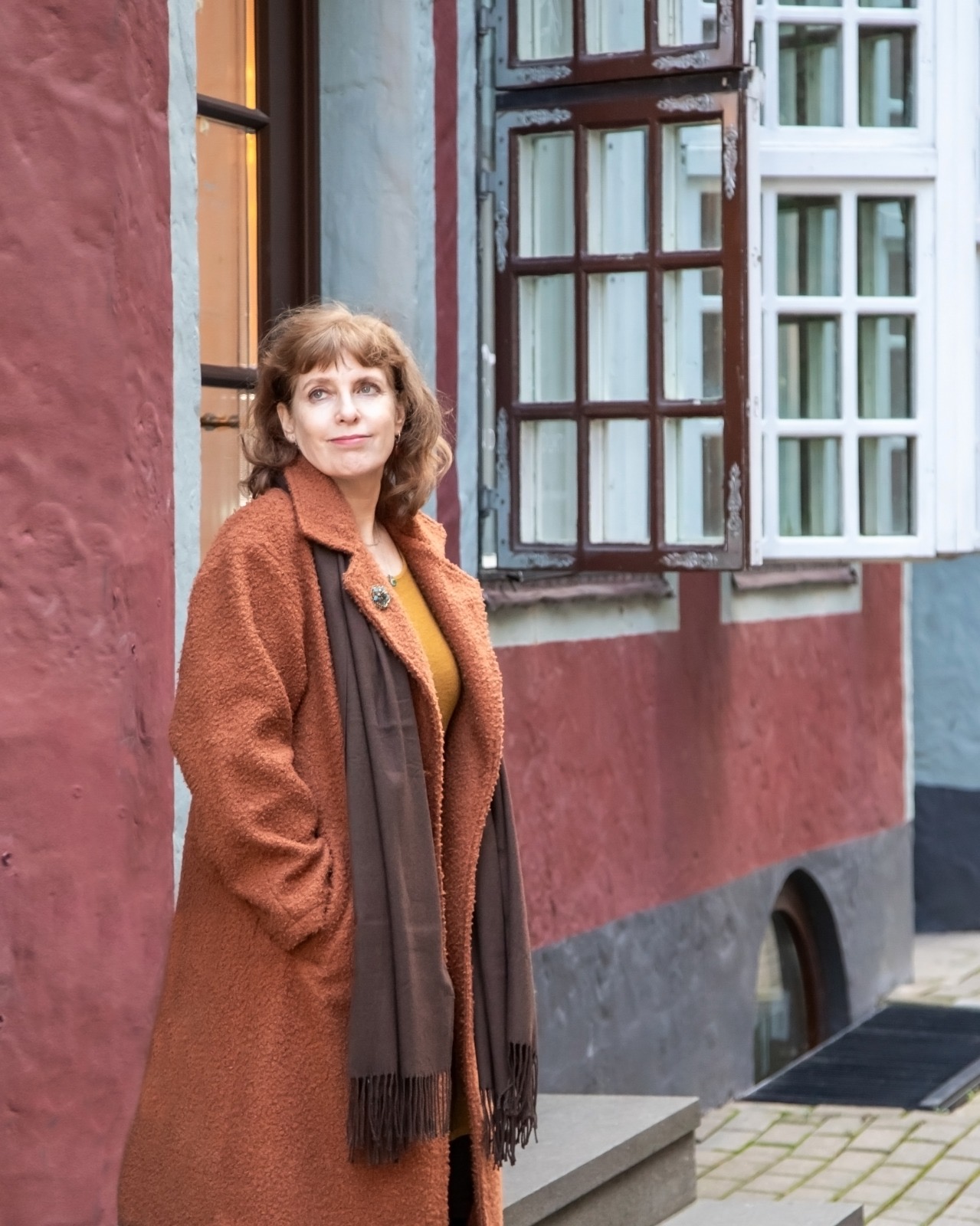
There is no train from Riga to Ventspils, a port city on the Baltic Sea 115 miles northwest of Riga, the capital of Latvia. Not enough people make the journey to Ventspils to warrant a train, yet this small city, population 34,000, is home to the International Writers’ and Translators’ House, where I’m heading for the month of November. This is my first writing residency and, as I glimpse stands of birch trees through the bus’s window, I am anxious and excited.
Latvia is the land of my maternal Jewish ancestors, with my roots going back to the late 1700’s. My great-grandfather was a prosperous timber merchant who’d somehow made his way from a poor shtetl in Belarus to a grand house in Riga, on Elizabete iela (street), still standing today. My great-great grandfather was a lawyer, as was one of my grandmother’s first cousins. From information I’ve gathered, with the help of Rita Bogdanova at the National Archives, I’ve learned that most of the family, including the women, were educated at gymnasiums (high schools), which was rare in the 1800s for Jews.

The manuscript I’ll be working on during this residency is, fittingly, about my roots in Latvia, how my large family disappeared over three generations, and how the trauma my ancestors endured led to generational estrangements on my maternal line. I touched on inter-generational trauma in my 2022 novel, Daughters of the Occupation, which was partially set in Latvia, and have wanted to dig deeper into this topic since then. Now, I’m looking forward to the time and space offered at the residency to help me write and make sense of the tumultuous history I’ve inherited.
As we near Ventspils, my heart thrums with nerves. A couple of months ago, I saw a film made to celebrate Jane Austen’s 250th birthday—”Jane Austen Wrecked My Life.” The film follows an aspiring female writer to a residency inspired by Austen, but from the moment she arrives, she is stuck and can’t write a word.
What if this happens to me? What if all the thoughts and words that have been simmering in my mind for years suddenly vanish when I begin my residency? What if I can’t cope with endless days of unstructured time?
What if…what if…what if…
The familiar refrain ploughs through my head as the bus pulls into the small station. There is no more time to dwell on what could be. I have arrived in Ventspils.
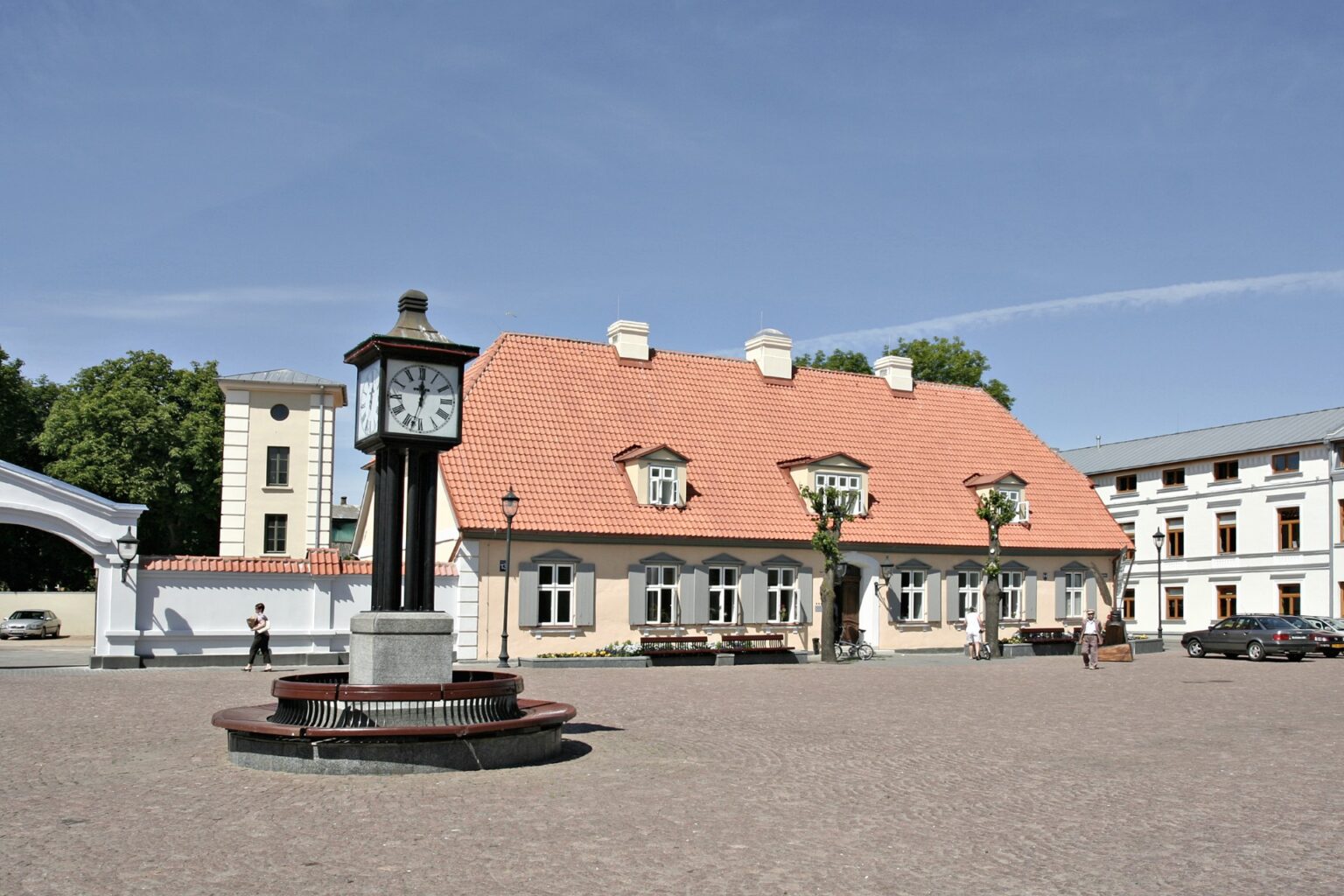
The residency building, in the town square, is even more charming than it looks in photographs. It’s the former town hall, built in the 1700s, and it houses up to nine writers and translators every month of the year. A gigantic sculpture of a feather in a jar of ink stands proudly in front, an impossible-to-miss symbol of the building’s purpose.
Brenda, a translator who works part-time at the residency, shows me around the heritage building, which was renovated in 2006 for the opening of this program. It’s a fully paid residency, which means there is no cost to stay for a month. To say it has become popular would be an understatement. I’ve been waiting two years for this day. Currently, there is a three-year wait list for a coveted residency spot.
The expansive kitchen is well-organized for nine people, with a large island, shelves for every person, two refrigerators, a dishwasher, a stove and an oven. Residencies vary when it comes to meals. Here, we make our own food and are given a stipend to help offset the costs. This makes sense to me. I’m a 5 a.m. writer and can’t imagine trying to arrange meals to suit different schedules. There will be a few communal dinners and lunches, Brenda tells me, which are popular with residents.
My corner room is far bigger than I anticipated, with a bedroom, a sitting room, and a bathroom. The desk sits in an alcove beneath a window overlooking a cobblestone square. This is when it hits me. For the next month, I will be ensconced here, within walls that have endured centuries of historical drama, in a city that originated in the 14th century as a member of the Hanseatic League.
After a five-minute walk to a small grocery store, where I stock up on Ramen noodles, rye bread, eggs, and bananas, I make coffee and settle into my room to begin writing. There is nothing in my way, no interruptions, no dogs barking, no set meal times, no time restrictions at all. The freedom is exhilarating and daunting. I haven’t had time like this, for myself, in decades. In my mind, I see myself doing yoga every day, taking long walks to the sea as breaks and, most of all, writing.
I stare at my computer screen. I gaze out the window at people walking through the square. I flip through one of my notebooks. Then, slowly, I begin writing.
The first resident I meet is Margherita, who is from Italy and, like me, has roots in Latvia. She’s a translator who learned Latvian ten years ago and now translates books from Italian and German to Latvian. Her ability to switch languages is impressive. She is not unique. Adrian, from Cologne, Germany, speaks excellent English as well as his native German. He is writing about his mother during the residency. Arvydas, from Lithuania, medaled in swimming in the Montreal Olympics, then earned a PhD in philosophy. I only see him at the communal dinners or, in the mornings, when he gets on one of the bicycles available, and goes for a ride. Then, there is Inga, a renowned Latvian writer who received a Fulbright Scholarship and earned a PhD in literature at Southern Illinois University. She switches between Latvian and English with astonishing ease.
A mother, Pilar, and daughter, Ilaria, are from Kyiv, Ukraine. Ilaria, a translator, moved to Poland when Russia invaded. At our first communal dinner, Pilar, a photographer, explains in Russian as her daughter translates, that the night before leaving for the residency, a bomb exploded in front of her apartment building. Five people were killed. It happens almost every day, she says, but the world has forgotten. There are many power outages, Ilaria adds. Her mother spends time in bomb shelters.
Of the nine writers and translators in my residency, I am an outlier, the only person who speaks just one language. I am also the sole writer from North America, which makes me question the efficacy of our educational system.
It’s been a week since I arrived and I’ve already learned a few things about myself. First, I’m not a self-starter when it comes to yoga. I’ve done one short “Yoga with Adrian” in eight days. Second, I don’t like the smell of herring boiled, baked, or roasted. Next, I love European coffee. It’s bolder and stronger. I don’t know how I’ll go back to my regular coffee in Canada. Finally, it is harder than I expected to manage the endless time, the sameness that feels like a facsimile of previous days.
Still, I am starting to fall into a comforting rhythm of writing, walking, drinking coffee, writing, napping, eating, writing, watching mindless shows on my iPad, and sleeping. I walk to the sea almost every day. I close my eyes and listen to the waves roll in and out, steady as time, and feel the painful emotions I’ve confronted while writing begin to ease. This manuscript is forcing me to dig up ghosts of the past, moments I’ve buried in the cellar of my mind, family estrangements that have shattered my heart. Being alone, not having to turn away from my feelings in order to cope with routines at home, is a gift for my soul and for my writing.
At the end of the month, I’ve written 40,000 words, a word count I could not have achieved at home in the same time. My head is reeling with thoughts I’d suppressed for years, sentiments that have begun to help me understand myself and my place in my family with greater clarity. My manuscript is beginning to feel like a real first draft.
On our last night together, we are supposed to attend a concert. But I am congested and feel rotten. I stay in bed while the other residents go. It is not the goodbye I wanted, but I have an early bus to Riga the next morning. We have exchanged emails and social media information and, as I curl up on the bus for the journey to Riga, I read a post from Adrian, saying goodbye to the residency. Then, I read about another bomb that hit Kyiv during the night, as Pilar was on her way home. And as the bus leaves Ventspils, I see that this residency was not just about writing.
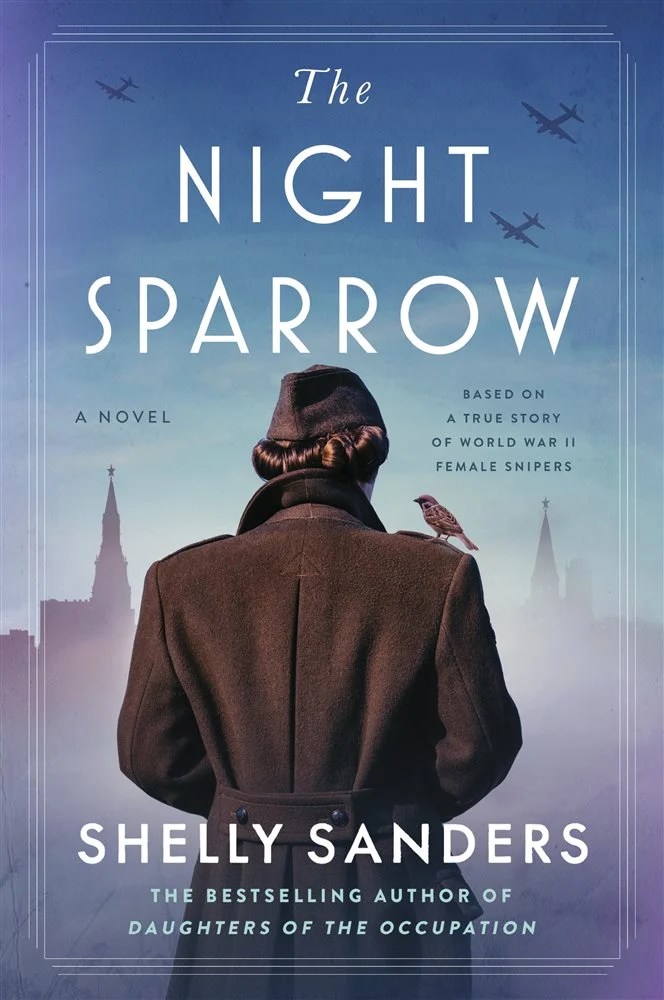
Shelly Sanders is the author of Daughters of the Occupation and The Night Sparrow. She began her writing career as a freelance journalist for Canadian national publications such as the Toronto Star, National Post, and Maclean’s magazine. Her first books were YA historical fiction. Rachel’s Secret (Second Story Press), inspired by her grandmother’s Russian Jewish childhood, received a Starred Review in Booklist. Rachel’s Promise and Rachel’s Hope followed, creating the award-winning Rachel Trilogy. Her first adult novel, Daughters of the Occupation (HarperCollins, 2022), is set during the Latvian Holocaust and explores inter-generational trauma. It was a Canadian bestseller and received a Starred Review from Kirkus. Her latest novel, The Night Sparrow (HarperCollins, 2025) was inspired by female snipers and interpreters in the Red Army during WWII. Connect with Shelly at www.shellysanders.com
 READ HER LIKE AN OPEN BOOK