Over on my Instagram account (same name as this one), I’ve been sharing one post a day in celebration of Jewish Book Month since November 20. I decided to share my collection by genre, one flatlay photo at a time. I thought I would share those photos here as a source for good books in several genres on a variety of subjects. (At the request of an Instagram follower, I’ve typed up a list of all the books I’ve featured. If you’d like a copy, just drop a comment with your email and I’ll send it to you.)
But first, a little background on Jewish Book Month. In 1925, Fanny Goldstein, a librarian at the Boston Public Library, decided Jewish books and Jewish pride were worth celebrating. Fanny set up a display of Jewish books and initiated the first Jewish Book Week. Jewish communities across the country adopted the week-long celebration. In 1940, the event was shifted to the month before Hanukkah, when it is still observed today.
Excitement and enthusiasm built for the numerous activities planned across the country, and in 1943 Jewish Book Week was extended to Jewish Book Month. One year later, Fanny Goldstein’s National Committee for Jewish Book Week was transformed into the Jewish Book Council. Eventually, the JBC Network grew out of this national desire to bring authors and literature to widespread communities. Today, the JBC Network has roughly 120 member organizations across North America and provides over 250 authors with a platform for sharing their books each year. JBC Network arranges over 1,300 programs a year, both virtually and in-person, for member sites.
Judaism (and four books on its relationship to Christianity)

To begin at the beginning, TaNaKh is the Hebrew Bible. The Torah is the Five Books of Moses/Pentateuch, Nevi’im is the Prophets, and Kethuvim is the miscellaneous writings (Psalms, Proverbs, Job, Song of Songs, the Book of Ruth, Lamentations, Ecclesiastes, the Book of Esther, the minor prophets, Chronicles). The a’s in TaNaKh are added to aid in pronunciation of the acronym. The suffix -im indicates a plural in Hebrew.
I highly recommend Jewish Literacy to anyone who wants a one-volume overview of Judaism, Jewish history and culture, holidays, key ethical questions, antisemitism, and the like. It’s essentially All Things Jewish 101. To Life: A Celebration of Jewish Being and Thinking is also excellent but not nearly as comprehensive. (Rabbi Harold Kushner is best known for his earlier book, When Bad Things Happen to Good People.) If you’re interested in the intersection of Judaism and Christianity, the last three books are enlightening reads.
Middle Eastern History, the Holocaust, and Israel

Books on Israel’s past and present, a couple Holocaust memoirs, and some recent books intended for a general audience that wants to learn the truth about Israel and Jews so they aren’t misled by the flood of misinformation, hate, and conspiracy theories on the internet.
When one bears in mind that there are 1.9 billion Muslims in the world and only 15.8 million Jews, one can see that there is no way the latter can fully counter the propaganda generated by Russia, Iran, Hamas, and their allies, and then spread relentlessly by millions of “useful idiots” in the West who know next to nothing about Jews, Jewish history, Middle Eastern history, and the century-long conflict between Jews and Arabs.
I encourage you to read some of these books, especially the bottom row. Education is the best defense against misinformation.
Antisemitism, Jewish Life Today, and the History of Sephardic Jews in Spain
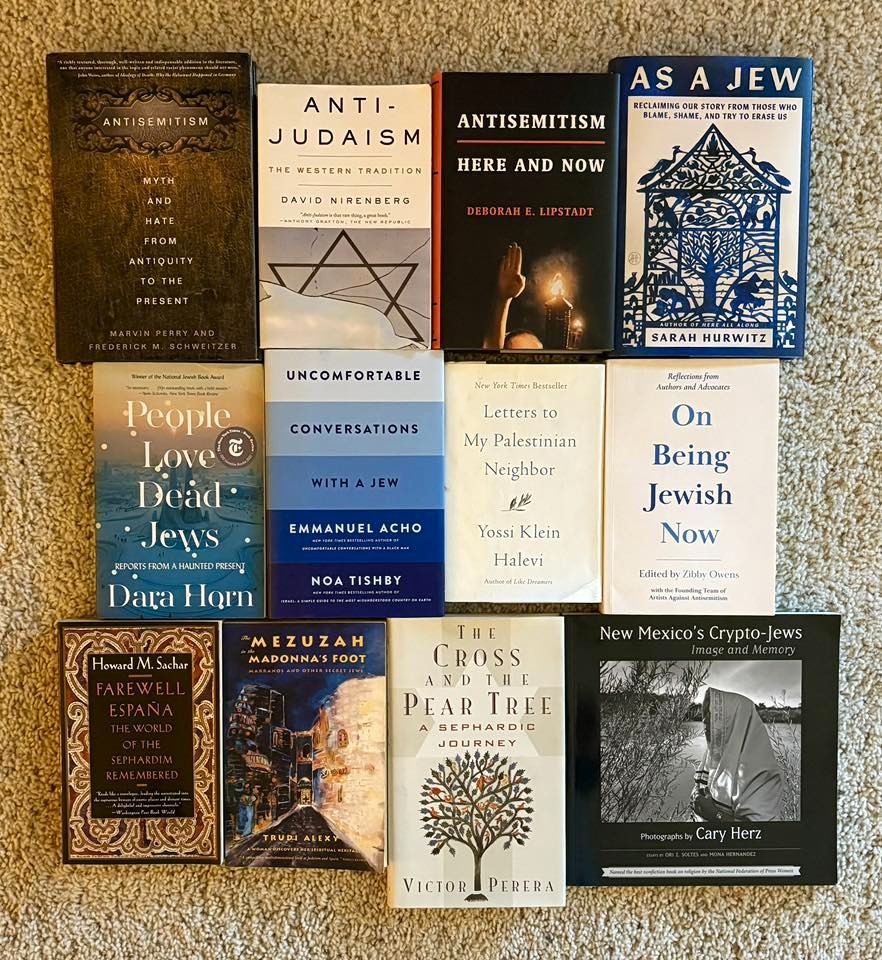
This selection of books focuses on the history of antisemitism and the forms it takes today. It is a human virus, always mutating in order to continue wreaking havoc on its victims. Social media has turned a flu-level virus into a Covid-level plague. Anti-Judaism: The Western Tradition explains where it comes from and why it has continued to persist for two millenia. Antisemitism: Here and Now is written in the form of letters from curious colleagues to Deborah Lipstadt, a professor at Emory University and expert on the subject. She was a consultant to the U.S. Holocaust Museum and served as United States Special Envoy for Monitoring and Combating Anti-Semitism from 2022 to 2025. Her responses are clear and compelling explanations of the current forms of antisemitism.
People Love Dead Jews is an outstanding essay collection on a variety of topics, not just antisemitism. Dara Horn is very smart and a gifted writer.
Uncomfortable Conversations with a Jew is a good introduction in Q&A form to everything non-Jews wonder about.
Letters to My Palestinian Neighbor has become a modern classic. Yossi Klein Halevi is one of Israel’s finest writers and analysts of the Israel-Palestinian conflict.
The bottom row features books about Spanish Jewry and their descendants (Sephardic Jews). Crypto-Jews live in New Mexico and Mexico. They are descendants of Sephardic Jews during the Inquisition who converted to Catholicism for their own safety but continued to practice Judaism or observe certain rituals like lighting candles at the start of Shabbat. Eventually, most made their way to the New World. Generations later, these crypto-Jews discover their Jewish ancestry and either resume some elements of Jewish observance or convert back to Judaism. It’s a fascinating story.
Memoirs, Biographies, and Miscellaneous Nonfiction

There’s not a bad book in this group, which covers a lot of different types of lives and ways of living. A Brilliant Life is the remarkable story of Mira, who survives several death camps with a combination of charm and luck, emigrates to Australia, and lives until her 90s, sharing her hard-won wisdom and positive approach to life across the years.
One Hundred Saturdays: Stella Levi and the Search for a Lost World is the life story of Stella Levi, who grew up in the Jewish community on the Greek island of Rhodes, until life was disrupted by the arrival of the Nazis. Author Michael Frank met with Levi for a hundred Saturdays to learn her story.
A Beautiful Country is a memoir about an undocumented family from China by the daughter who grew up to become a Yale-educated lawyer and a convert to Judaism. Heart of a Stranger is the recently-published memoir by Rabbi Angela Buchdahl, the daughter of an American father and Korean mother who grew up in Tacoma and went on to become the cantor and then the rabbi at Central Synagogue in Manhattan, one of the leading Reform Judaism congregations in the country.
If you’re of a certain age, you’re familiar with Dodgers legend Sandy Koufax, one of the greatest pitchers of all time (if not the greatest). He became a hero to American Jews when he refused to pitch the opening game of the 1965 World Series because it fell on Yom Kippur, the holiest day of the year.
Wendy Mogel’s books, The Blessing of a Skinned Knee and The Blessing of a B Minus, are excellent guides to parenting using Jewish wisdom and values. The Amen Effect: Ancient Wisdom to Mend Our Hearts and World is an inspiring sermon about the importance of community by Rabbi Sharon Brous.
You’re probably familiar with Joanna Rakoff’s My Salinger Year, her wonderful memoir about her experience as a recent college grad working for J.D. Salinger’s literary agent. Primo Levi, Yuval Noah Harari, and Mitch Albom need no introduction. If Not Now, When? and Sapiens are required reading. Have a Little Faith is the heartwarming story of a dying rabbi and an inner-city pastor in Detroit. Albom learns that despite their different faiths, their lives as clergy and the wisdom they shared had much in common.
The books below belong in the previous photos. I missed them when I was gathering books
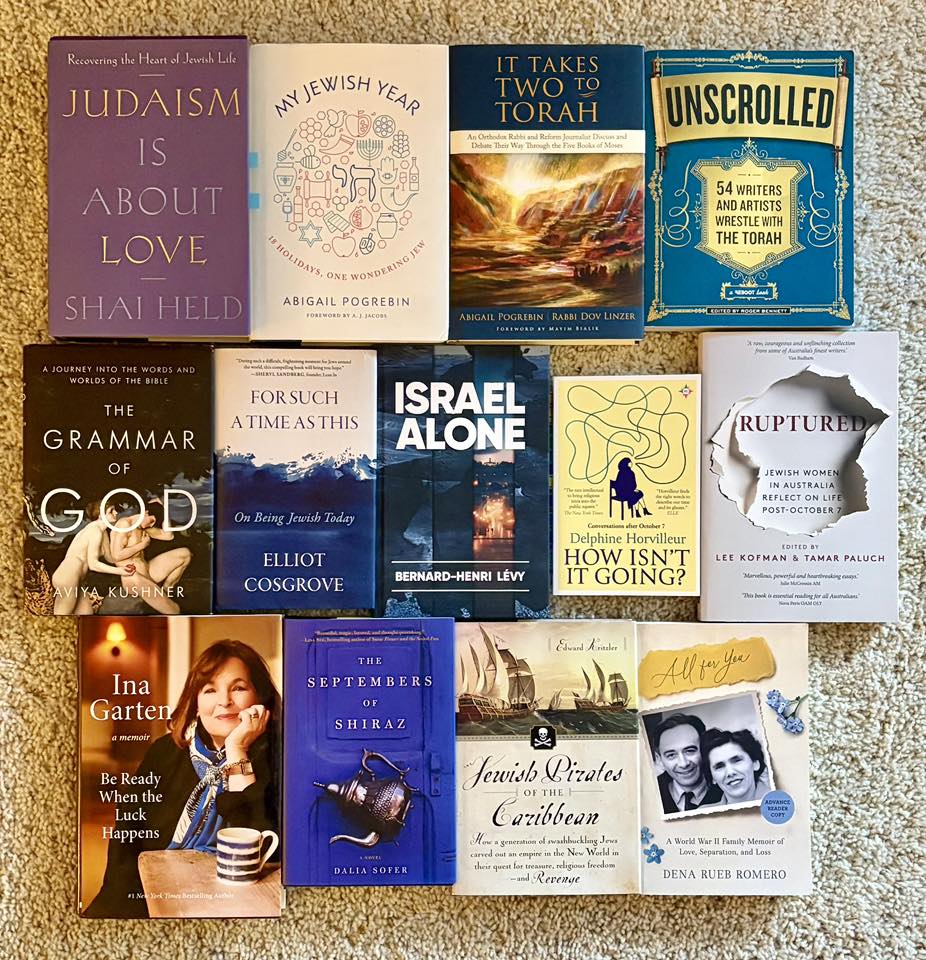
Needless to say, when gathering books for this series, I missed a bunch of them. We have seven bookcases spread across the house, so it’s easy to miss a book when I’m scanning the shelves. While most of them are nonfiction, there is one novel (The Septembers of Shiraz, set in Iran).
For Such a Time As This, Israel Alone, How Isn’t It Going?, and Ruptured address the events of October 7, 2023 and the reactions and ramifications that followed. I highly recommend For Such a Time As This and Israel Alone. (I haven’t read Ruptured yet.)
Aviya Kushner’s religious upbringing included reading the Bible in Hebrew. While taking Marilyn Robinson’s class on the Old Testament in the MFA program at University of Iowa, she encountered the English translations, which were different in surprising and perplexing ways. With Robinson as her mentor, she became immersed in the study of the translators over the centuries, the interpretive decisions they made, and the impact of these changes to the original meaning in the English-speaking world. The Grammar of God: A Journey Into the Words and Worlds of the Bible is the story of her obsession and what she learned.
All For You: A World War II Family Memoir of Love, Separation, and Loss is a close-up, real time description of the changing circumstances for Jews during the 1930s. Emil, who is Jewish, is in love with Deta, who is Lutheran. Nazi purity laws forbid their marriage. She finds work as a nanny in London and he is able to emigrate to New York City, taking advantage of his skills as a photographer. Over the next several years, Emil attempts to rescue Deta and his family. The author is Emil’s daughter.
I’m currently reading one chapter a day in It Takes Two to Torah: An Orthodox Rabbi and Reform Journalist Discuss and Debate Their Way Through the Five Books of Moses. Their thought provoking dialogue has been enlightening.
If you like Ina Garten’s cookbooks, TV show, or podcast, you’ll want to know the rest of the story. My wife really enjoyed her recent memoir.
Historical Fiction, Part 1

The sixteen books above are all outstanding. The four books in the top row are must reads, as are The Postcard (my favorite book of 2023) and The Safekeep, which won the Women’s Prize for Fiction last year (pictured above is the British edition; the US cover features two green pears).
Your Presence is Mandatory was inspired by the life of Vasilyuk’s Ukrainian grandfather, who fought in the Russian army during WWII and ended up a German prisoner of war. Like so many who survived the war, his experiences are remarkable. But he spends the rest of his life keeping most of it secret from his family. Upon his death, his family finds a briefcase with documents that reveal what he was hiding from them and why. Vasilyuk’s debut won the Sami Rohr Prize for Jewish Literature and the California Book Award in Fiction.
Fagin the Thief gives the villain of Dickens’s Oliver Twist a rich and compelling back story. Our Narrow Hiding Places depicts the struggles of the Dutch people during the Hunger Winter of 1944-45, when they were suffering under a Nazi blockade.
While many/most people consider Leigh Bardugo’s The Familiar to be fantasy, I decided to include it here because the heart of the book deals with the life of a Jewish girl during the Spanish Inquisition.
James Salter was a writer’s writer. His real name was James Arnold Horowitz, but he wrote under the pen name James Salter and later changed his name legally.
Historical Fiction, Part 2
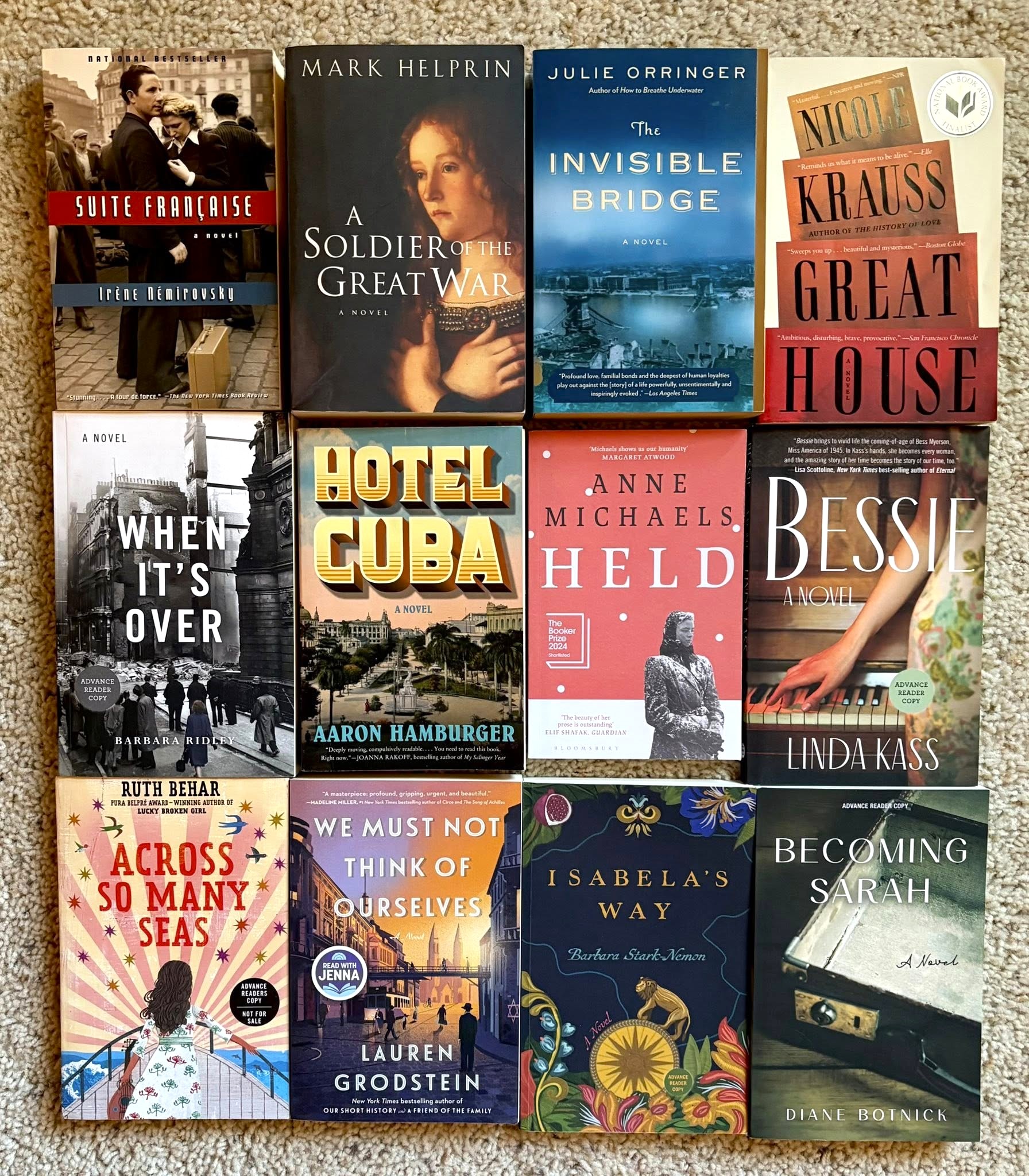
The first three novels pictured above are required reading. Iréne Nemirovsky was a Ukrainian Jew living in France when she was arrested in 1942. She had recently completed the first two books of a planned series of five novels about life in France during WWII. The manuscript was saved by her daughters but not published until 2004, when the first two books were combined into the one-volume Suite Française.
A Soldier of the Great War (1991) is an epic adventure, love story, and love letter to storytelling. It is alternately brutal and sublime, philosophical and thrilling, hilarious and heartbreaking. Mark Helprin is a remarkable writer. I read it back in 1992 and it has remained in my top 10 ever since.
The Invisible Bridge (2010) is another beautifully written and moving novel of the Holocaust set in Budapest and Paris before and during WWII. It’s the story of three brothers and a family struggling to survive annihilation and also a great love story. Think Doctor Zhivago during the Holocaust.
Everyone who reads Hotel Cuba loves it, but not enough people have read it. So add it to your TBR. Ruth Behar writes Middle Grade novels based on her family’s history of moving from Europe to Cuba and eventually to the United States. Across So Many Seas and Letters From Cuba are worth your time.
Bessie (2023) is a fictionalized biography of Bess Myerson, the first Jewish woman to be crowned Miss America in 1945. Myerson, the daughter of poor Russian immigrants living in the Bronx, was six feet tall, a brilliant student, and a musical prodigy who was determined to win the $5,000 prize that could fund her education. Her steely determination served her well in standing up against antisemitism.
I recently reviewed Isabela’s Way (Sept. 2025) on my blog. It’s the story of a young Jewish girl’s escape from Church authorities during the Inquisition in Portugal, helped by a 17th century Underground Railroad.
Becoming Sarah is the story of one of the babies born in Auschwitz and the difficult path she faced in making a life for herself and her children.
Hybrids of Historical and Contemporary Fiction
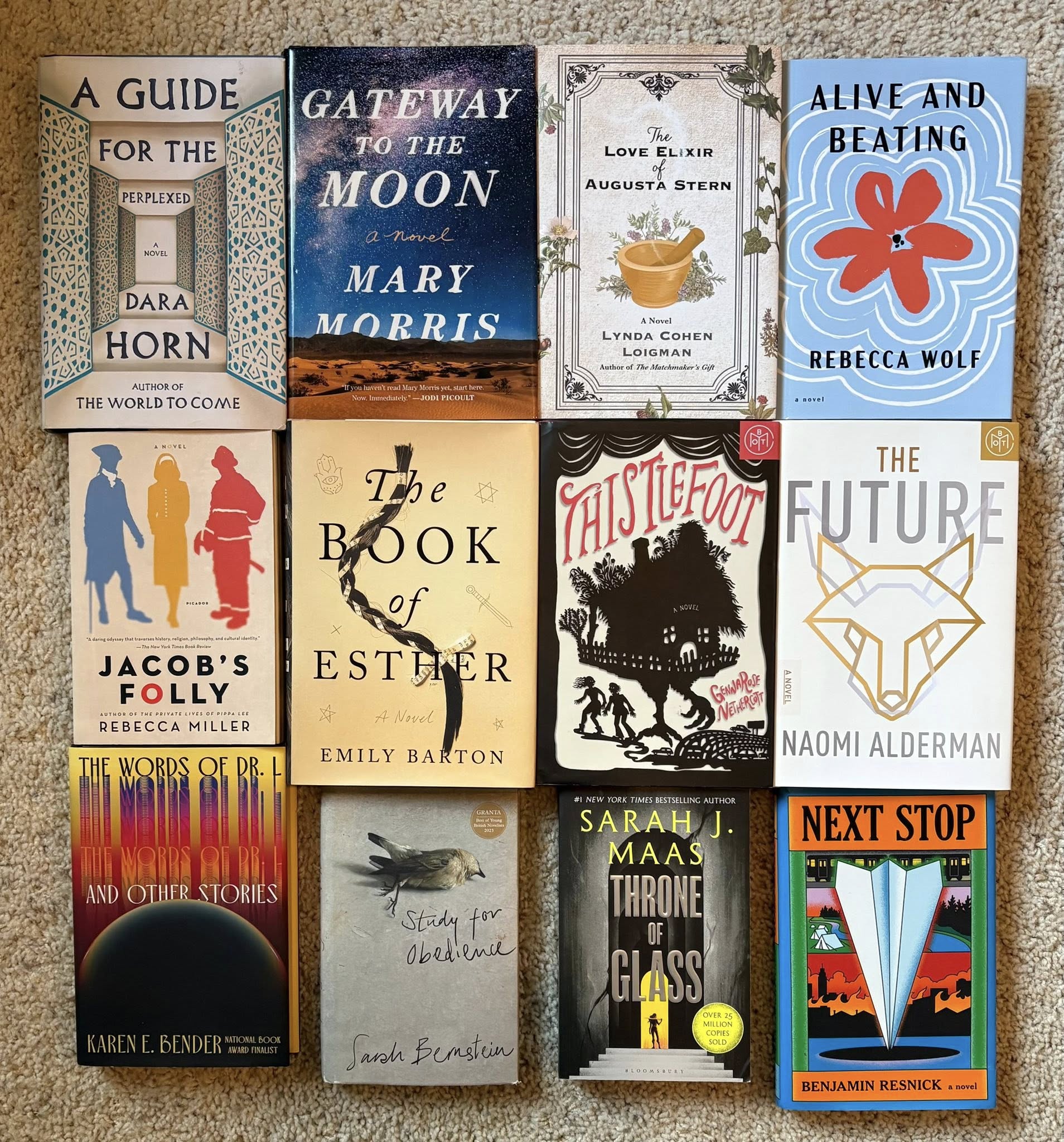
Fiction That Moves Between the Past and the Present + Fiction in the Future/Outside of Time
The first five books fit into the Past & Present category, while the rest are set in the future or an unnamed time (fantasy, dystopian, indeterminate).
A Guide for the Perplexed by Dara Horn (best known for her essay collection People Love Dead Jews) is a good pick for fans of books like The Weight of Ink and People of the Book.
Gateway to the Moon is the story of Luis Torres, a Spanish Jew who converted to Catholicism (in name only) and journeyed to the New World with Columbus. It follows his descendants as they move across North America, eventually ending up in New Mexico. When young Miguel Torres goes to work for a Jewish family in Santa Fe, he discovers that many of their traditions mirror those of his family and ancestors, but which he had no idea were Jewish, leading him on a spiritual journey.
The Love Elixir of Augusta Stern was a popular Book of the Month pick last fall and spread through word of mouth this year. Augusta Stern is a retired pharmacist who moves to a senior community in Florida, where she encounters Irving Rivkin, the delivery boy in her father’s pharmacy when they were both teenagers. This meeting takes her back to a time when she was torn between modern medicine and her aunt’s traditional healing methods. And her relationship with the younger Irving.
Alive and Beating tells the stories of six Jerusalem residents of diverse backgrounds as they learn they will finally receive a heart transplant.
Jacob’s Folly is a time travel tale that moves from 18th century Paris to 20th century Long Island.
The Book of Esther imagines an alternate history of WWII in which the Khazars, a warrior people, stand between Germania to the west and the city of Stalingrad to the east. When Germania invades Khazaria, a young woman named Esther inspires her people to fight this existential threat. The Book of Esther is “simultaneously a steampunk Joan of Arc and a genre-bending tale of a counterfactual Jewish state … [that is] reminiscent of Michael Chabon’s The Yiddish Policemen’s Union and Philip Roth’s The Plot Against America.”
The Words of Dr. L is a collection of speculative stories set in the contemporary U.S. and near-future dystopias.
Study for Obedience won the Scotiabank Giller Prize for best Canadian novel and was shortlisted for the Booker Prize in 2023. A young woman moves from the place of her birth to the remote northern country of her forebears to be housekeeper to her brother, whose wife has recently left him. Soon after her arrival, a series of inexplicable events occurs. She notices that the local suspicion about incomers in general seems to be directed with some intensity at her and she senses a mounting threat.
Throne of Glass certainly needs no introduction. You either love it or have no interest in reading it.
Next Stop is a bizarre apocalyptic story with a Jewish spin that incorporates Biblical and cultural elements. “A black hole suddenly consumes Israel and mysterious anomalies spread across the globe. Suddenly the world teeters on the brink of chaos. As antisemitic paranoia and violence escalate, Jewish citizens Ethan and Ella find themselves navigating a landscape fraught with danger and uncertainty.”
Contemporary Fiction
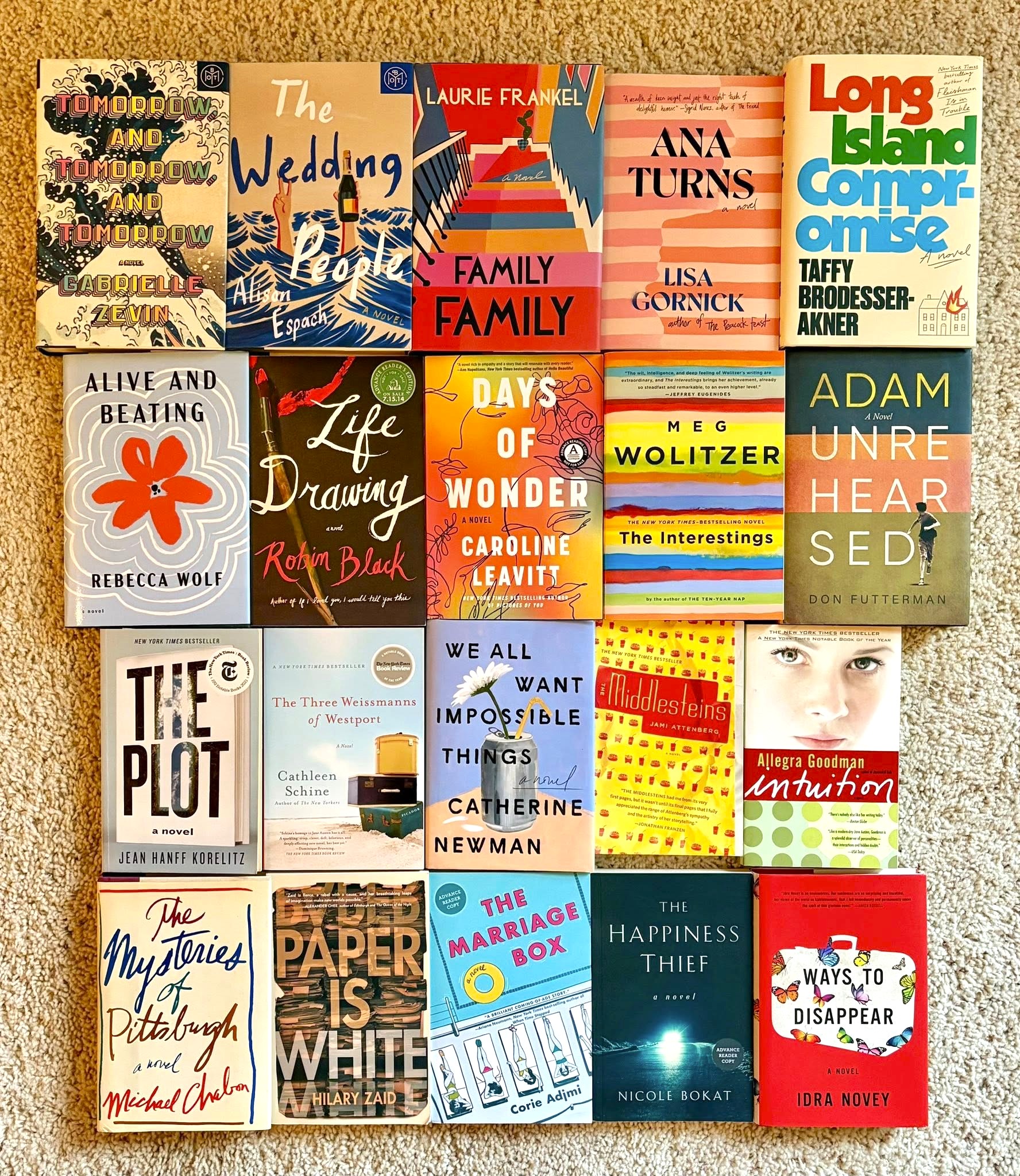
It seems like most people have read The Wedding People, Tomorrow and Tomorrow and Tomorrow, The Plot, and We All Want Impossible Things, each of which I loved.
I recommend all of Lisa Gornick’s books, including her most recent, Ana Turns. She writes with penetrating psychological insight (she was a psychotherapist).
Caroline Leavitt is a master of stories featuring sympathetic characters facing ethical dilemmas. I recommend Days of Wonder, With or Without You, Cruel Beautiful World, or Is This Tomorrow.
Alive and Beating tells the stories of six Jerusalem residents of diverse backgrounds as they learn they will finally receive a heart transplant.
If you’ve discovered Allegra Goodman recently, thanks to Isola (2025) or Sam (2023), I suggest going back to her earlier books Intuition (2006) and Kaaterskill Falls (1998).
Cathleen Schine’s smart and hilarious books are worth a read, especially The Three Weissmanns of Westport, The New Yorkers, and The Grammarians.
Don’t overlook the indie press books in the bottom row: Paper is White, The Marriage Box, and The Happiness Thief (I also recommend Nicole Bokat’s Will End in Fire).
Short Stories

About ten years ago I went through a phase where I read a ton of short story collections. Since then I’ve continued to read five to ten collections a year. Pictured here are some favorites by Jewish writers.
If you haven’t read anything by Mark Helprin, now is the time. He is most famous for his novels Winter’s Tale and A Soldier of the Great War, but he’s also a terrific short story writer. Check out The Pacific or his early collections, Ellis Island and A Dove of the East. “Monday” in The Pacific might be the definitive 9/11 story. He has also written three beautiful children’s books with Chris Van Allsburg (Jumanji and The Polar Express).
The UnAmericans is a remarkable debut that ended up being my favorite book of 2015. Read it!
Joan Silber, Edith Pearlman, and Karen Bender are three of the finest American short story writers, with great insight into people and situations and compassion for their characters. Check out the latest books by Bender (The Words of Dr. L) and Silber (the novel Mercy).
Wendi Kaufman’s Helen on 86th Street and Other Stories was published just weeks after she passed away after a long battle with cancer. This heartfelt collection deserves your attention.
Rachel Hall’s Heirlooms impressed me immensely. It’s a novel in stories that tells the complicated story of four generations of an extended family from France before WWII to the United States in the early 2000s. So good!
Ronna Wineburg is an accomplished storyteller and a gifted chronicler of the lives of women and their relationships.
Clarice Lispector is a legend in her native Brazil. She wrote about women with the same intensity as her characters possessed. New Directions Books published her collected stories (650 pages) in 2015.
Ben Shattuck’s The History of Sound is one of the most acclaimed books of the last year. He is a writer with an old soul.
Joan Leegant’s Displaced Persons is an expertly crafted and powerful collection that provides insight into the lives of Israelis at home and in the U.S. It was a finalist for the 2025 Jewish Book Award. (The paperback is only $3 on Amazon  )
)
Meryl Ain is a journalist, author of two novels, and host of the podcast “People of the Book.” She is also the founder of the Facebook group “Jews Love to Read!” Her first short story collection, Remember to Eat, will be published in January.
Israeli Fiction
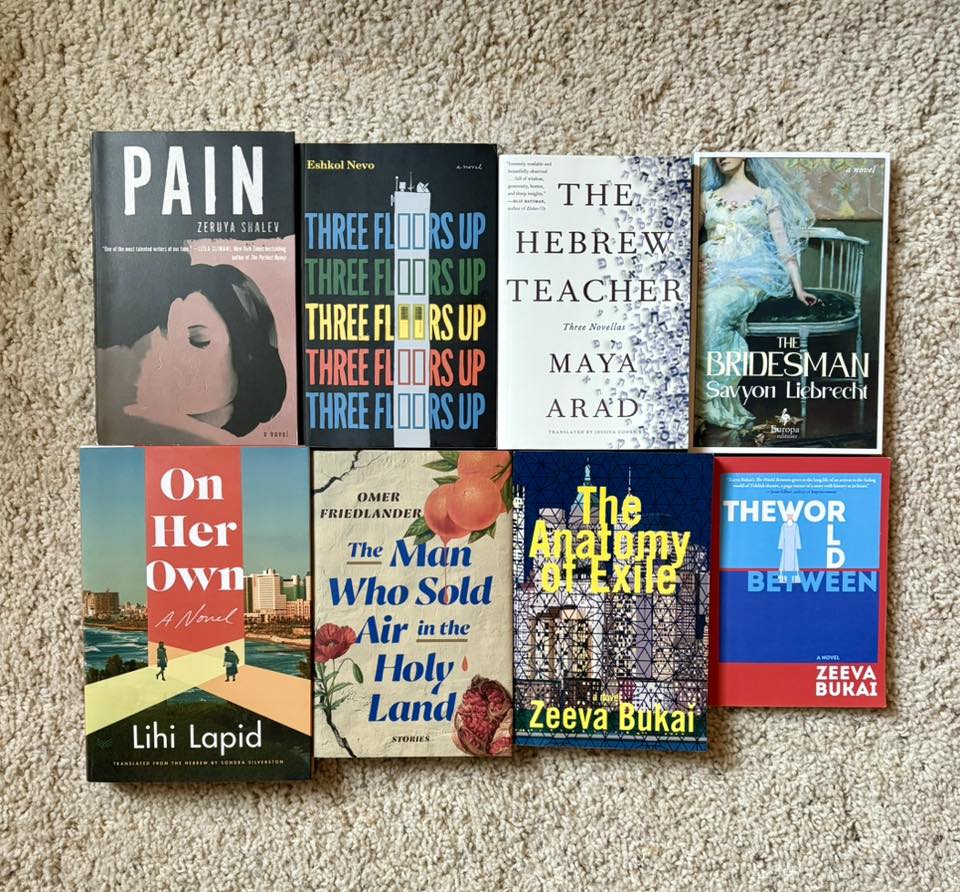
The Anatomy of Exile was one of my favorite books of 2025. I’m looking forward to reading Zeeva Bukai’s upcoming book, The World Between, due in February.
Maya Arad’s The Hebrew Teacher got a lot of positive reviews in the past year or two. Her new book, Happy New Years, was the debut pick of the new book club sponsored by the Jewish Book Council.
Lihi Lapid similarly came to North American readers’ attention in the past couple years with On Her Own. Her new book, I Wanted to be Wonderful, is the current pick of Zibby Owens’ book club.
Omer Friedlander’s The Man Who Sold Air in the Holy Land is one of the most acclaimed short story collections of the last few years.
Zeruya Shalev, Eshkol Nevo, and Savyon Liebrecht are highly regarded writers in Israel who deserve a wider audience abroad.
I’m committed to reading more Israeli writers in the coming year to better understand life in Israel.
Even More Miscellaneous Fiction and Nonfiction
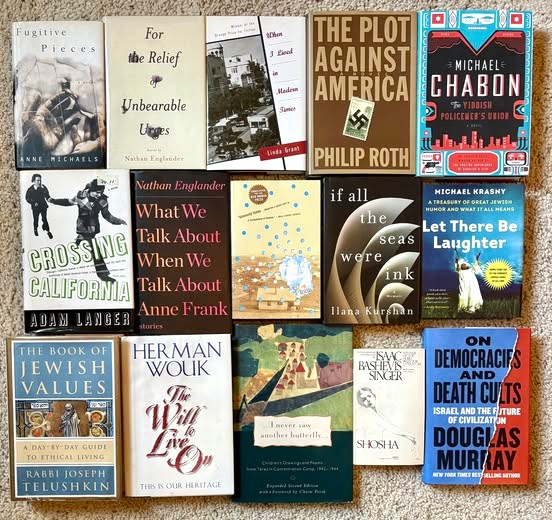
 READ HER LIKE AN OPEN BOOK