Continuing on from my post of January 14 about books that deserve more attention, here are five more books I enjoyed. They were published between 2014 and 2025 and are set in Italy, North Korea, China, Israel, Brooklyn, and a beehive (yes, a beehive). I hope you find something here to add to your reading list.

Meeting in Positano – Goliarda Sapienza (Other Press)
Goliarda Sapienza was a famous Italian actress in the 1940s and 1950s who turned to writing autobiographical works and fiction in the 1960s. Sapienza worked with some of Italy’s most famous filmmakers and became part of the intellectual elite. She was shaped in part by her experiences during World War II. In 1943, at age 19, she took a break from her acting studies to join an anti-fascist brigade, and she remained an outspoken political activist throughout her career. Unfortunately, her frank and unconventional writing found little success in her lifetime. Most of her work was published after her death in 1996. Meeting in Positano, written in 1984, was not published in Italy until 2015, with U.S. publication in 2021.
Meeting in Positano tells the autobiographical story of her unusual friendship with a mysterious young widow named Erica in the isolated town on the Amalfi Coast during the 1950s, before it became a famous getaway favored by celebrities. It is a tribute to a very specific time and place and to a particularly intense friendship with a woman who could not have been more different.
Erica, in her late 30s, is a wealthy, aristocratic widow, beautiful in an imperfect way, who is lonely and, as she admits, not good at making girlfriends. For Goliarda, it is platonic love at first sight, as she is utterly taken by Erica’s unique appearance and charisma. In fact, most of the residents of Positano–a charming, eccentric group of supporting characters–appear to be in love with her. But no one really knows much about her background.
The two women, separated by nearly a decade in age, slowly become “the sisters,” as some in the town start to call them. Through long conversations and days spent on the beach and on the water, they come to know each other well, and we learn all about Erica’s life. Goliarda methodically peels back the layers that make up Erica and the development of their complicated relationship over the next ten years.
Meeting in Positano is both an intriguing dual character study of two unusual women and a love letter to a town that no longer exists in its charming 1950s incarnation, before new roads made it easier to reach. Goliarda describes Positano as “a place that was still isolated from the barbaric advances of products, merchandise, and urban madness.”
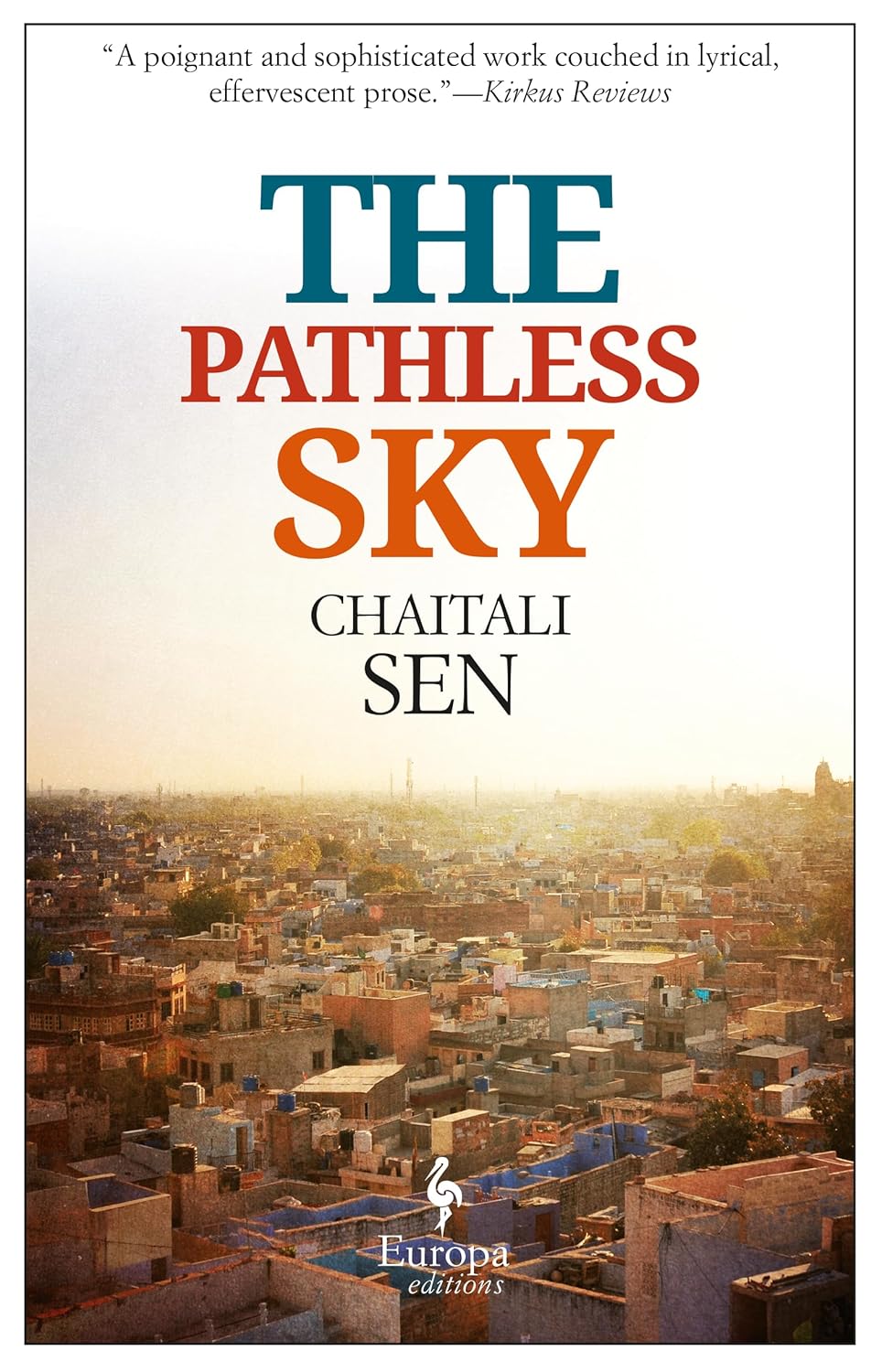
The Pathless Sky – Chaitali Sen (Europa Editions)
Chaitali Sen has written a powerful novel of love and life in an authoritarian society. She has wisely chosen to leave the country and time unstated, making her story universal, and yet it feels so timely and specific that it can be said to accurately capture our zeitgeist.
While books that tread this territory can feel coolly unemotional, with characters often representing ideas, The Pathless Sky achieves an emotional intensity through its flesh-and-blood characters and the hypnotic quality of Sen’s prose. It is the story of John and Mariam, who meet while in college and spend the following years in and out of each other’s lives for reasons both personal and political. John is studying geology, a powerful metaphorical contrast with the fickle nature of human efforts, particularly those of authoritarian governments.
The characters’ opposing natures and the random, inexplicable actions of the increasingly militaristic police state combine to test their relationship in a hundred different ways. We never stop rooting for their love to triumph because it can be all we have left in such circumstances, the human struggling against the machinations of tyranny. The Pathless Sky could well have been titled Love in a Time of Oppression (apologies to Gabriel Garcia-Marquez).

The Bees – Laline Paull (Ecco)
Laline Paull came to the attention of readers worldwide when her 2023 novel Pod was a finalist for the Women’s Prize for Fiction. But my favorite of Paull’s three novels is her debut, The Bees. It combines the best traits of a thriller, a hero’s quest, and a dystopian fantasy to powerful effect.
Just as Richard Adams made readers care deeply about a warren of rabbits in his 1973 classic, Watership Down, The Bees will have readers worrying about the many threats facing the members of one hive in an English orchard. Flora 717 is a dutiful member of the sanitation workers, the lowest caste in the hive, when it is discovered that she can speak (the “flora kin” group is mute). She draws the attention of Sister Sage, one of the priestesses that manage the hive for the Queen. Before long, she is promoted to the Royal Nursery, caring for the Queen’s newborns. Sister Sage realizes that Flora 717 is a rare bee indeed and determines to maintain a close watch over her, using her for the benefit of the hive but wary of her capabilities.
Flora is deeply conflicted between her genetic predisposition to “Accept, Obey, and Serve” and her rational and critical mind, which causes her to question, disobey, and ultimately lead. As she demonstrates her intelligence, bravery, and devotion to the Queen, she moves up literally and figuratively in the world of the hive. But her proximity to the Queen, the Priestesses, and the drones makes her privy to knowledge she would be better off not knowing. Before long, Flora becomes a threat to the Queen in a way she could never have imagined.
Beyond its intense and exciting plot, The Bees is distinguished by its well-drawn and credible characters. Paull has plausibly imagined the bees’ views of the outside world with its many creatures, humans, and man-made structures. The novel’s other noteworthy accomplishment is the way Paull has seamlessly incorporated a wealth of fascinating information about bees without bogging down the narrative. Laline Paull’s background in screenwriting has resulted in a cinematic thriller with several scenes you are unlikely to forget.

How I Became a North Korean – Krys Lee (Viking)
North Korea, the “Hermit Kingdom,” is such an enigma that the title of Krys Lee’s novel was intriguing enough to make me want to read it. How I Became a North Korean is a beautifully written novel about three young people struggling to attain freedom and to find their true selves by living a life that isn’t controlled by the North Korean state.
Two of the three main characters have fled the country into Northeast China and one is an American who finds himself in the Chinese border town. Yongju is the son of a high-level North Korean government official and a legendary actress who leads a life of privilege that includes attending a prestigious university. When his father is murdered, the family flees to the border, hoping to escape death or life in a work camp. Jangmi is a young woman barely surviving by smuggling goods across the river when she finds herself pregnant by a local businessman. Deciding she must flee and find someone to help care for her and her unborn baby, she agrees to be sold to an older Chinese man in search of a bride. Finally, there is Danny, a brilliant but awkward Chinese American high school student in California. His parents have divorced, and his mother has returned to China. His life becomes intolerable when his sexuality results in him being ostracized at school. Without telling his father, he buys an airline ticket to China, intending to live with his mother, who has no idea he is coming.
Lee expertly moves between the three first-person narratives, increasing the tension chapter by chapter. Each character’s motives are thoroughly examined, as are their different approaches to surviving their new life as an outcast. The plot brings their paths together in a plausible manner involving a morally complex Korean missionary who provides refugees safety and the promise of an eventual life in South Korea.
We learn about life in North Korea only through limited flashbacks; the bulk of the story takes place in the Chinese border town. Living in this stateless limbo between their past in North Korea and a hoped-for future in South Korea, the three protagonists try to make peace with their unfortunate circumstances and each other. The novel’s two great strengths are Lee’s sensitive portrayal of the characters’ emotional lives and her spare, elegant prose.
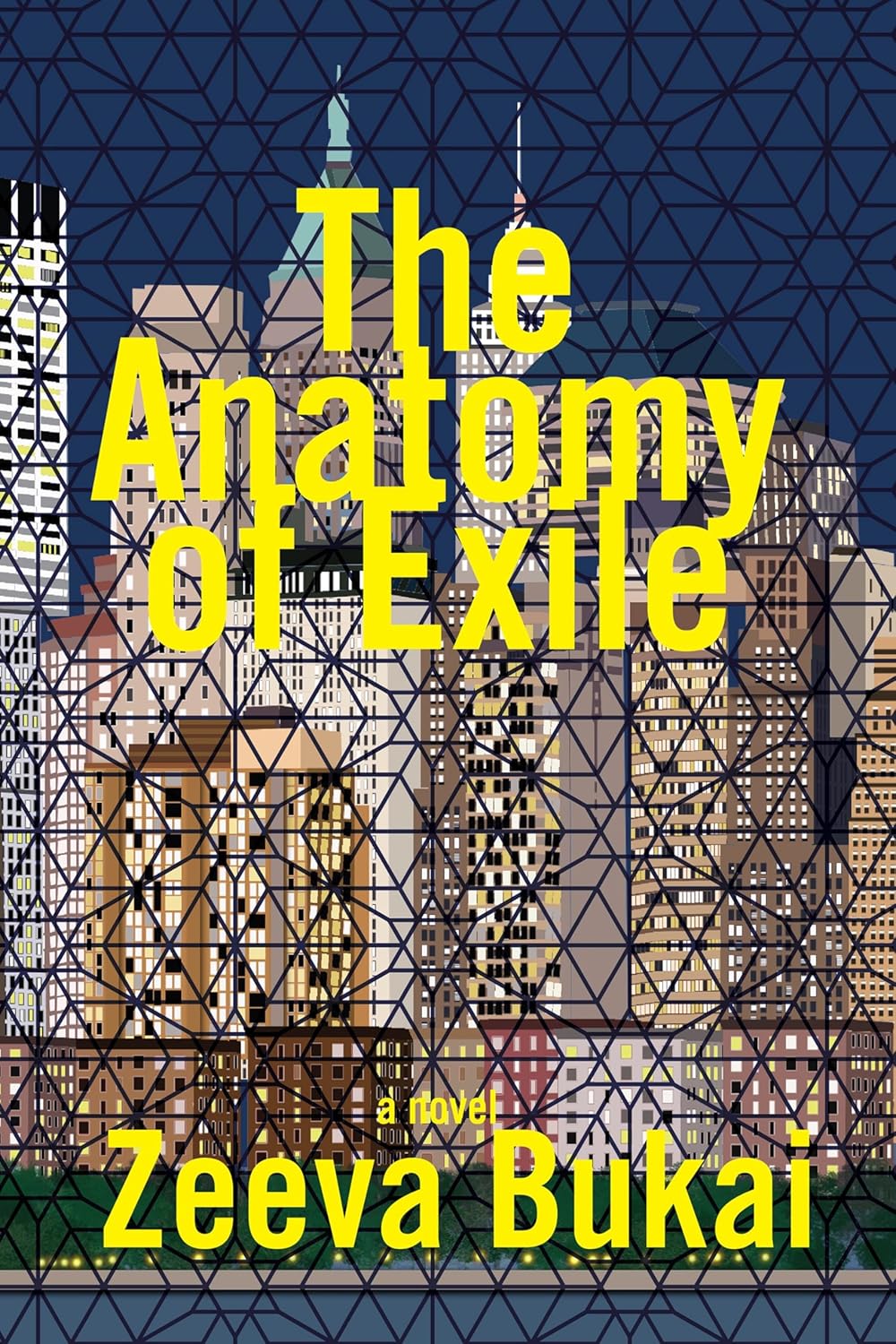
The Anatomy of Exile – Zeeva Bukai (Delphinium Books)
Zeeva Bukai’s debut novel, The Anatomy of Exile, concerns issues and experiences that are of universal relevance. Tamar, an Israeli Jew, is married to Salim Abadi, an Arab Jew from Syria whose family immigrated to Israel. They have three children (Ruby, Rachel, and Ari) and live contentedly in Tel Aviv. Everything changes when Hadas, Salim’s beloved sister and Tamar’s best friend, is shot and killed in what is believed to be a terror attack. When they learn the shocking truth behind her murder, Salim is determined to leave the chaos of Israel for the United States. He is convinced that in five years he can earn the kind of money that will allow them to return and buy a place in one of Israel’s beach communities. His sister’s death has convinced him that it’s now or never.
The family moves to Brooklyn, where they rent an apartment in a mostly immigrant community. Their neighbors include a Palestinian family from Israel, Ibrahim and Radwa Mahmoudi and their two teenage sons. The two couples establish a tentative friendship, believing that in the melting pot of 1968 America they can be friends. Salim is particularly happy to be able to speak Arabic with Ibrahim.
The family’s exile in Brooklyn both shapes each member’s desires and destinies, many of which conflict with those of other family members. Salim works two jobs, leaving Tamar alone much of the time. The younger children, Rachel and Ari, quickly become more American than Israeli. The Abadi family is fragmenting, despite Tamar’s efforts to hold it together.
While the adults tread lightly across the political and cultural minefield, Tamar, bedeviled by her experiences in Israel, believes the friendship that has developed between Ruby and Faisal Mahmoudi will lead to trouble of one kind or another. Real and (possibly) imagined conflicts create a situation in which it seems there is no good solution. Who is right about their future? Should they become Americans or go home to Israel? The family is divided.
In The Anatomy of Exile, Zeeva Bukai turns and turns the characters’ lives like a jeweler examining the many facets of a diamond. As the tension builds, the characters make their choices, with consequences both expected and unexpected. It’s a complicated tale of immigration and assimilation, a coming-of-age love story, and an intimate portrayal of a good marriage cracking under pressure.
 READ HER LIKE AN OPEN BOOK